Building a custom home on the San Francisco Peninsula involves navigating complex permitting, strict zoning rules, seismic and environmental regulations, and some of the highest construction costs in the country. Understanding the local process before you commit to a lot or a builder can save you significant time, money, and stress. This guide covers what Peninsula homeowners and buyers need to know from the start.
The Peninsula is one of the most desirable places to build in the Bay Area, and also one of the most demanding. From hillside lots in Woodside to in-fill parcels in San Mateo, every project comes with its own combination of site constraints, regulatory requirements, and design challenges. Getting informed early is the difference between a smooth build and a costly surprise.
Key Takeaways
- Permitting on the Peninsula often takes longer than in other California regions, and timelines vary significantly by city and county.
- Lot characteristics like slope, soil type, and proximity to creeks or fault lines directly affect your design options and budget.
- Hiring the right builder and architect early reduces expensive redesigns and avoids permit delays.
- Environmental review, fire hazard zoning, and grading restrictions are real constraints that affect what you can build and where.
- Construction costs in this region are consistently among the highest in the nation, and soft costs (design, permits, engineering) add significantly to total project cost.
- Working with a builder experienced in local jurisdictions is one of the most practical ways to protect your investment.
Things You Must Know
1. The Permitting Process Is Not Linear
Many first-time custom home builders underestimate how non-linear the permitting process can be on the Peninsula. A project in one city may require design review, environmental clearance, geotechnical reports, and neighbor notification before a building permit is even issued. Revisions requested mid-review are common. Planning for 12 to 24 months from design start to permit approval is a reasonable expectation for complex sites, though simpler in-fill projects in certain cities may move faster. A builder or architect familiar with the specific jurisdiction can give you a much more accurate picture of what to expect.
2. Your Lot Is as Important as Your Budget
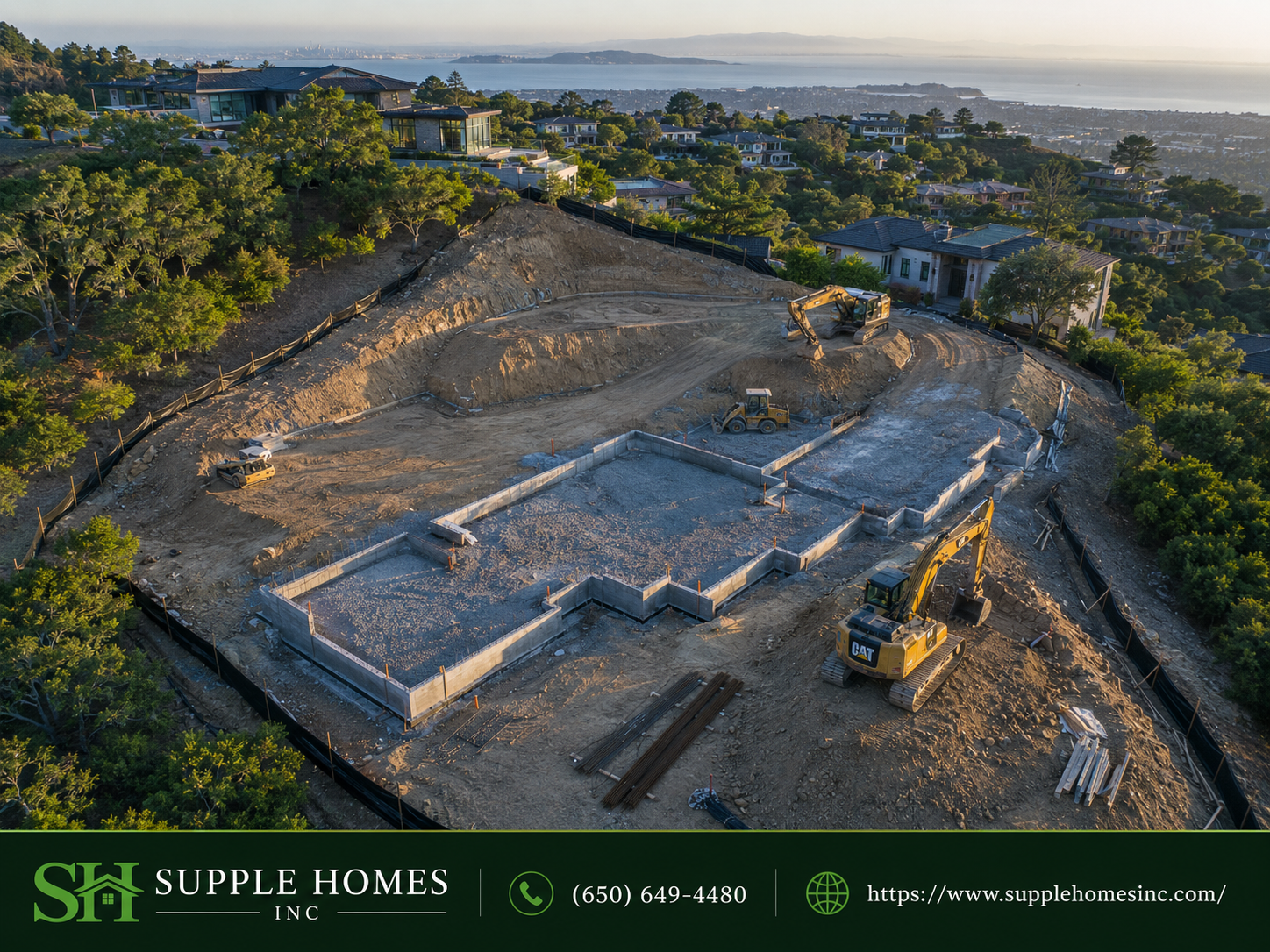
On the Peninsula, lot characteristics can determine nearly everything about your home's design, cost, and feasibility. A sloped lot in the hills may require extensive grading, retaining walls, or a post-and-beam foundation, all of which add cost. Lots near creeks may fall under riparian buffer setbacks. Properties in high fire hazard severity zones come with stricter building material requirements. Before purchasing land or committing to a design, a geotechnical evaluation and a preliminary zoning review are worth every dollar. For a closer look at how slope and soil conditions affect custom builds, building a custom home on Los Altos Hills slopes and soil offers useful context on what structural engineering decisions look like in practice.
3. Soft Costs Add Up Faster Than Most Buyers Expect
Hard construction costs get most of the attention, but soft costs on a Peninsula custom build can represent 20 to 30 percent of your total project budget when you account for architectural design, structural and civil engineering, soils reports, permit fees, impact fees, utility connections, and construction management. In some jurisdictions, school impact fees alone can reach tens of thousands of dollars. Budgeting for these costs from the start prevents the kind of mid-project financial strain that derails timelines and damages builder relationships.
How Does the San Francisco Peninsula Building Environment Compare to Other Bay Area Regions?
The Peninsula spans roughly from Daly City in the north to Palo Alto in the south, covering a wide range of cities, unincorporated county land, and coastal zones. Each jurisdiction (San Mateo County, Santa Clara County, and the various incorporated cities within them) operates under its own planning department, design review process, and fee schedule. That fragmentation makes the Peninsula more complex to navigate than a single-jurisdiction region.
Cities like Atherton, Hillsborough, and Woodside have design review boards and architectural guidelines that add review layers. Coastal-adjacent areas may fall under California Coastal Commission jurisdiction. And much of the Peninsula sits within Seismic Zone 4, requiring structural engineering that goes well beyond standard residential norms in other parts of the country.
What Are the Most Common Zoning and Site Constraints on the Peninsula?
Zoning rules vary widely across Peninsula cities and counties, but several constraints appear consistently enough that any buyer or builder should understand them before selecting a site.
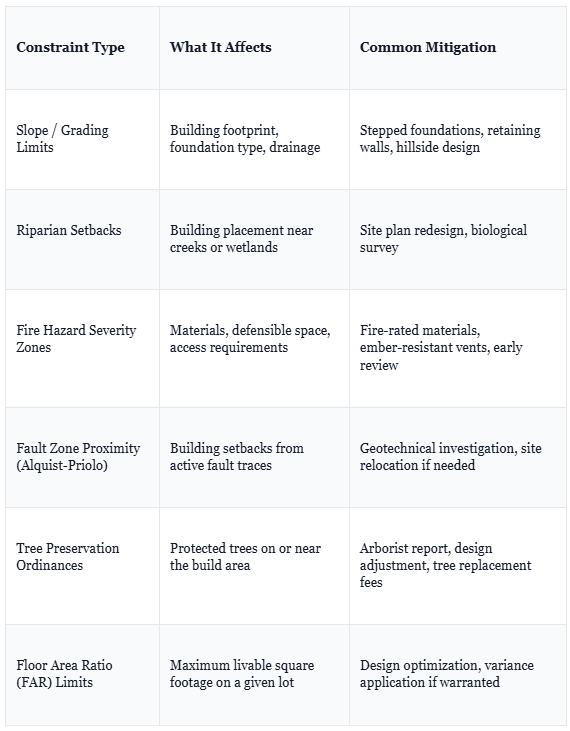
Knowing which constraints apply to your specific parcel before you finalize a design saves you from building plans that will never get approved. A pre-application meeting with the local planning department is often available and genuinely useful for complex sites.
Should You Hire a Builder or an Architect First?
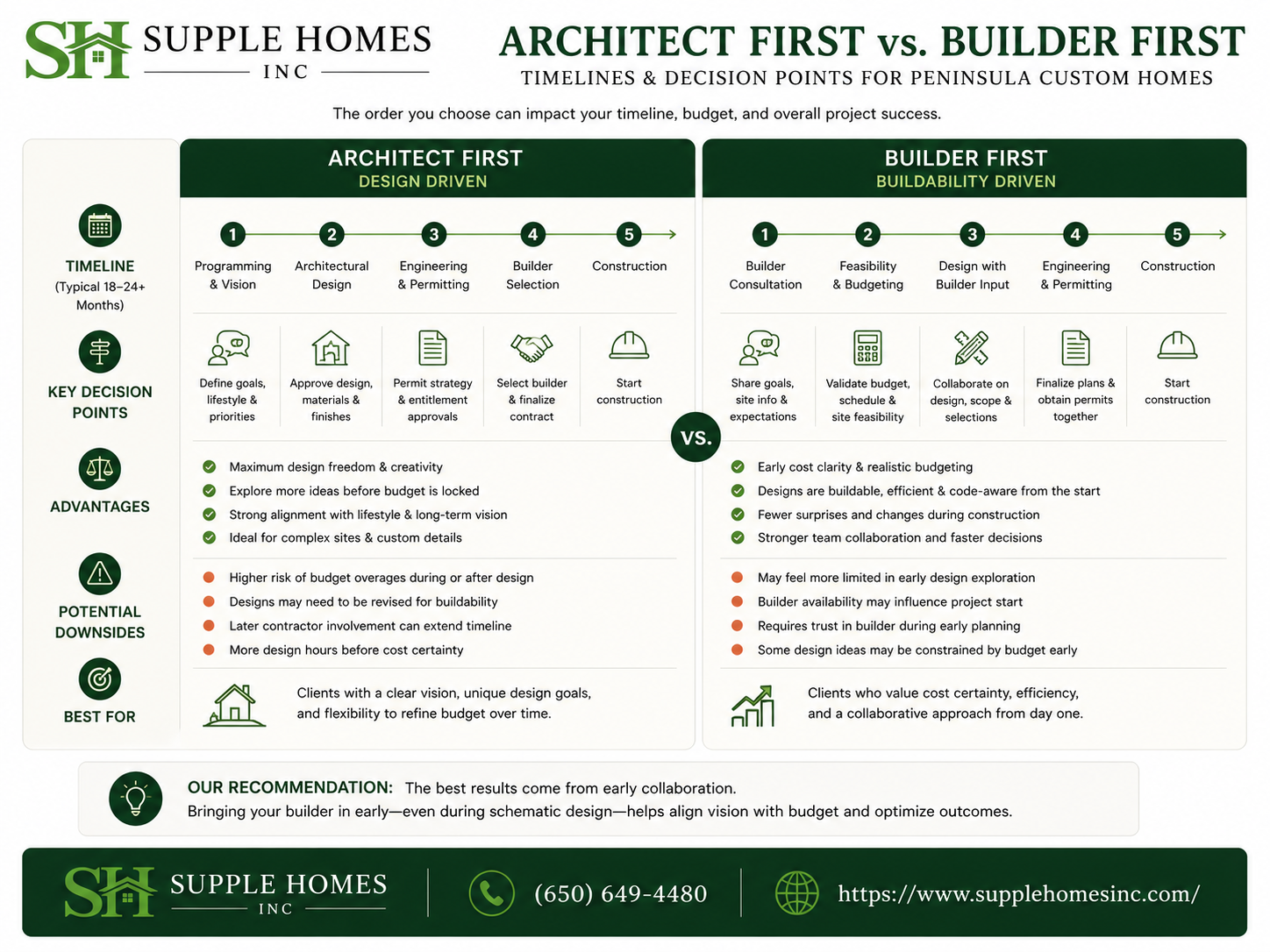
This question comes up constantly among Peninsula buyers, and the honest answer is that it depends on your project stage and your lot complexity. If you already own land, starting with an architect allows you to understand what the site can support before committing to a builder's pricing structure. If you're still shopping for land, a builder who knows the local market well can help you evaluate parcels before you purchase something that turns out to be far more expensive to develop than expected.
On complex Peninsula sites, the strongest approach is an integrated one. Architects, structural engineers, and builders who have worked together before move through design and permitting more efficiently. Miscommunication between a design team and a general contractor who comes in late is one of the more common sources of budget overruns on custom home projects. For a broader look at how experienced builders approach planning and design together, how luxury home builders in the Bay Area design homes for privacy, quiet, and wellness shows how thoughtful early decisions shape everything downstream.
What Does the Custom Home Building Process Look Like on the Peninsula?
- Site Evaluation: Geotechnical report, topographic survey, utility assessment, zoning verification, and preliminary code research.
- Pre-Design and Programming: Define your needs, lifestyle priorities, budget range, and non-negotiables before any design work begins.
- Schematic Design: Architect produces early massing concepts and site plans based on site constraints and local code parameters.
- Design Development: Plans are refined in coordination with structural, mechanical, and civil engineers.
- Planning and Design Review Submittal: Depending on the jurisdiction, this may involve a public hearing, neighbor notification, or architectural review board approval.
- Construction Document Preparation: Full permit-ready drawings are completed, including all engineering calculations and energy compliance documentation.
- Building Permit Submittal and Review: The building department reviews for code compliance and may issue comment letters requiring revisions.
- Construction: Ground is broken after permit issuance. Regular inspections are required at code-specified milestones throughout construction.
- Certificate of Occupancy: Final inspections are completed and the jurisdiction issues a certificate confirming the home is legally habitable.
In high-demand Bay Area jurisdictions, design review and permit approval timelines for new custom single-family homes can range from 6 months to over 2 years depending on project complexity, environmental review requirements, and current department workloads. Some cities have implemented online permitting tools to streamline portions of this process.
What Environmental and Safety Regulations Apply to Peninsula Custom Builds?
California has some of the most stringent residential building regulations in the country, and many Peninsula jurisdictions add local layers on top of state requirements. The areas most commonly affecting custom home projects include the following.
Seismic Design: All new construction on the Peninsula must comply with California's seismic design requirements under the California Building Code. Sites near mapped fault zones require additional geotechnical investigation under the Alquist-Priolo Earthquake Fault Zone Act, and some sites may face building setback requirements from fault traces.
The San Andreas Fault runs directly through San Mateo County, and multiple secondary fault systems are mapped throughout the Peninsula. Properties within mapped Alquist-Priolo zones are subject to investigation requirements before a permit for human occupancy structures can be approved.
Wildfire Hazard: Significant portions of the western and hillside Peninsula are designated as High or Very High Fire Hazard Severity Zones by CAL FIRE. Homes in these areas must meet Chapter 7A of the California Building Code, which specifies fire-resistant construction materials, ember-resistant vents, and defensible space standards.
Energy Code (Title 24): California's Title 24 energy standards require new homes to meet stringent envelope, HVAC, and lighting efficiency requirements. All-electric new construction requirements also apply in many Peninsula jurisdictions, though specifics continue to evolve.
Stormwater and Drainage: Grading and drainage plans must meet both local and regional stormwater quality requirements. Projects that disturb more than a certain square footage of land may require a Stormwater Pollution Prevention Plan (SWPPP).
What Are the Most Common Mistakes to Avoid?
- Purchasing land without a feasibility review. Buying a lot before confirming what can actually be built on it has ended more than a few projects before they started.
- Underbudgeting soft costs. Permit fees, engineering reports, architectural fees, and impact fees are not optional and should be modeled into your budget from day one.
- Choosing a builder based on price alone. A lower bid from a contractor unfamiliar with Peninsula permitting and site complexity often becomes the most expensive choice.
- Skipping the pre-application meeting. Most Peninsula cities offer pre-application consultations. Using them early can identify issues before you've invested heavily in design.
- Designing before engineering. On hillside and constrained sites, structural and civil engineering inputs should shape design from the start, not be bolted on after.
- Assuming timelines will match other regions. Peninsula project timelines are routinely longer than national averages. Planning personal milestones around optimistic timelines creates real problems.
For a deeper dive into the planning and execution mistakes that affect custom builds across the region, common mistakes when building a custom home in Silicon Valley covers several issues directly relevant to Peninsula projects as well.
How Do Costs Compare Across Peninsula Cities?
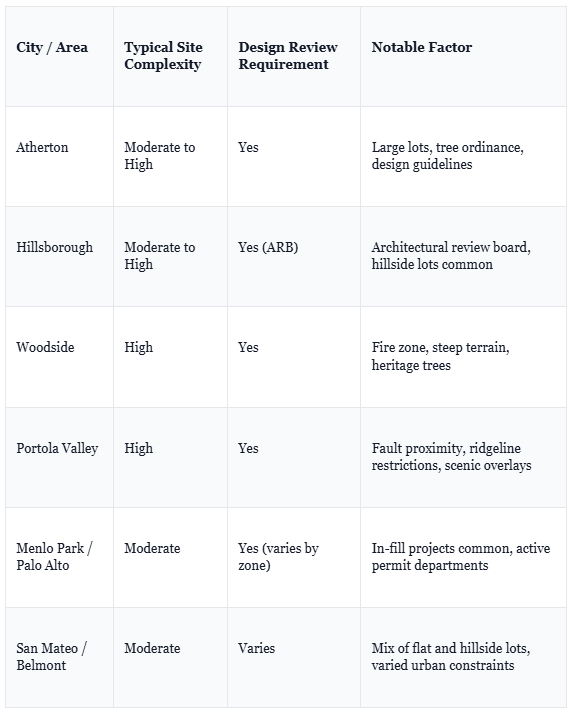
Impact fees for new residential construction in Peninsula cities vary significantly. In some jurisdictions, school impact fees, traffic impact fees, and park dedication fees combined can add $50,000 to $150,000 or more to the cost of a new single-family home, depending on square footage and location. These fees are typically due at permit issuance and are not negotiable.
Frequently Asked Questions
How complicated is the permitting process for a custom home on the Peninsula?
It can be quite involved, especially for hillside lots, properties near environmental features, or cities with active design review boards. The process typically includes planning department approval, building permit review, and multiple rounds of engineering submittals. Working with a builder or architect who has pulled permits in your specific jurisdiction will give you the most accurate timeline estimate and reduce the chance of unexpected delays.
What are the most significant zoning and site constraints to watch for?
Slope-related grading limits, riparian setbacks near creeks, fire hazard severity zone designations, Alquist-Priolo fault zone restrictions, tree preservation ordinances, and FAR limits are the constraints that most often reshape or complicate Peninsula custom home projects. A pre-purchase site analysis with a local builder or architect can help identify which of these apply to any lot you're evaluating before you commit to a purchase.
Should I hire an architect or a builder first?
If you own land and are ready to design, starting with an architect makes sense, though choosing one with strong Peninsula project experience is important. If you're still in the land selection phase, a knowledgeable builder can add real value by evaluating site feasibility and cost implications before you buy. The most effective projects on complex Peninsula sites tend to involve architects and builders working collaboratively from early in the process rather than in strict sequence.
What are the most important environmental and safety regulations that affect Peninsula custom builds?
California's seismic design requirements, CAL FIRE's wildfire hazard zone standards (Chapter 7A), Title 24 energy compliance, and local stormwater management requirements are the core regulatory frameworks. If your site is near a mapped fault zone or within a designated fire severity zone, additional technical studies and design requirements will apply. Your architect and geotechnical engineer should be familiar with which regulations govern your specific parcel.
What should I avoid saying to my contractor during a custom home project?
Avoid phrases like "we can figure that out later" regarding structural or engineering decisions, or "just do what you think is best" on choices that have major cost or permit implications. Vague approvals on materials or scope changes without written documentation create disputes. Also, avoid sharing unrealistic timelines based on non-local experience. A contractor who knows the Peninsula permit environment will give you honest projections, and those projections deserve to be taken seriously from the beginning.
Ready to Build on the Peninsula? Start with the Right Team
Building a custom home on the San Francisco Peninsula is genuinely achievable, but it rewards careful preparation. The projects that go well share a few common traits: buyers who understood their site constraints before committing, teams who worked collaboratively from early in the process, and realistic budgets that accounted for the full cost picture rather than just construction.
If you're planning a custom home in San Mateo County, the South Bay, or the greater Peninsula area, Supple Homes Inc. has the experience to help you navigate the process from site evaluation through move-in. Reach out to the team at (650) 649-4480 to talk through your project and get a realistic picture of what building in this region looks like for your specific goals and site.