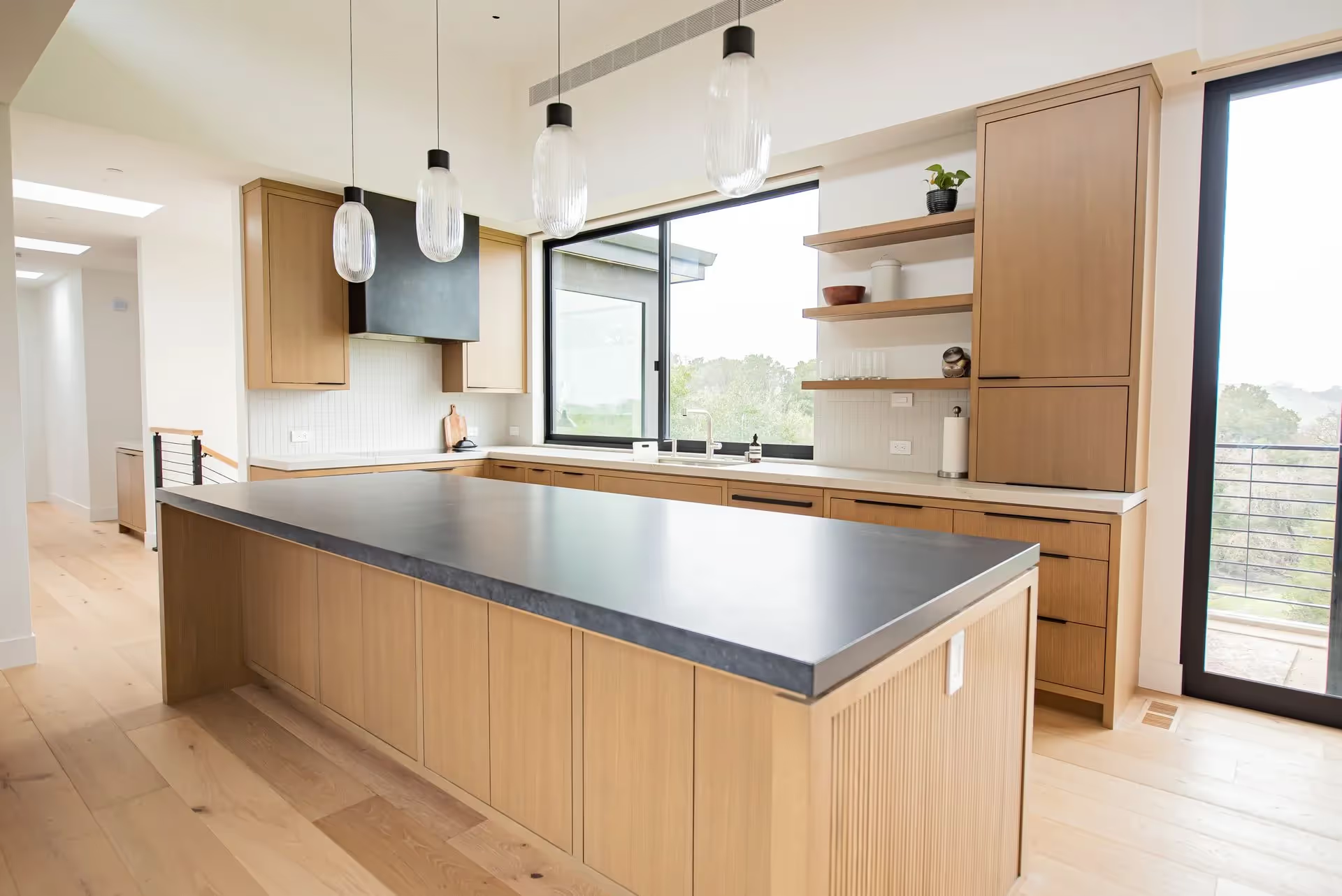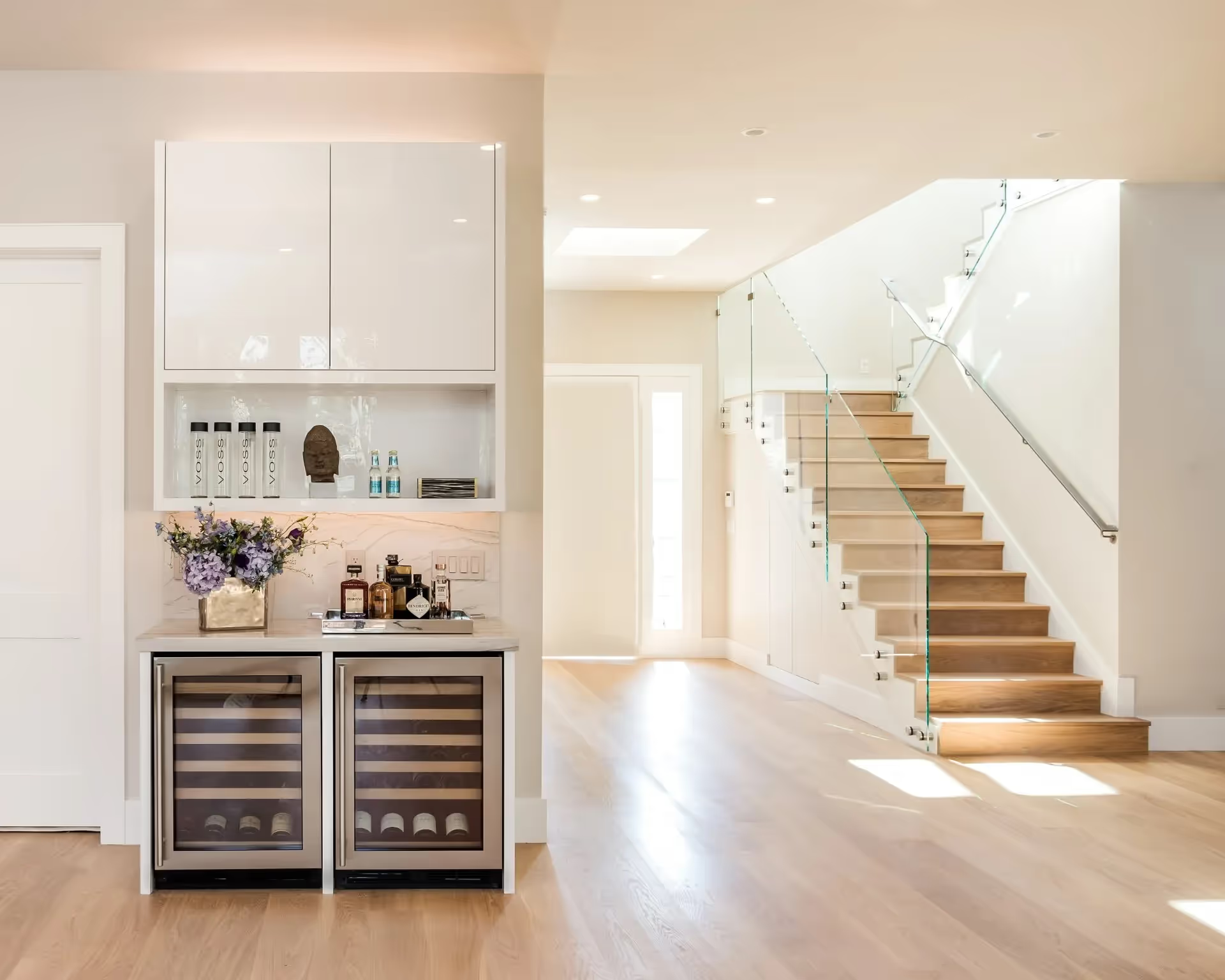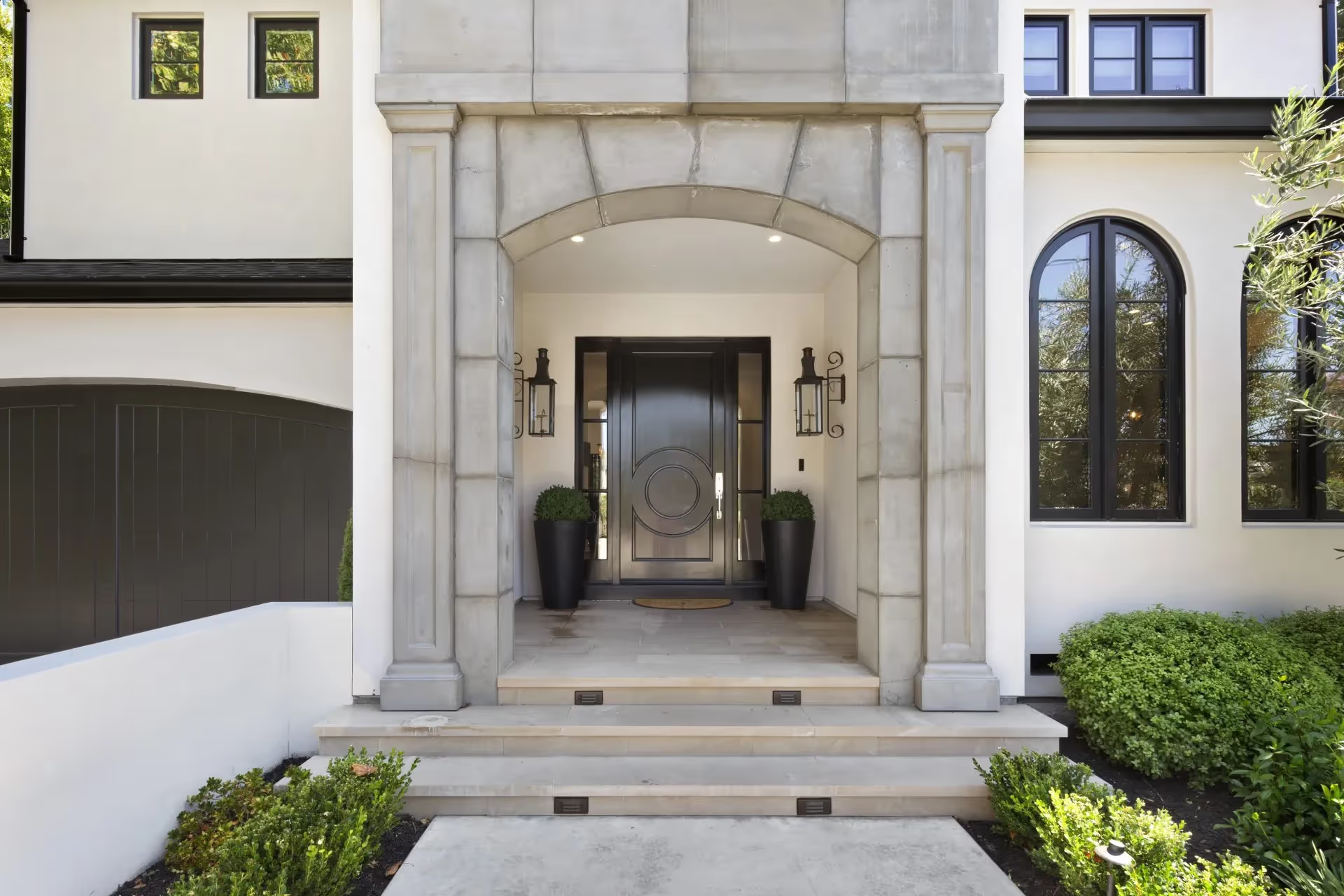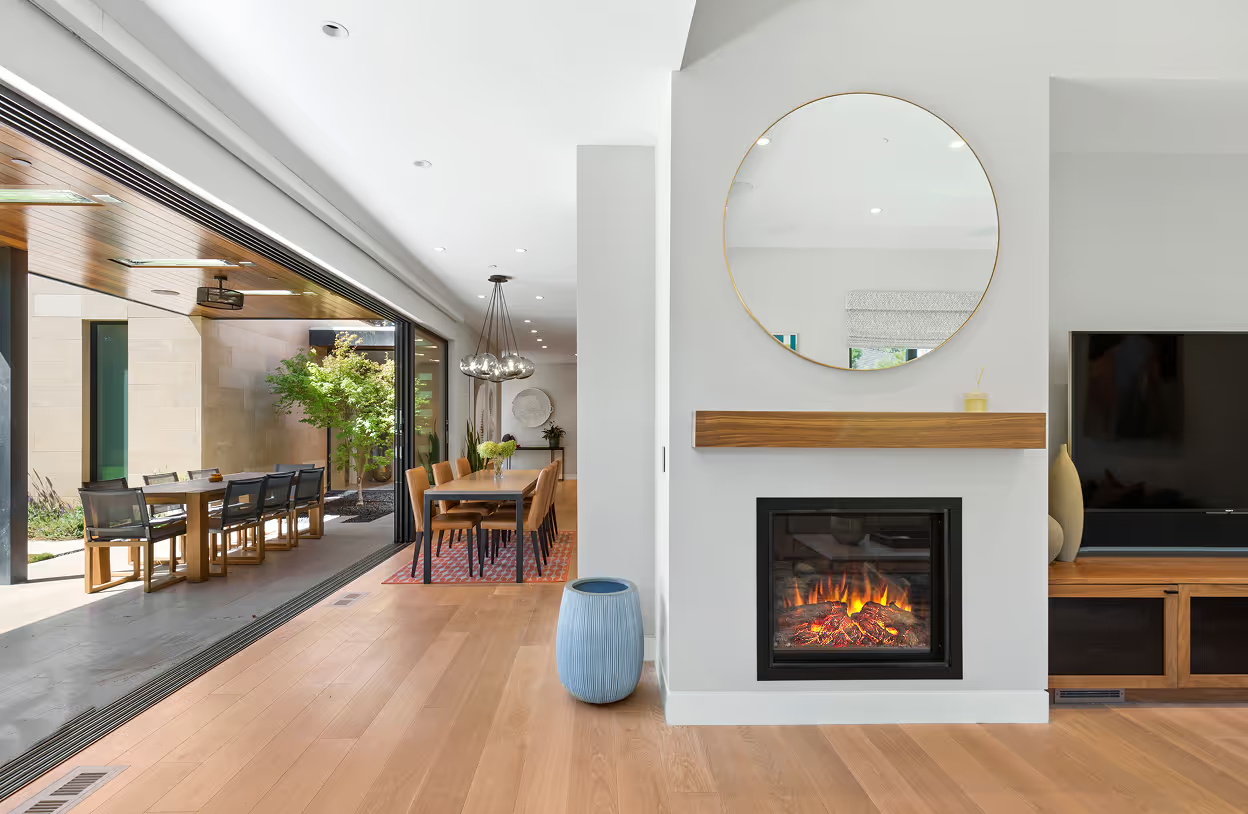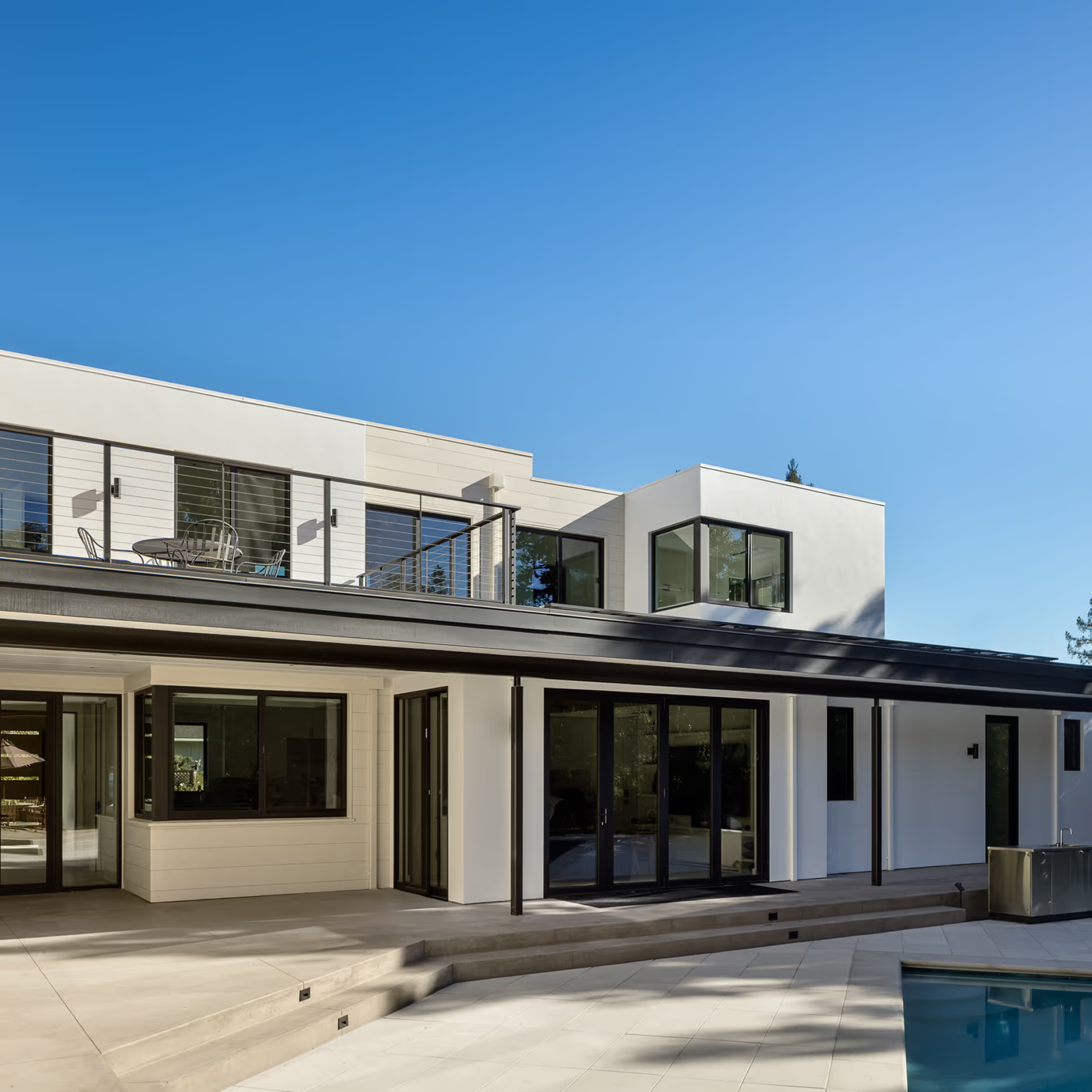
Protecting design intent during a luxury renovation means ensuring that every material choice, spatial proportion, and finish quality specified during the design phase survives the realities of construction. In the Bay Area, where projects routinely exceed $3M and involve multiple design professionals, the builder's role as a consistent advocate for the original vision is what separates a finished home that delivers on its promise from one that quietly disappoints.
Introduction
A luxury renovation can take years of planning, hundreds of decisions, and a level of trust that most homeowners extend only once. The design phase produces something close to a shared vision: renderings, material boards, architectural drawings that capture exactly what the finished home should feel and look like.
Then construction begins, and the variables multiply. Subcontractors make field calls. Materials arrive late. Substitutions get proposed. Without a builder who treats the original design as a commitment rather than a suggestion, that vision erodes in ways that are often invisible until the project is complete.
Key Takeaways
- Design intent refers to the full vision established during the design phase, including proportions, material selections, spatial flow, and finish quality.
- The builder's role is to enforce that vision on the job site, not just execute tasks assigned by subcontractors.
- Substitution protocols, procurement planning, and architect-designer communication are the three practical systems that protect the design.
- Homeowners who choose a builder with established relationships with high-end architects and interior designers are far less likely to experience design drift.
- Front-loading decisions before demolition begins is the most effective way to reduce mid-project disruptions and keep the design intact.
Things You Must Know
1. Design Drift Happens Gradually, Not All at Once
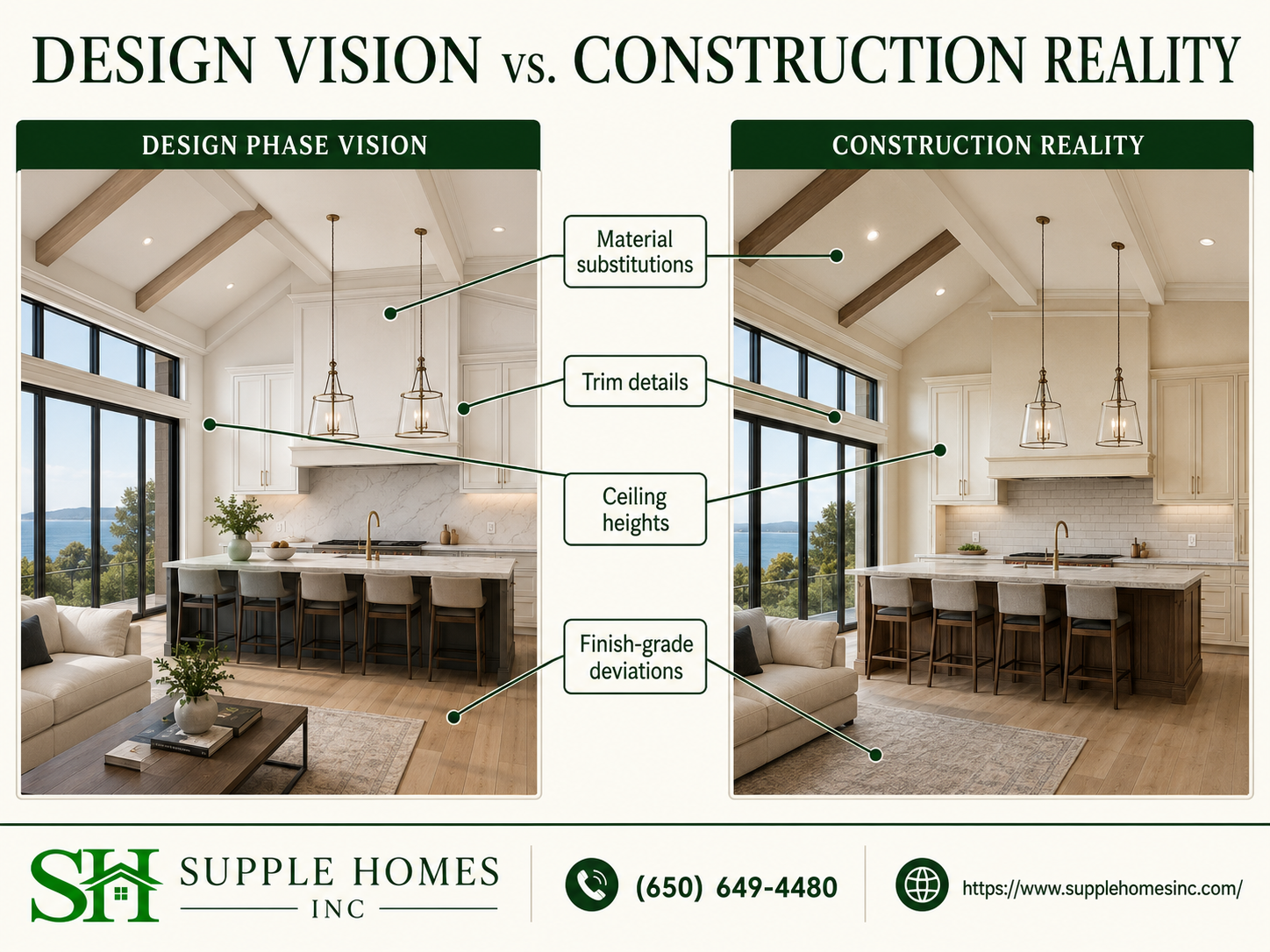
The most common way a luxury renovation loses its design integrity is not through a single bad decision but through dozens of small ones. A subcontractor suggests a simpler trim detail. A back-ordered tile gets swapped without formal approval. A ceiling height gets adjusted to accommodate ductwork without looping in the architect. Each individual change seems minor, but the cumulative effect is a finished home that no longer matches what was designed. Understanding that drift is a process rather than an event helps you ask the right questions before choosing a builder.
2. Procurement Timelines Are a Design Protection Tool
High-end finishes, custom cabinetry, stone slabs, and specialty hardware routinely carry lead times of twelve to twenty-four weeks or longer. A builder who does not plan procurement well in advance creates the conditions for substitution decisions under pressure, which is when design intent is most at risk. Before signing a contract, ask how the builder manages material lead times and what the process looks like when a specified item becomes unavailable. The answer reveals whether they have a system or are managing by reaction.
3. The Builder-Architect Relationship Matters More Than Most Homeowners Realize
In a luxury renovation involving an architect and an interior designer, the quality of their working relationship with the builder directly determines how well the design translates to the finished space. A builder who respects the architect's drawings and the designer's selections, and communicates proactively with both throughout construction, creates a coherent decision-making structure. A builder who operates in isolation from the design team makes field decisions that no one else sees until the damage is done. Ask both your architect and your designer which builders they actively choose to work with, and why.
What Does "Protecting Design Intent" Actually Mean on a Job Site?
Design intent is not just about aesthetics. It encompasses the proportions of a space, the way light moves through it, the tactile quality of materials, and the relationship between indoor and outdoor areas. These are decisions that took months to develop and that a skilled architect and designer refined carefully for a specific client and a specific home.
On the job site, protecting that intent means a builder who reads the drawings with the same level of care the architect used to produce them. It means flagging conflicts before they become problems rather than resolving them with whatever is fastest. It means holding subcontractors accountable to the specified details, not just the structural requirements.
The Three Systems That Keep a Design Intact Through Construction
1. Scope Alignment Between Drawings and Field Execution
Before any demolition begins, a builder who prioritizes design intent conducts a detailed review of the architectural drawings alongside the interior designer's specifications. This is not a formality. It is the moment where conflicts between structural requirements and design intentions get identified and resolved before they create pressure on the job site.
This alignment process also establishes a shared baseline. When a subcontractor proposes an alternative approach, there is a documented reference point for evaluating whether that alternative preserves or compromises the design.
2. A Clear Substitution Protocol
Material substitutions are inevitable in complex renovations. What separates builders who protect design intent from those who don't is not whether substitutions occur, but how they handle them when they do.
In a well-run project, the substitution protocol works like this:
- The builder identifies that a specified material is unavailable or presents a legitimate field conflict.
- The original specification and the proposed alternative are documented in writing.
- The architect and interior designer review both options and provide written approval before any change is made.
- The homeowner is informed of the substitution and the approved alternative.
- The change is logged in the project record for reference.
Homeowners should never discover a material substitution after it has been installed. If a builder cannot describe this kind of process clearly before you sign a contract, that is a meaningful signal about how they operate under pressure.
3. Coordinated Communication with the Design Team
A luxury renovation involving an architect and interior designer is not three separate professional relationships. It should function as a coordinated team with the builder at the center of construction-phase communication.
Builders who protect design intent schedule regular coordination meetings with the design team throughout construction, not just during the pre-construction phase. They share field photos, flag emerging conflicts early, and bring questions to the right professionals before making unilateral decisions. This rhythm of communication is what allows the design team to stay engaged without being called to the site for every minor issue.
How Design Intent Gets Protected When You're Not Watching Every Day
One of the most common concerns among homeowners undertaking a major renovation is how much personal oversight they'll need to provide. For busy executives and professionals in the Bay Area, the idea of becoming a part-time project manager is not realistic and shouldn't be necessary.
The answer lies in how the project is structured before construction begins. When material selections are finalized early, procurement timelines are built into the schedule, and a single experienced point of contact manages communication between the homeowner and the job site, the need for daily involvement drops substantially.
Weekly updates with clear photo documentation covering specific areas of the project let you stay informed without being pulled into decisions that should have already been made. The goal is not to keep you out of the process; it's to make sure the process was set up correctly so that your involvement is strategic rather than reactive. If you're curious how that kind of intentional structure plays out across the full scope of a custom home project, the thinking behind designing a custom home for growing families on the Peninsula covers some of the same front-loading principles.
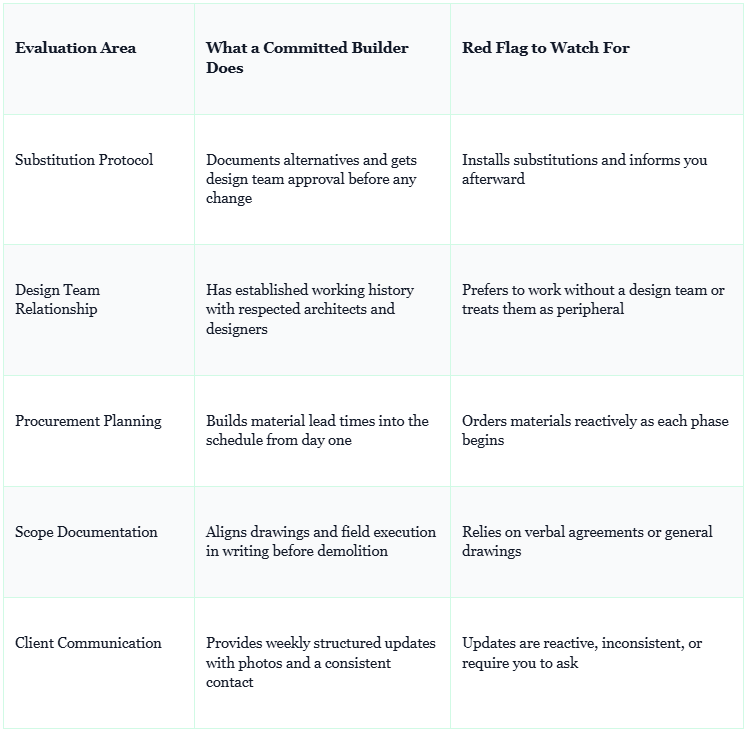
What to Look for When Evaluating a Builder's Commitment to Design Integrity
Common Mistakes Homeowners Make That Put Design Intent at Risk
- Choosing the right builder early in the process can be beneficial. In some cases, the builder is selected before the architect or designer and can recommend trusted design professionals who are well suited to the project. The key is ensuring the builder and design team collaborate closely so the scope, budget, and design vision remain aligned.
- Skipping the substitution protocol conversation before signing the contract. How a builder handles substitutions is one of the most revealing due diligence questions you can ask. If it never comes up before you sign, you don't actually know what their process is.
- Assuming weekly updates will happen automatically. In a complex renovation, communication requires structure. If the reporting cadence isn't agreed upon at the outset, updates become reactive rather than proactive.
- Evaluating builders on price before evaluating them on process. In a $3M to $8+M renovation, the cost of design drift or a poor substitution decision far exceeds any savings achieved by selecting a lower bid. The right question is not who is cheapest but who has the systems to protect what you spent months designing.
- Not asking the design team which builders they trust. Your architect and interior designer have direct field experience with multiple builders. Their recommendation reflects not just personal preference but observed behavior under real project conditions.
High-end finishes and specialty materials used in luxury renovations commonly carry lead times of twelve to twenty-four weeks or longer, with some custom stone, tile, and cabinetry items requiring even more extended procurement windows depending on country of origin and current supply chain conditions.
In the Bay Area, large-scale luxury renovations and custom ground-up builds frequently involve project budgets ranging from $3M to $8M or higher, with some high-end remodels in markets like Palo Alto, Los Gatos, and Los Altos reaching into the $10M to $11M range when infrastructure, technology integration, and premium site conditions are factored in.
Research on construction project outcomes consistently identifies communication breakdowns between builders and design teams as a leading contributor to cost overruns, schedule delays, and client dissatisfaction in residential renovation projects above a certain complexity threshold.
How Design Elements Like Lifestyle Integration Stay Intact Through a Long Build
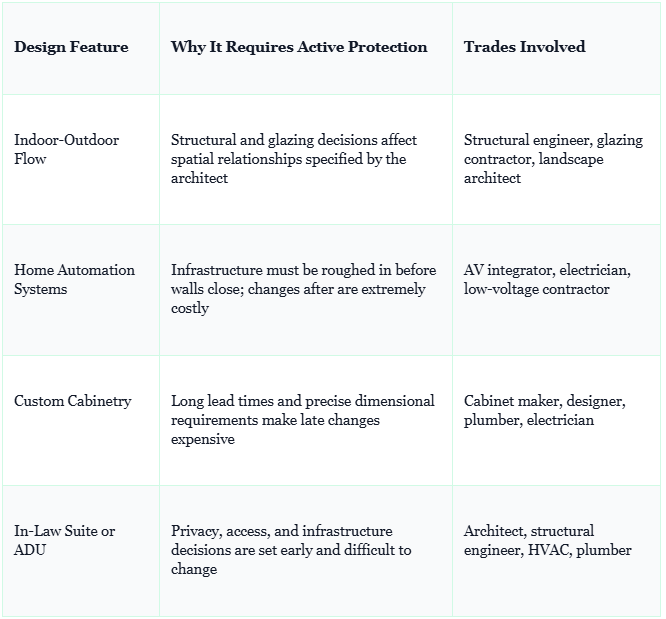
Protecting design intent extends beyond materials and finishes. In a luxury renovation built around how a family actually lives, features like indoor-outdoor flow, smart home systems, dedicated theater spaces, in-law suites, and kitchen configurations represent specific lifestyle decisions that need to be preserved as construction evolves around them.
These elements require coordination across multiple trades: AV integrators, structural engineers, kitchen designers, and cabinetmakers all need to operate from the same source of truth. A builder who understands this dimension of luxury construction maintains that coordination actively, not as a passive administrator but as the person who holds the full picture together. For a sense of how those lifestyle-focused design decisions get built into a home from the earliest planning stages, the approach to designing functional luxury for everyday living reflects the same philosophy.
Frequently Asked Questions
What does it actually mean for a builder to "protect design intent," and why does it matter in a luxury renovation?
Protecting design intent means ensuring that the vision established during the design phase, including the proportions, material selections, spatial flow, and finish quality, survives intact through the realities of construction. In a luxury renovation, dozens of subcontractors, field decisions, and substitution requests can quietly erode what the architect and designer originally specified. A builder who prioritizes design intent acts as the enforcer of that vision on the job site, pushing back when a shortcut would compromise the result and communicating proactively when a genuine field condition requires a decision. For homeowners investing several million dollars in a project, this discipline is the difference between a home that looks like the renderings and one that quietly doesn't.
We've worked with builders before who said the right things but let the design slip during construction. How do we know this won't happen again?
This is one of the most legitimate concerns a homeowner can bring to a builder conversation, and the answer lies in systems and relationships rather than promises. Builders who consistently protect design intent maintain documented scope alignment between architectural drawings and field execution, hold regular coordination meetings with the architect and interior designer, and flag substitution requests before acting on them rather than after. Ask specifically how the builder handles the moment when a specified material is back-ordered or when a subcontractor proposes an alternative. Their answer reveals whether they have a real process or just good intentions. Past client references from projects that involved an architect or designer are the most reliable signal, because those professionals see firsthand whether the builder advocates for the design or works around it.
How involved do we need to be during construction to make sure our design choices are built correctly?
For clients who have established trust with the right builder, the level of required involvement during construction drops significantly, and that is by design. A builder who genuinely protects design intent structures the process so that decisions are front-loaded: materials are selected, lead times are confirmed, and substitution protocols are agreed upon before demolition begins. Weekly updates with clear photo documentation and a single point of contact allow you to stay informed without being pulled into daily site decisions. The goal is for you to be confidently hands-off during execution, not because you're being kept in the dark, but because the framework was built correctly at the start.
What happens when a specified material or finish is unavailable mid-project? Who decides what the replacement is and how?
In a well-run luxury renovation, substitution decisions follow a clear chain of communication. The builder identifies the issue, documents the original specification and the proposed alternative, and presents both to the architect or designer for approval before any change is made in the field. Homeowners should never learn about a material substitution after it has already been installed. Builders who are serious about design integrity also build procurement timelines that account for the long lead times common in high-end finishes, reducing the frequency of substitution moments in the first place. Understanding a builder's substitution protocol before you sign a contract is one of the highest-value due diligence questions you can ask.
How does the relationship between the builder, architect, and interior designer affect whether the design vision actually gets built?
The quality of that three-way relationship is arguably the single biggest determinant of whether a luxury renovation delivers on its design promise. When a builder respects the architect's intent and the designer's selections, and communicates clearly with both throughout construction, the project has a coherent decision-making structure that resolves conflicts without eroding the design. When those relationships are siloed or adversarial, field decisions get made in isolation and the cumulative effect is a finished home that drifts from the original vision in ways that are difficult to pinpoint but easy to feel. Look for a builder who has established working relationships with high-end architects and designers, and whom those professionals actively choose to recommend. That alignment reflects a shared commitment to the outcome, not just the contract.
Closing Thoughts and Next Step
A luxury renovation in the Bay Area represents one of the most significant investments a family will make, and the design that took months to develop deserves a builder who treats it as a commitment rather than a starting point subject to ongoing negotiation.
The discipline of protecting design intent is not a soft concept. It lives in procurement planning, substitution protocols, coordinated team communication, and a builder who understands that the finished home will be compared to what was promised, not just to what was structurally sound. That standard is worth holding to.
If you're planning a large-scale renovation or custom build in the Bay Area and want to work with a team that has built its reputation on delivering exactly what was designed, Supple Homes Inc. would welcome a conversation. You can reach the team directly at (650) 649-4480 to discuss your project, your design team, and how the process works from the first meeting through the final walkthrough.