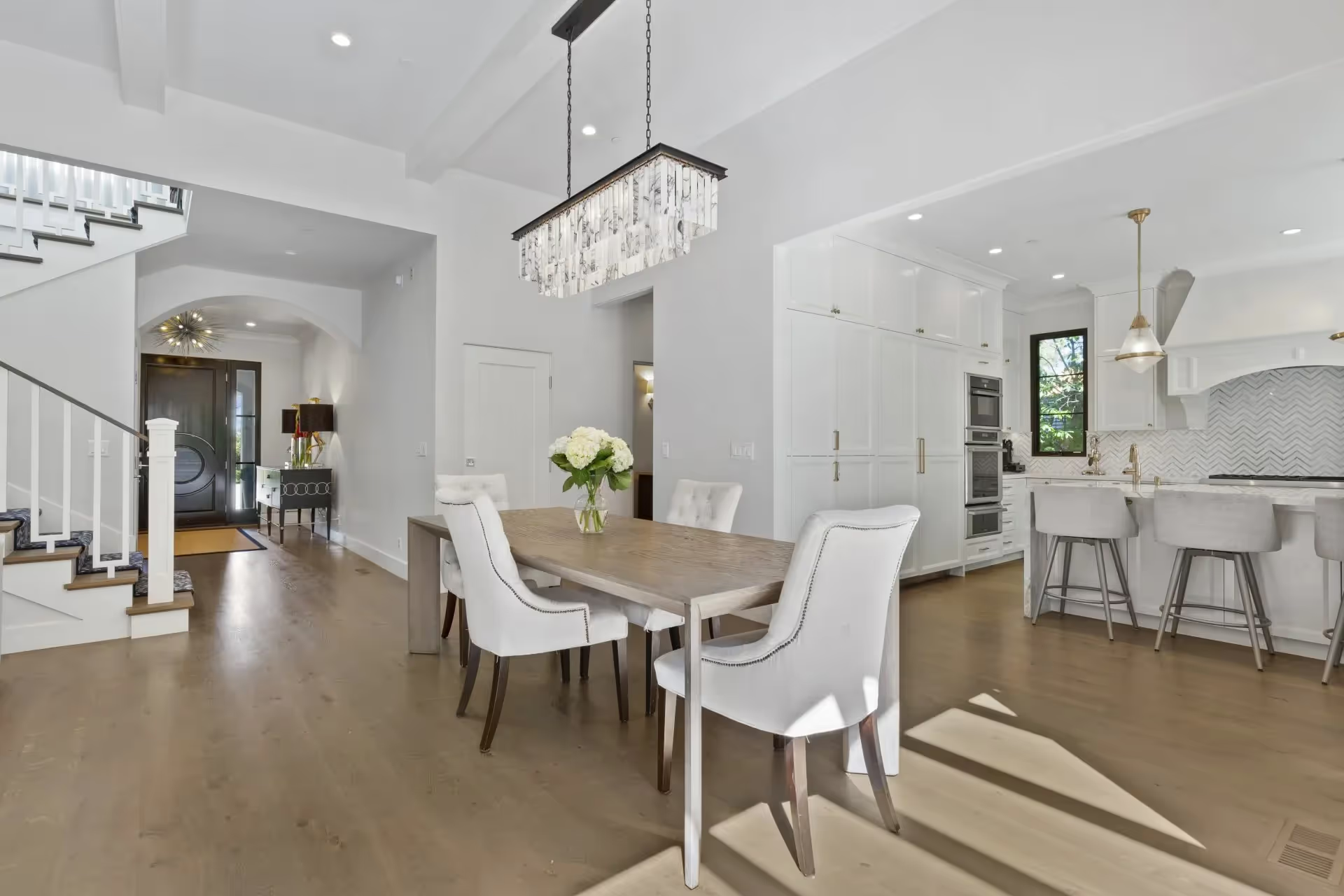
Designing a custom home for a growing family on the San Francisco Peninsula means balancing space flexibility, safety, and long-term livability within a region known for smaller lots and premium construction costs. The most effective approach combines adaptable floor plans, durable material choices, and a builder who understands Peninsula-specific zoning and site constraints. Planning ahead for how your family's needs will shift over time is the most valuable investment you can make early in the design process.
Families on the Peninsula face a particular challenge when building custom: land is scarce, costs are significant, and the needs of a household with young children today look very different from what that same household will need in ten or fifteen years. Getting the design right from the start means fewer costly changes down the road and a home that genuinely works for every stage of family life.
Key Takeaways
- Flexible floor plans, such as rooms that can shift from playroom to home office to guest suite, add long-term value without requiring extra square footage.
- Peninsula lots often come with strict setback requirements and height restrictions, so early coordination with a local builder is essential before finalizing any design.
- Durable, low-maintenance materials pay for themselves quickly in a high-traffic family home, especially in the Peninsula's mild but occasionally damp coastal climate.
- Dedicated zones for noise-generating activities, like homework, music, and play, reduce household friction and make open-concept layouts more practical for families.
- Safety features built into the original design, including non-slip surfaces, secured storage, and appropriate window heights, are far less expensive than retrofitting later.
- Choosing a builder with direct experience on Peninsula projects reduces permitting delays and helps you navigate local regulations more efficiently.
Things You Must Know
1. Lot Constraints Shape Your Design Before Anything Else
On the Peninsula, the size and shape of your lot often determines your design options more than your budget does. Many parcels in communities from Redwood City to Palo Alto carry strict setback rules, FAR (floor area ratio) limits, and tree preservation requirements. Before falling in love with a particular floor plan, have a local professional evaluate the lot's buildable envelope. This one step prevents weeks of redesign later.
2. "Growing With Your Family" Requires Intentional, Not Just Extra, Space
Adding square footage doesn't automatically make a home more functional for a family. A 2,800-square-foot home with well-placed flexible rooms often serves a growing family better than a 3,500-square-foot home with a rigid layout. Think about how rooms will be used in five, ten, and fifteen years, and build adaptability into the design from day one rather than hoping future renovations will solve it.
3. Peninsula Construction Costs Vary Widely by Scope and Site
Custom home construction costs on the Peninsula can vary significantly depending on lot conditions, finishes, structural complexity, and current material pricing. Hillside lots, expansive soil areas, or sites near the Bay may require additional foundation or drainage work that affects the overall budget. A detailed pre-construction assessment from an experienced local team helps you set realistic expectations before finalizing any design decisions.
What Makes Family-Focused Design Different on the Peninsula?
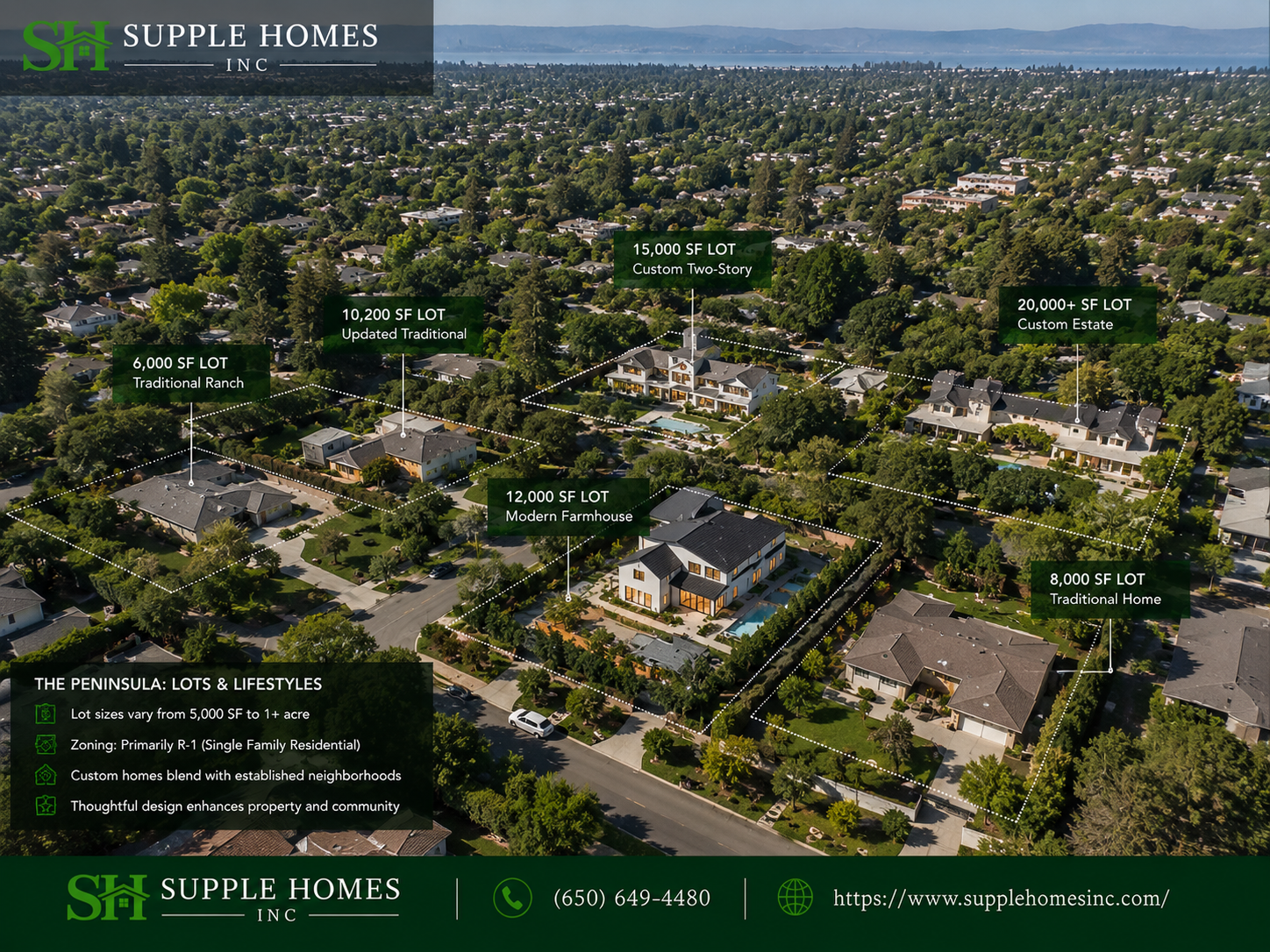
The San Francisco Peninsula sits in a unique position. It has some of the most desirable residential land in the country, combined with some of the most constrained. Communities like Menlo Park, Atherton, Los Altos, and Burlingame offer excellent schools and established neighborhoods, which is exactly why families want to build here rather than relocate. But those same communities have mature tree canopies, narrow streets, and lots that haven't changed much in decades.
That context shapes every design decision. You're rarely working with a blank slate, and that's not a disadvantage. It just means that good design on the Peninsula requires local knowledge from the start. Families who try to import a floor plan from another region, or who work with a builder unfamiliar with local permitting, often find themselves mid-project with unexpected constraints and budget pressure.
If you're exploring what high-performance construction looks like in this region, it's worth reading about building a high-performance luxury home on the San Francisco Peninsula to understand what modern construction standards can deliver here.
How Should You Structure the Floor Plan for a Family That Will Change?
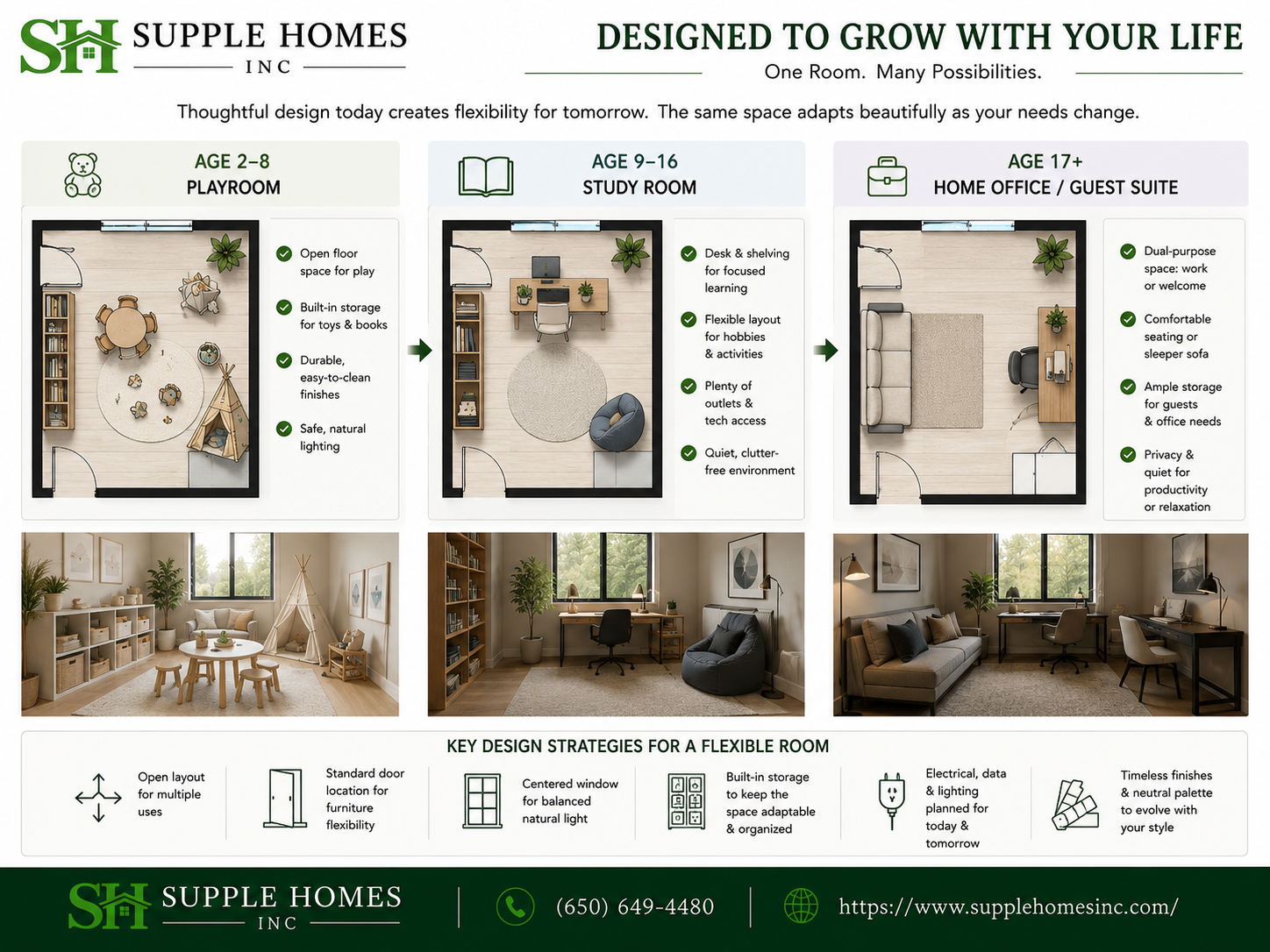
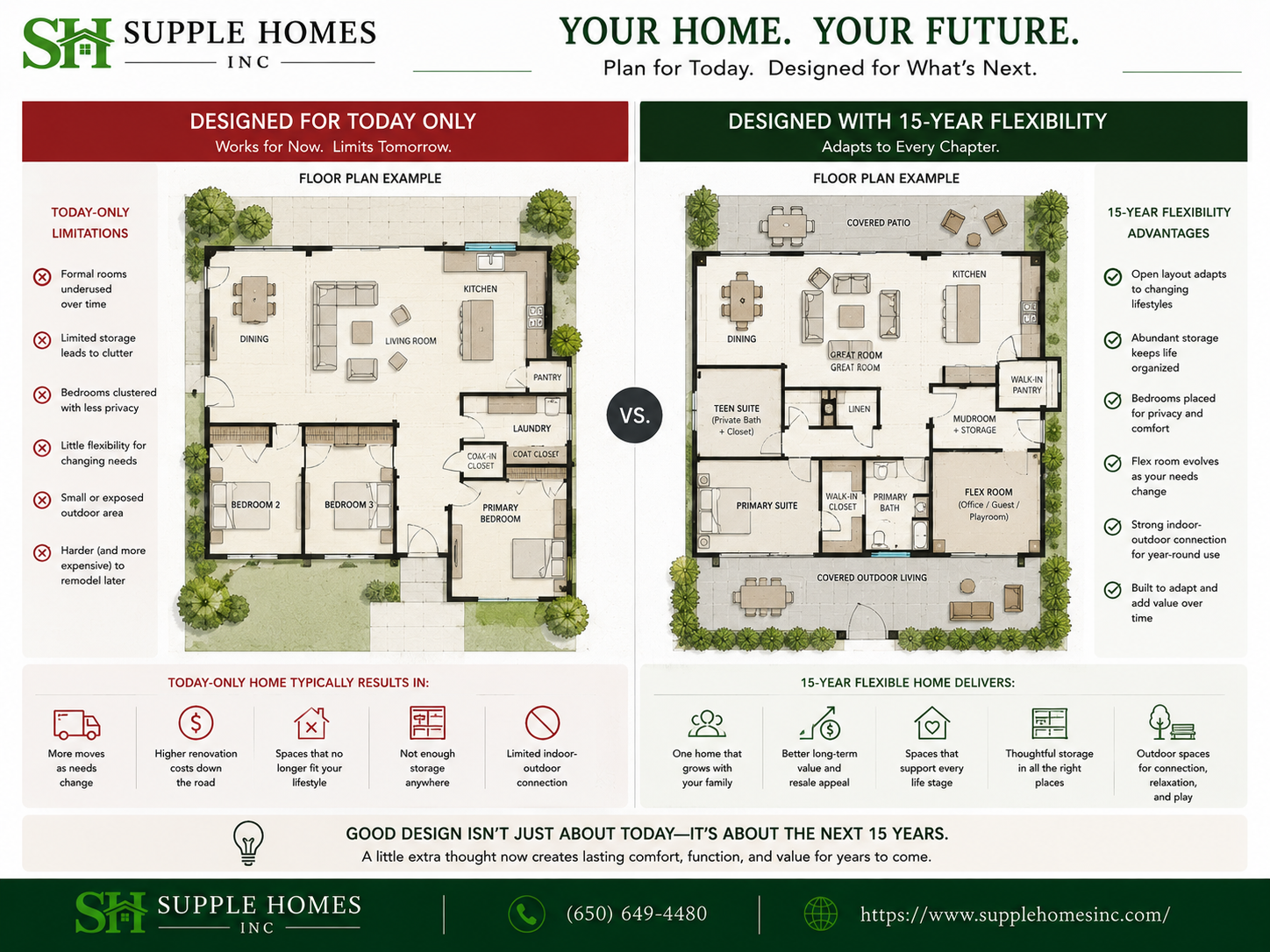
The most useful framing when designing for a growing family is to think in phases. Phase one is the early years, when young children need supervision, proximity, and safe spaces to play. Phase two is the middle years, when kids need study space, privacy, and room for their own social lives. Phase three is when those children are adults, and the home may need to serve a couple again, possibly with space for visiting family or even multigenerational living.
A floor plan that accounts for all three phases doesn't need to be enormous. It needs to be thoughtful. Some practical approaches include:
- Designing a bonus room or accessory space on the main floor that can serve as a playroom now and a home office or in-law suite later.
- Sizing bedroom closets generously, since storage needs change dramatically as children grow.
- Including a mudroom or transitional entry space, which is heavily used in family homes and often undervalued in early planning.
- Locating at least one full bathroom on the main living level for long-term accessibility and convenience.
- Designing the primary suite so it offers acoustic separation from children's bedrooms without isolating parents entirely from the household.
Studies on residential design adaptability suggest that homes built with flexible room functions and adequate storage retain higher long-term resale value compared to homes with rigidly assigned spaces, particularly in family-oriented markets.
What Materials Hold Up Best in a Family Home on the Peninsula?
Material selection for a family home is a different conversation than material selection for a single-person or couple's residence. Traffic is higher, accidents happen, and surfaces need to withstand years of use without looking worn. The Peninsula's climate, which is mild year-round but can be damp near the Bay and foggy along the coastal corridor, adds another layer of consideration.
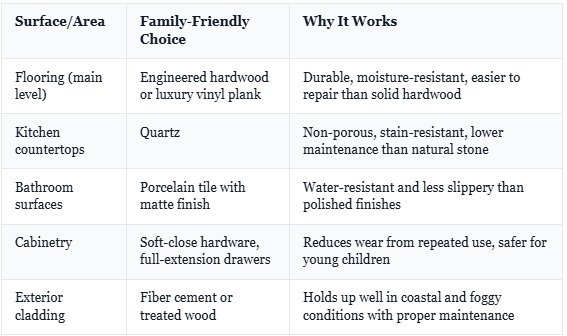
The upfront cost difference between budget and mid-grade materials in high-traffic areas may seem significant, but replacement and repair costs over a decade almost always exceed the initial savings from choosing lower-quality finishes in those spots.
How Do You Maximize Space on a Typical Peninsula Lot?
Many Peninsula lots are generous by urban standards but constrained by suburban expectations. A 6,000 to 8,000 square foot lot in Palo Alto or San Mateo may feel large when you're standing in the yard, but after setbacks, easements, and any existing structures, the buildable footprint can be surprisingly limited.
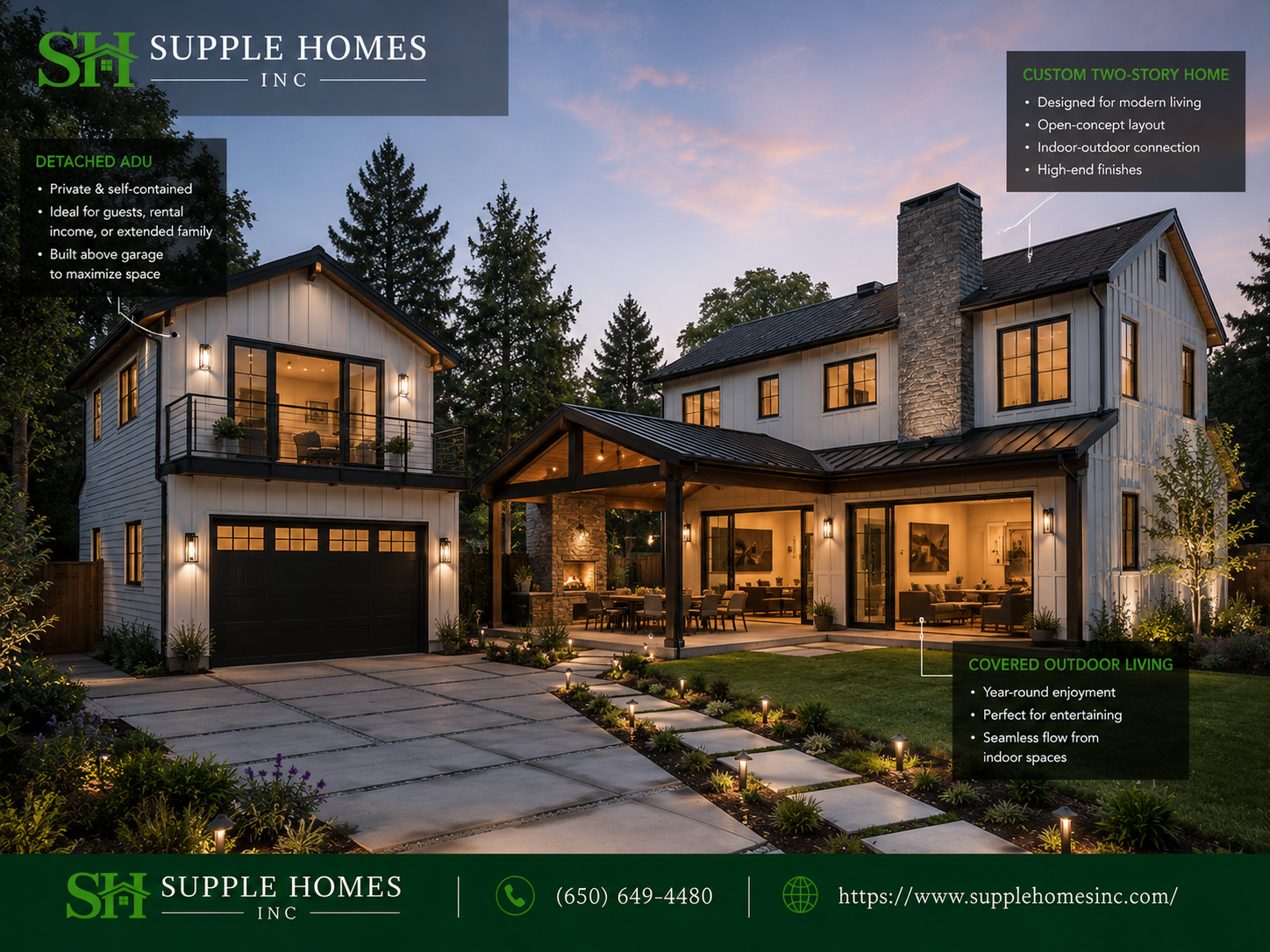
Vertical thinking helps. A well-designed two-story home on a modest footprint can deliver more usable square footage than a sprawling single-story that consumes the outdoor space families actually want. Some strategies that work well on Peninsula lots include:
- Design upward, not outward. Two-story designs preserve yard space and often meet FAR limits more easily than sprawling single-story plans.
- Use outdoor space intentionally. Covered patios, defined play areas, and connected indoor-outdoor flow extend usable square footage without adding to the home's footprint.
- Minimize circulation waste. Long hallways and oversized landings consume square footage without providing functional space. Work with your designer to keep circulation efficient.
- Plan garage and utility areas carefully. On many Peninsula lots, the garage occupies a significant portion of the footprint. Consider whether an attached ADU above the garage fits within local zoning and serves your family's needs.
- Explore ADU options early. Many Peninsula cities have updated their ADU ordinances. A detached or attached accessory dwelling unit can serve as a guest suite, au pair quarters, or eventual rental income.
For a thorough look at how the full building process unfolds from planning through completion, the guide on the custom home building process from planning to final walkthrough walks through each stage in practical detail.
ADU adoption on the Peninsula has accelerated following California's AB 68 and SB 13 legislation, with several Peninsula cities reporting significant increases in ADU permit applications over recent years.
What Safety Features Should Be Built Into the Design?
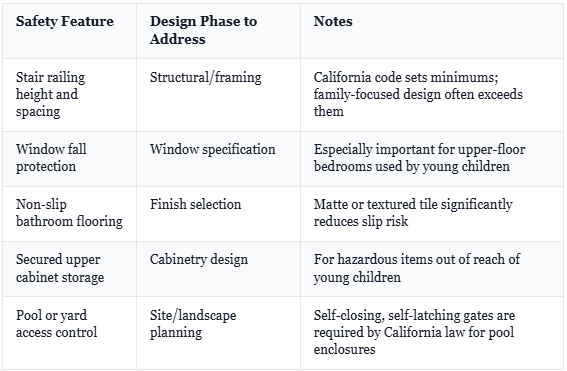
Safety in a family home is most effective when it's built into the original design rather than added as an afterthought. Retrofitting safety features after construction is both more expensive and usually less elegant than integrating them from the start.
The conversation about safety also extends to air quality and water systems. Many Peninsula families are now specifying whole-home filtration, HVAC systems with enhanced filtration, and low-VOC or no-VOC finishes throughout. These choices matter more in a home where young children are present for most of the day.
Research on indoor air quality in residential settings has linked elevated VOC concentrations from paints, adhesives, and flooring materials to increased health concerns in children, particularly in tightly sealed, well-insulated homes.
Common Design Mistakes Families Make (and How to Avoid Them)
- Underestimating storage needs. Families accumulate significantly more gear, clothing, and equipment than the average household. Most people who have lived in a house for five or more years wish they had more storage. Design it in now.
- Over-investing in formal spaces. Formal dining rooms and front living rooms that serve only occasional use may feel aspirational during planning but often become underused in active family homes. Redirect that square footage to everyday spaces.
- Ignoring acoustic separation. Open-concept floor plans are popular, but without deliberate acoustic planning, homework time, instrument practice, and video calls all compete in the same sonic environment.
- Designing for today's ages only. A home designed around a toddler's needs may not suit a teenager's. Think across all childhood stages when placing rooms, planning outdoor access, and sizing communal spaces.
- Skipping the pre-design site analysis. On Peninsula lots, soil conditions, solar orientation, prevailing fog patterns, and neighbor proximity all affect design decisions. Skipping a proper site analysis can lead to costly mid-design corrections.
- Choosing a builder without local experience. The Peninsula permitting process, relationships with local planning departments, and familiarity with regional subcontractors all affect project timelines. Local experience shortens your path from design approval to move-in.
Before you finalize any decisions, the article on what to know before building a custom home on the San Francisco Peninsula covers several important points that catch families off guard during the planning phase.
Industry surveys of custom home clients consistently identify insufficient storage and poor acoustic planning as among the most common regrets reported by homeowners within the first three years of occupancy.
Frequently Asked Questions
How can I design a floor plan that actually "grows" with my kids?
The most effective approach is to identify two or three rooms that can serve different purposes as your children age. A room near the main living area might serve as a playroom for the first several years, then transition to a study or hobby room as kids enter school age, and eventually function as a home office or guest suite when the house is less occupied. Building in proper lighting, adequate square footage, and closet space in these rooms from the start is what makes the transition practical rather than aspirational.
What are the best materials for a busy family with young kids?
Durability and ease of maintenance should drive material choices in high-traffic areas. Quartz countertops, engineered hardwood or luxury vinyl plank flooring, porcelain tile in bathrooms, and soft-close cabinetry hardware all hold up well over years of heavy use. The Peninsula's climate leans mild but can be damp in certain corridors, so materials with good moisture resistance matter particularly for ground-floor and exterior applications.
How can I maximize the small lots typical of the Peninsula?
Thinking vertically is the most reliable strategy. A two-story design keeps the home's footprint smaller while delivering the square footage a family needs, and it preserves outdoor space that's genuinely valuable in this region. Working with a designer and builder who know the local FAR and setback rules helps you identify exactly how much buildable space you have and how to use it efficiently. ADU options above garages or as detached structures are also worth evaluating early, particularly if multigenerational living or long-term flexibility is a priority.
What are the key safety considerations to keep in mind?
Safety features are most cost-effective and visually clean when designed into the original build rather than added afterward. The most commonly overlooked items include window fall protection on upper floors, acoustic separation between adults' and children's areas, non-slip flooring in bathrooms, and compliant pool enclosures if outdoor water features are planned. Indoor air quality is increasingly part of this conversation, with low-VOC finishes and whole-home filtration systems being specified more frequently in Peninsula family homes.
How do I choose the right local team for this project?
Experience with Peninsula-specific permitting, familiarity with local subcontractors, and a clear track record of family-oriented custom homes are the most practical criteria. Ask to see completed projects in similar communities, ask about the team's experience with lots that have constraints like setbacks, trees, or slope, and make sure communication expectations are set clearly before any agreements are signed. For more guidance on evaluating builders in this region, the resource on how to choose a custom home builder in Menlo Park covers the right questions to ask.
Building a Home Your Family Can Actually Live In
A well-designed custom home for a growing family isn't about maximizing square footage or following design trends. It's about building something that works for real life across many years: mornings before school, weekend projects, teenage study sessions, and the quieter years that eventually follow.
On the Peninsula, that also means working within the real constraints of your lot, your local zoning, and the regional construction environment. Families who plan for those realities from the start build better homes and have smoother projects than those who discover the constraints mid-process.
If you're ready to start planning a custom home designed around how your family actually lives, Supple Homes Inc. works with Peninsula families to design and build homes that are practical, flexible, and built to last. Reach out to the team at (650) 649-4480 to discuss your project and lot, and to get a clear picture of what's possible in your specific location.