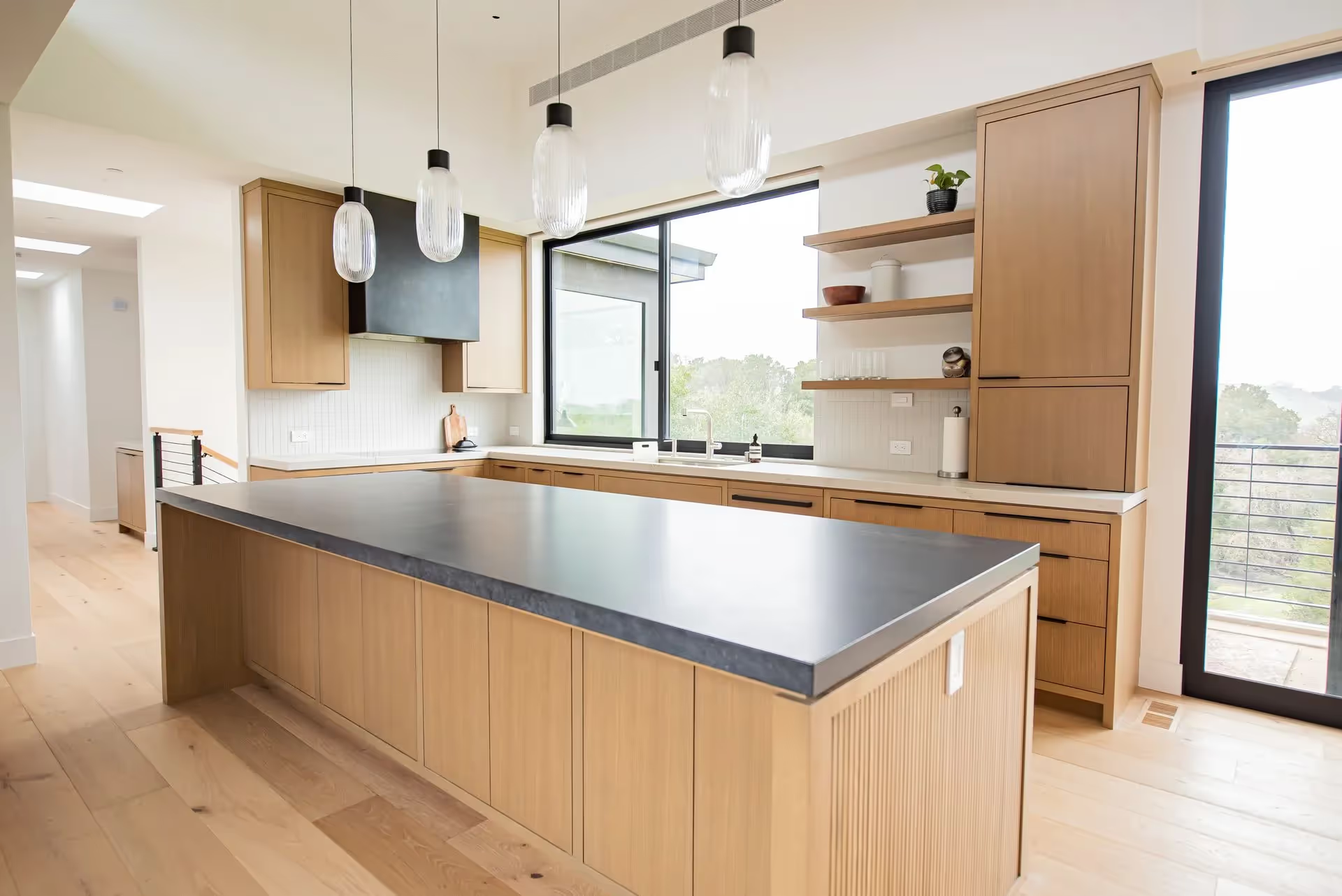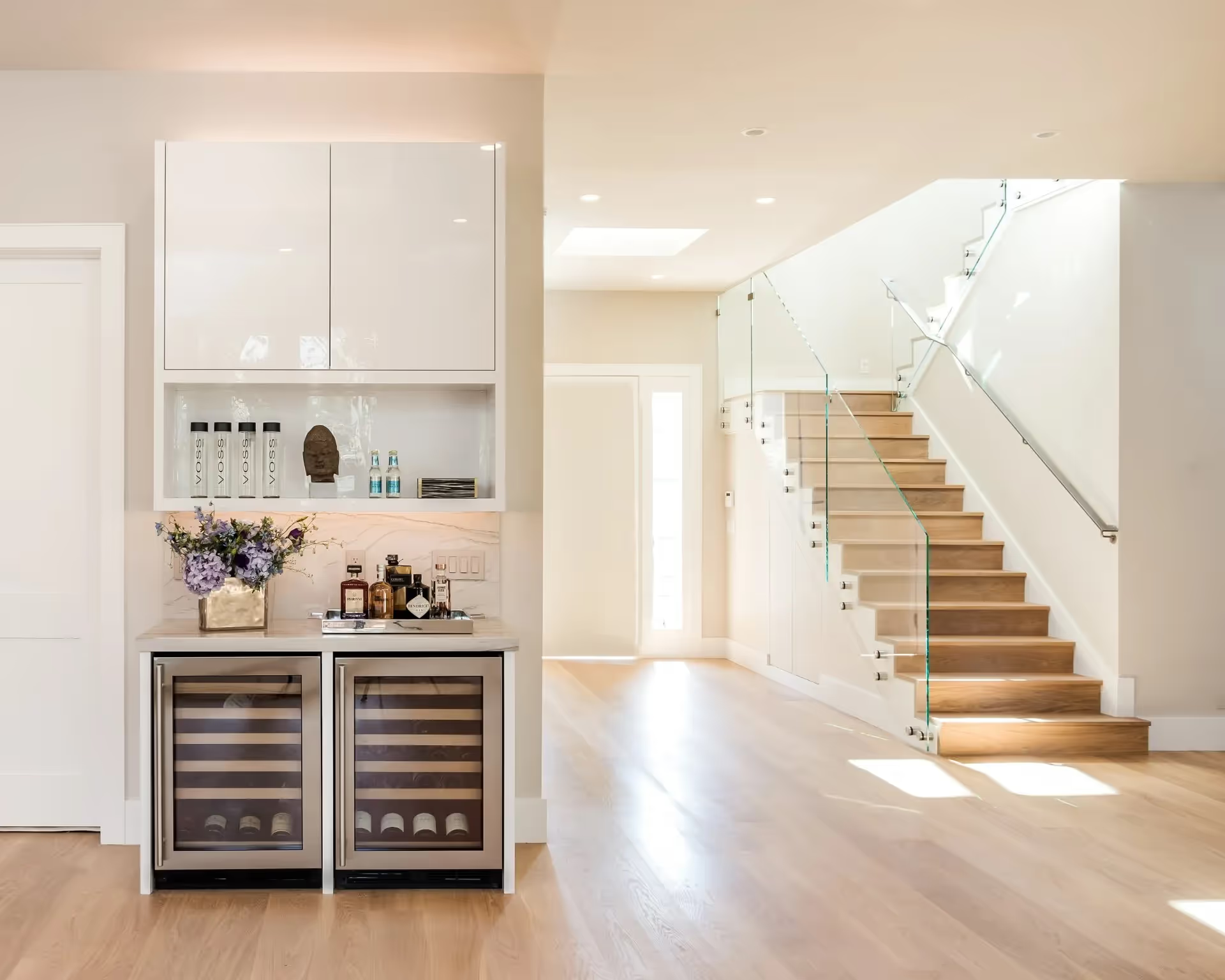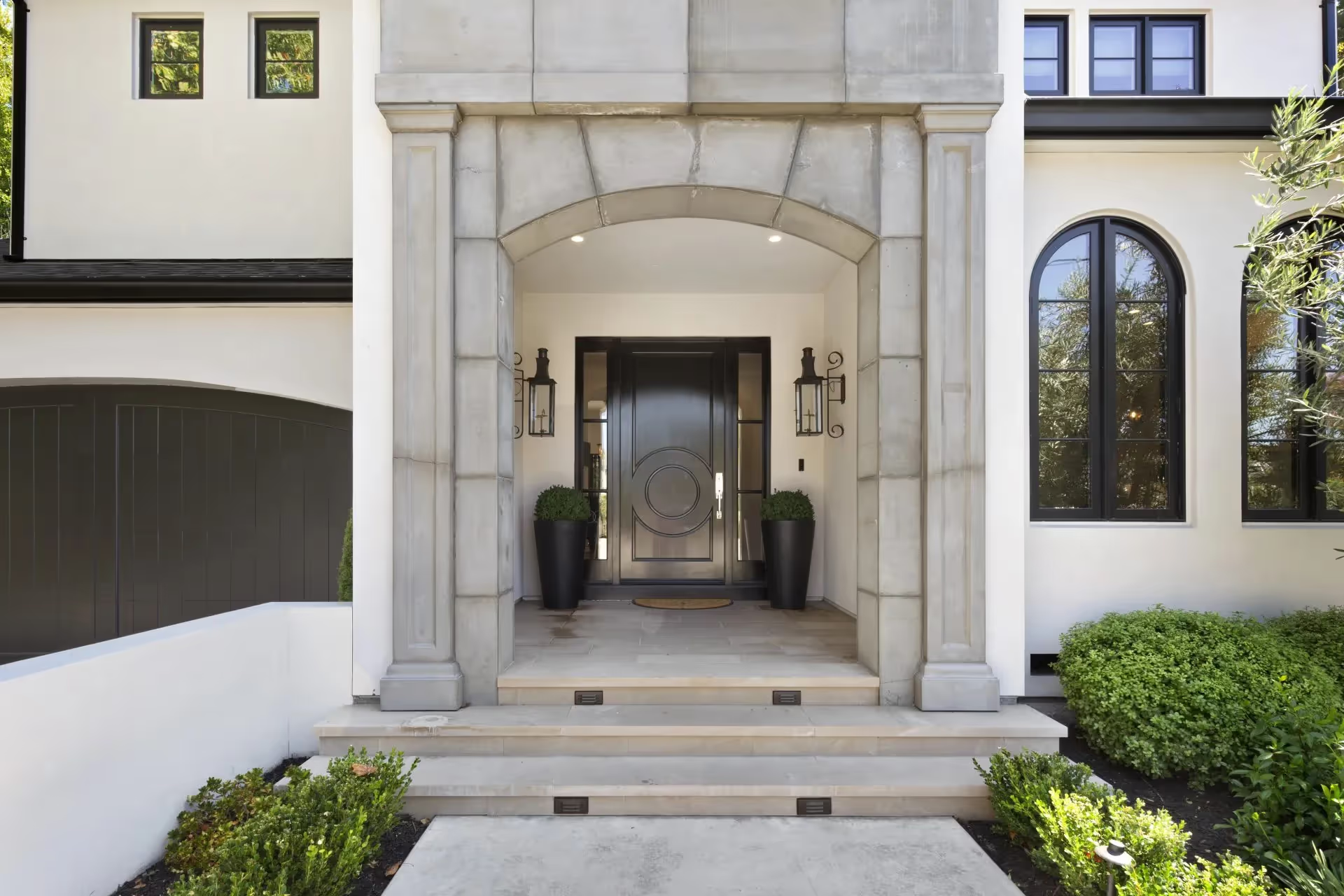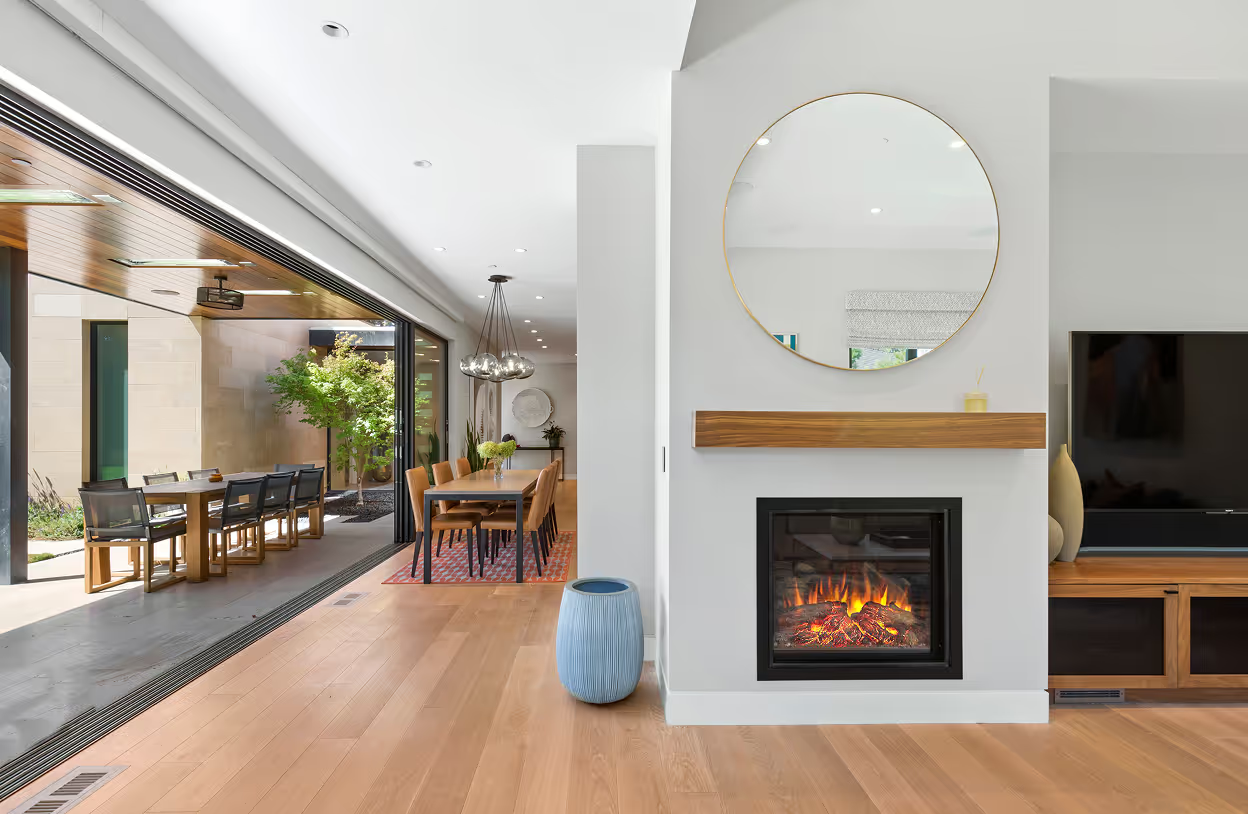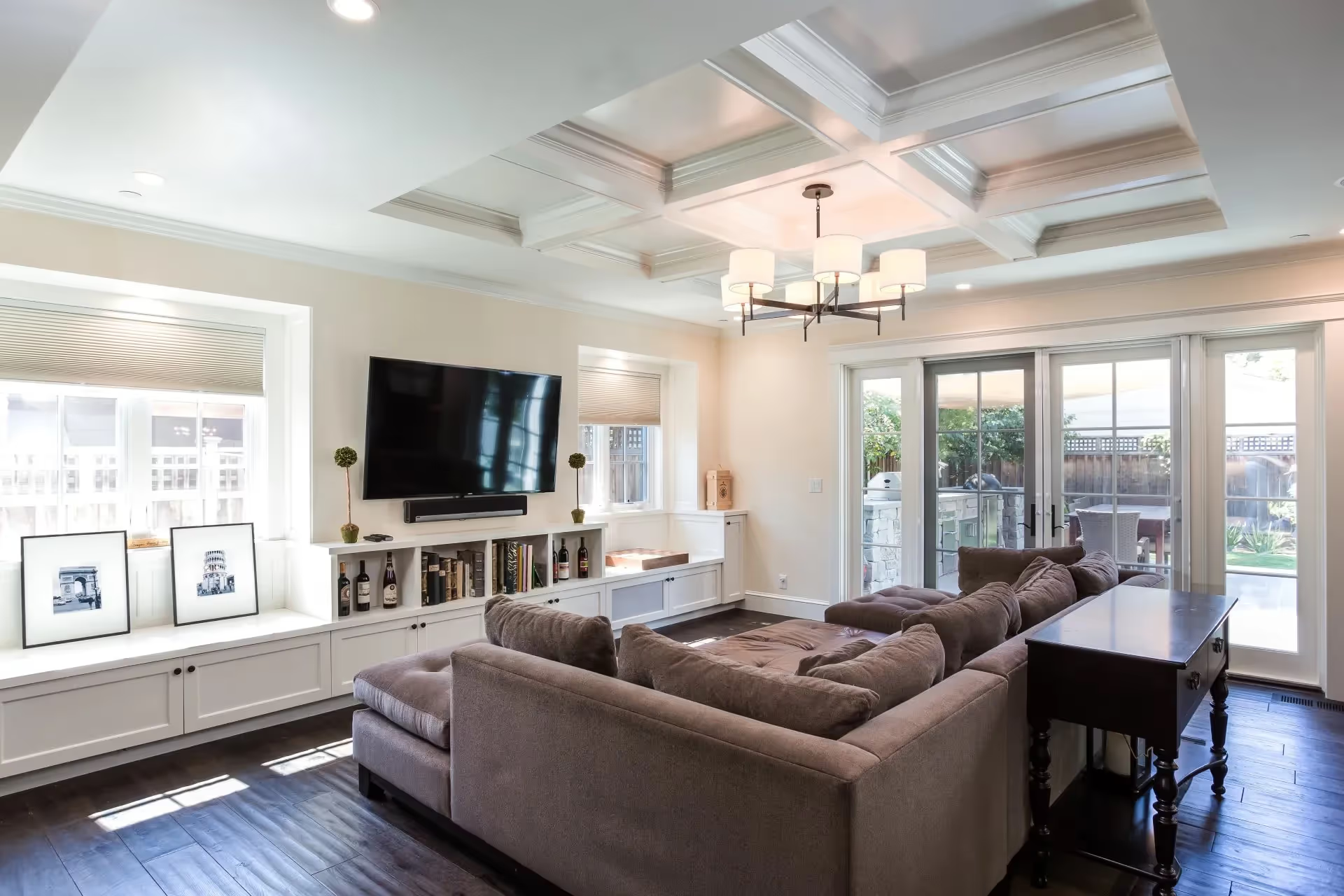
A high-performance luxury home on the San Francisco Peninsula goes well beyond premium finishes and square footage. It integrates advanced building systems, climate-responsive design, and precision construction to deliver measurably better comfort, efficiency, and durability. On the Peninsula specifically, these homes are engineered around the region's coastal climate, hillside topography, seismic activity, and the lifestyle expectations of one of the most discerning buyer markets in the country.
Most people equate luxury with aesthetics. Marble countertops, soaring ceilings, a wine cellar. Those things matter, but they don't tell you whether a home will hold its temperature on a cold Half Moon Bay evening, stay structurally sound through a 6.0 earthquake, or actually reduce your energy bills after a $5 million build. High-performance luxury is a different standard entirely, and on the Peninsula, buyers are increasingly demanding both.
Key Takeaways
- High-performance homes combine premium aesthetics with measurable building science outcomes: tighter envelopes, better air quality, and lower energy use.
- The Peninsula's coastal climate, seismic risk, and fog patterns require region-specific design decisions that generic luxury construction ignores.
- Indoor-outdoor integration is not just a style preference here; it's a functional design strategy shaped by the Peninsula's mild but variable weather.
- Smart home technology in this tier goes beyond convenience gadgets and includes integrated energy management, whole-home automation, and resilience systems.
- Construction quality at this level involves structural details, material selection, and third-party testing that most production builders never implement.
- Homes built to high-performance standards in this market tend to hold value better during market corrections and command stronger resale premiums.
Why the Peninsula Creates a Unique Set of Performance Demands
The San Francisco Peninsula is not a forgiving environment for poorly built homes. Fog rolls in from the Pacific and lingers for weeks, driving moisture into wall assemblies that weren't designed for it. Hillside lots from Hillsborough to Los Altos Hills create drainage challenges, foundation complexity, and wind exposure that flat-lot construction simply doesn't encounter. And the seismic reality of building near active fault systems means structural performance isn't optional.
Beyond the physical environment, Peninsula buyers are sophisticated. Many have owned multiple homes, worked in technology or finance, and have strong opinions about what "quality" actually means at a technical level. That creates a market where vague claims about luxury no longer close deals. Buyers want to understand R-values, air change rates, and structural redundancy. Builders who can't speak that language are losing ground to those who can.
The Peninsula's coastal climate zones, particularly those west of Highway 280, regularly experience summer fog cover that suppresses natural light for 60 to 90 days per year and keeps ambient moisture levels significantly higher than inland Bay Area communities. This directly affects how window systems, vapor barriers, and HVAC equipment should be specified in a high-performance build.
What Actually Separates Building Performance From Building Aesthetics
There's a real difference between a home that looks expensive and one that performs. A traditional luxury home might feature imported stone, custom millwork, and a designer kitchen, all of which are legitimate value signals. But if that same home leaks conditioned air through poorly detailed window flashing, cycles its HVAC system every 8 minutes because the load calculation was done wrong, or develops moisture problems in the crawl space after two winters, it isn't high-performance regardless of how it photographs.
Performance in the building science sense comes from decisions made before the finishes are even specified. It starts with the building envelope.
The Building Envelope: Where Performance Is Won or Lost
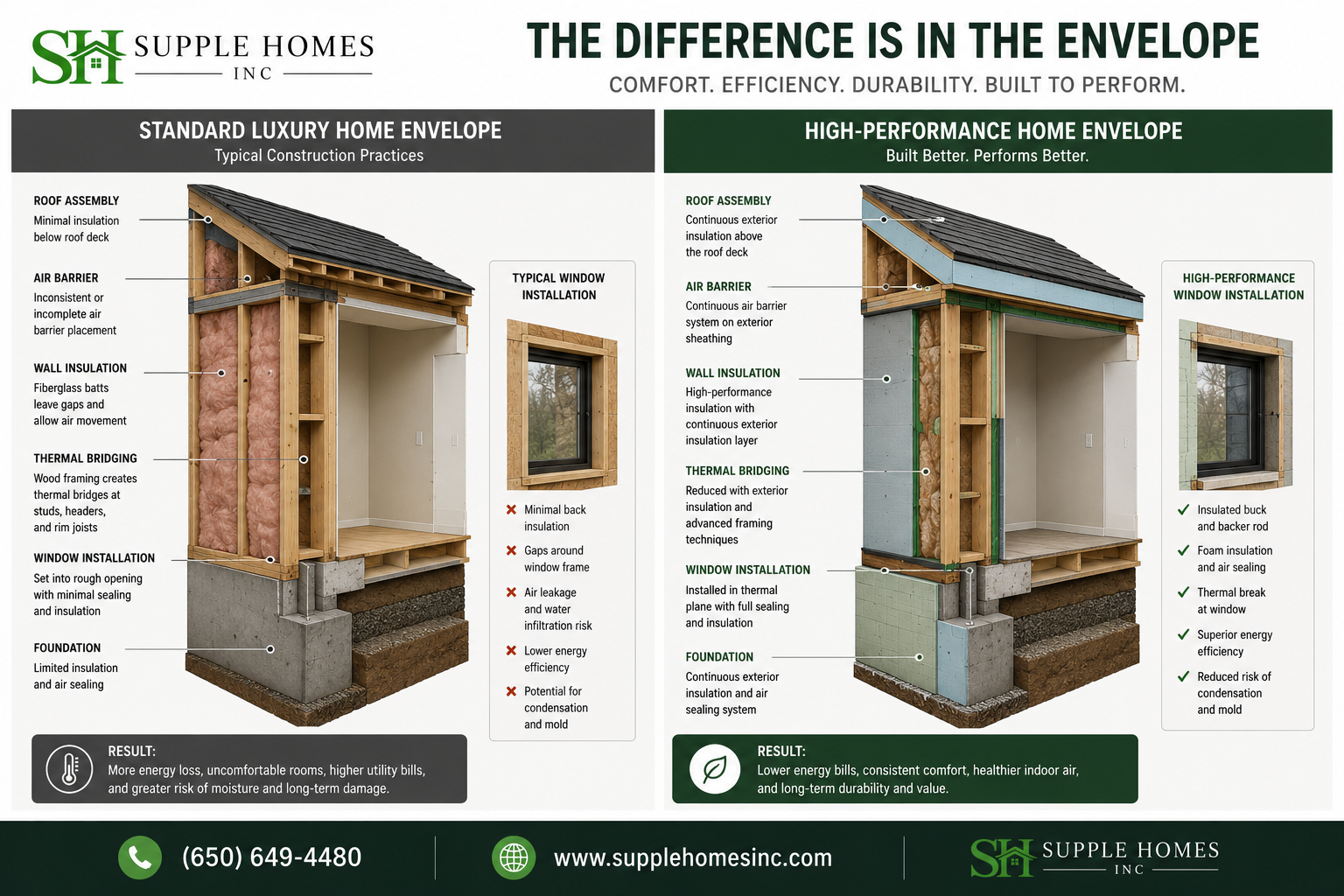
The envelope is the boundary between conditioned interior space and the outside world: walls, roof, windows, doors, and the air and moisture barriers within them. In a high-performance home, this boundary is designed and tested to minimize uncontrolled air movement and moisture intrusion. Builders like Supple Homes Inc. treat the envelope as a system, not a collection of independent trades.
Blower door testing, which measures how airtight a building envelope is, typically shows that production-built luxury homes allow 5 to 8 air changes per hour at 50 pascals of pressure. Genuinely high-performance custom homes in this range target 1.5 to 3 ACH50, meaning the envelope is two to four times tighter. That difference translates directly into heating and cooling costs, acoustic comfort, and indoor air quality year-round.
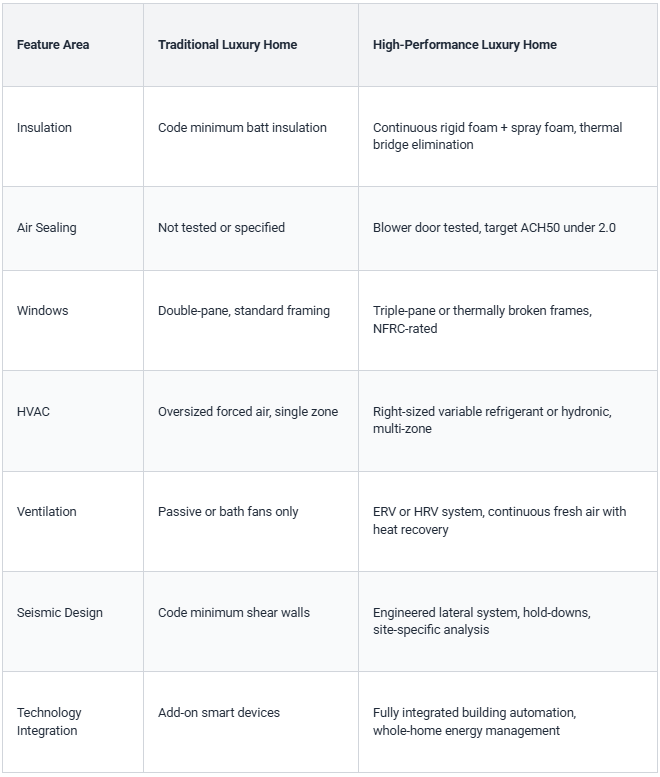
How High-Performance Homes Compare to Traditional Luxury Construction
Indoor-Outdoor Living as a Functional Design Strategy, Not Just a Trend
Anyone who has spent time on the Peninsula knows the weather is genuinely special. Atherton and Menlo Park rarely freeze and rarely swelter. Palo Alto and Redwood City see enough warm days that outdoor spaces can be used for eight or nine months of the year. This isn't coincidence driving indoor-outdoor design here; it's climate-responsive architecture.
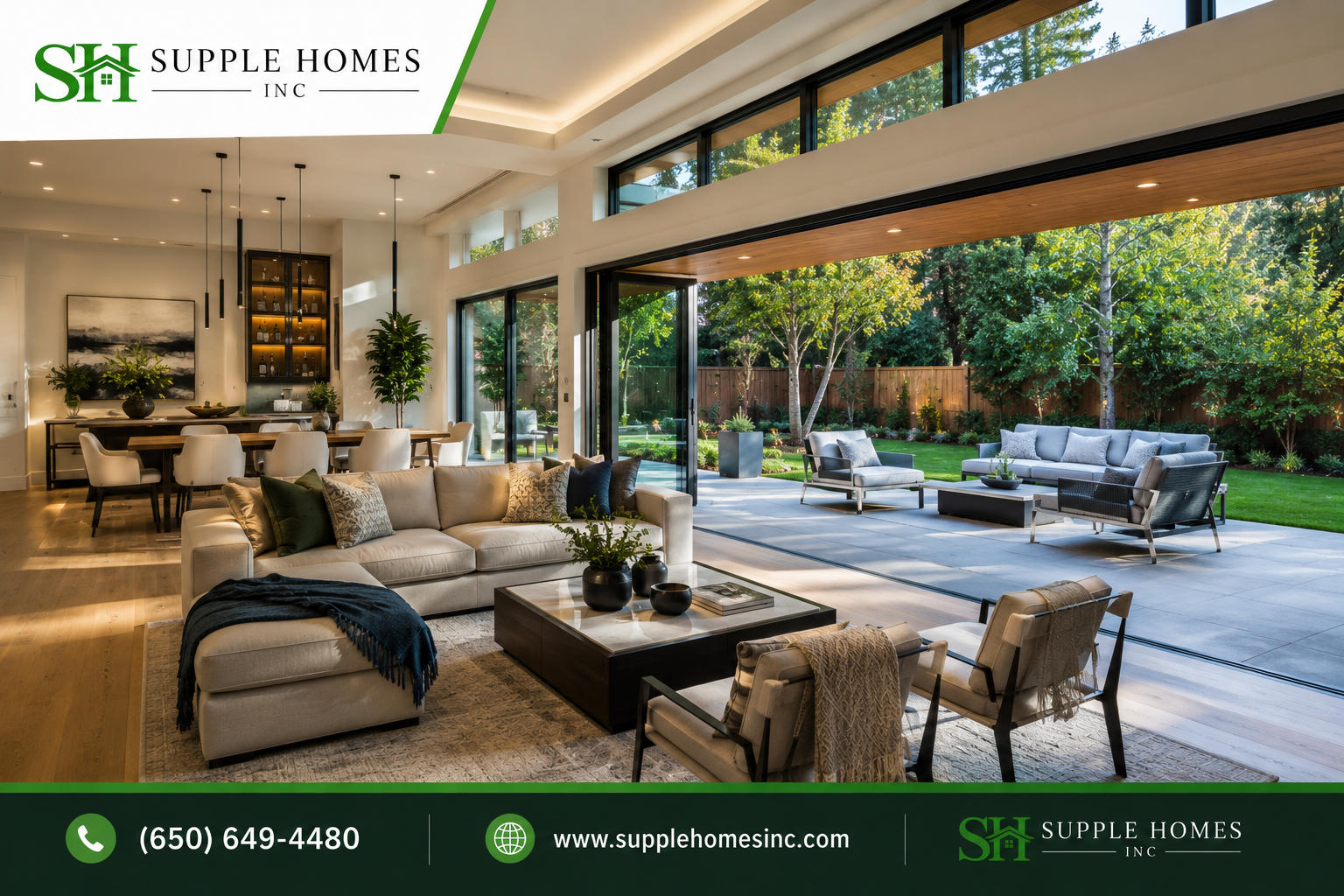
In a high-performance home, the transition between interior and exterior is engineered as carefully as any other system. This means thermally broken pocket door systems that don't create condensation problems when closed, covered loggia structures with radiant heating for shoulder-season use, and thoughtful solar orientation so that large glass walls don't become passive heat traps in south-facing rooms.
Large glass wall systems, including multi-panel lift-and-slide doors spanning 20 feet or more, can account for 30 to 45 percent of a home's total heat loss if not properly specified. High-performance installations on the Peninsula typically use fiberglass or aluminum frames with thermal breaks, low-emissivity coatings tuned to the climate zone, and proper rough opening flashing to prevent the moisture infiltration that compromises wall assemblies over time.
How Technology Integration Works at This Level
Smart home technology in the $5 million to $15 million Peninsula market has matured well past voice-controlled lights and app-based thermostats. In a true high-performance build, technology is structured around three layers: comfort automation, energy management, and resilience.
Comfort automation means the home actively maintains conditions without manual input. Occupancy sensors, motorized shading that responds to sun angle, and multi-zone climate systems that understand which rooms are in use all work together. Energy management goes further, integrating solar production, battery storage, EV charging, and time-of-use utility rate optimization into a single platform. Resilience features like automatic generator transfer, whole-home water shutoff, and leak detection protect a significant asset during emergencies.
Battery storage systems paired with rooftop solar on Peninsula homes are typically sized between 20 and 40 kilowatt-hours of usable capacity to handle a full day of critical loads during a grid outage. With PG&E's ongoing grid reliability challenges in certain Peninsula corridors, backup power integration has shifted from a luxury option to a near-standard feature in custom homes above $4 million.
Step-by-Step: How High-Performance Features Get Built Into a Custom Home
- Pre-design energy modeling: Before floor plans are drawn, a performance consultant models the home's anticipated energy loads based on orientation, massing, and climate data. This shapes window placement, shading overhangs, and mechanical system sizing from the start rather than as afterthoughts.
- Envelope design with thermal bridging analysis: The structural and insulation systems are coordinated to eliminate points where framing members conduct heat through the wall assembly. This often changes framing details, requires continuous exterior insulation, and informs the window-to-wall ratio in each elevation.
- Mechanical system design by a dedicated engineer: HVAC systems are sized using Manual J load calculations specific to the home, not rule-of-thumb estimates. This prevents the oversizing problem that plagues most luxury builds and results in a system that actually dehumidifies and maintains temperature correctly.
- Technology infrastructure pre-wire: Conduit pathways, server room location, low-voltage panel placement, and AV backbone are mapped during framing so that no retrofit work is needed later. This is where understanding key construction details at the framing stage pays long-term dividends.
- Third-party testing during construction: Blower door tests, duct leakage tests, and window installation inspections happen during construction, not after, so that failures can be corrected before walls are closed. This is standard practice among builders who are serious about performance claims.
- Commissioning before occupancy: Every building system, HVAC, automation, solar, security, and AV, is tested against its design intent by the installing subcontractor and reviewed by the general contractor before the homeowner takes possession.
Common Mistakes in High-Performance Luxury Construction
- Oversizing HVAC for "comfort headroom." An oversized system short-cycles, meaning it heats or cools the space quickly but shuts off before it can properly dehumidify. This is one of the most common complaints in expensive Peninsula homes and almost always traces back to a load calculation that wasn't done correctly.
- Treating smart home technology as a finish-stage add-on. Technology infrastructure needs to be planned at the design phase. Retrofitting it after framing costs significantly more and almost always results in compromises in functionality or aesthetics.
- Specifying high-performance windows without addressing the installation. A premium triple-pane window installed without proper flashing and air sealing around the rough opening performs no better than a standard unit. The product and the installation are both part of the system.
- Ignoring site drainage on hillside lots. Peninsula hillside properties from Woodside to Portola Valley regularly see foundation and crawl space moisture problems that originated in poorly designed grading and drainage systems. This is a performance issue, not just a cosmetic one.
- Skipping the commissioning phase to meet a move-in deadline. Systems that aren't commissioned properly often take months to optimize after occupancy, leaving homeowners in a home that doesn't perform as designed during the critical first year.
What This Looks Like Across Peninsula Communities
High-performance luxury construction is active across the full length of the Peninsula, but the specific priorities vary by location. In Atherton and Hillsborough, seismic engineering and privacy are often top concerns given the scale of the estates. In Los Altos Hills and Woodside, hillside drainage, fire-resistant cladding, and the integration of large outdoor spaces into the natural landscape shape the design. In Menlo Park, Palo Alto, and Redwood City, infill lots and ADU integration are increasingly common, requiring thoughtful acoustic separation and independent mechanical zoning.
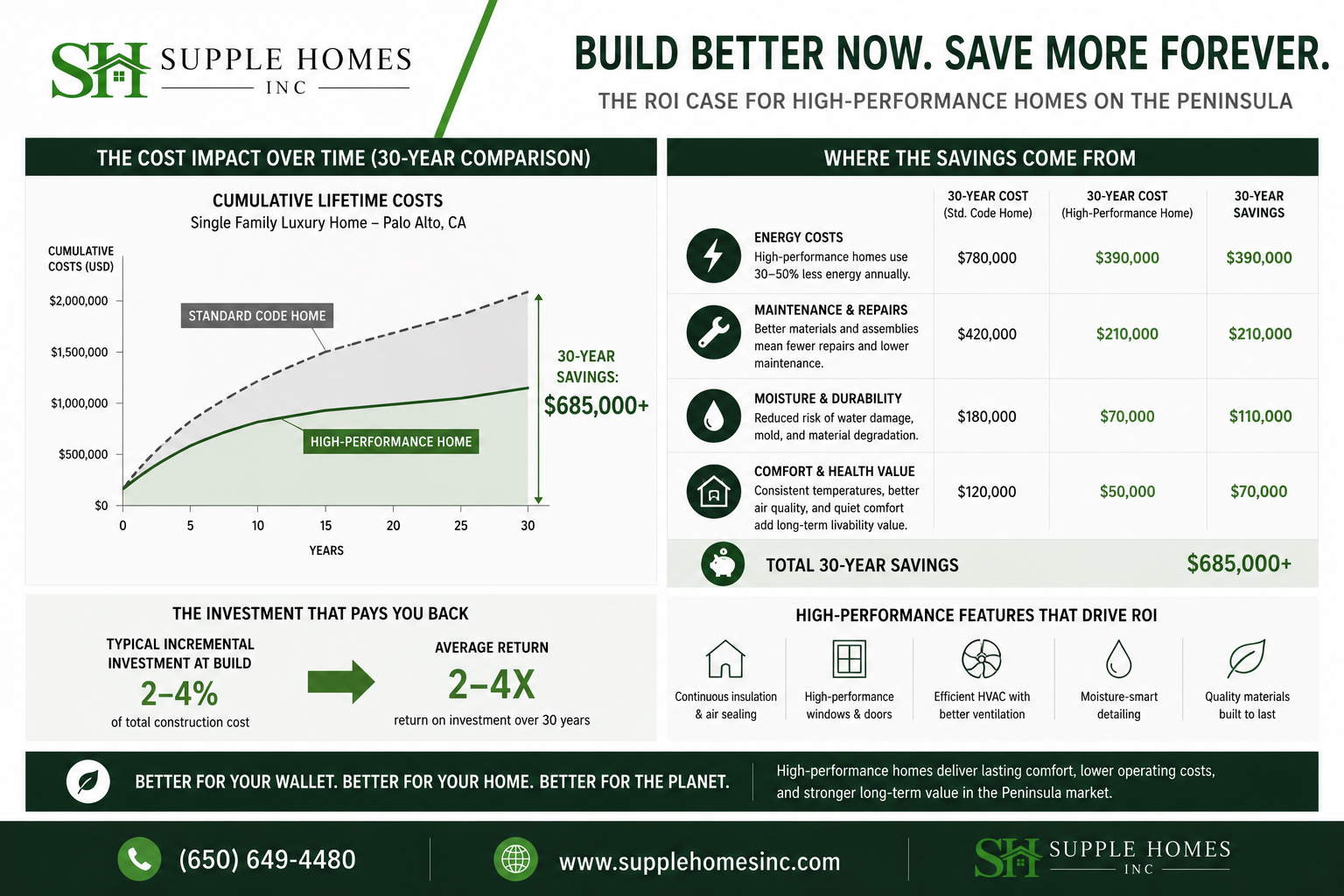
Custom home construction costs on the San Francisco Peninsula for high-performance builds typically range from $800 to over $1,100 per square foot for the hard construction costs alone, depending on site complexity, material specifications, and the degree of systems integration. When soft costs, land, and landscaping are included, all-in project budgets for this tier frequently exceed $8 to $15 million for homes in the 4,000 to 7,000 square foot range.
Understanding custom home cost factors specific to this region is essential before making design decisions, since performance upgrades interact differently with budget depending on where you are building and what site conditions you're working with.
Frequently Asked Questions
What does "high-performance" actually mean in the Peninsula?
High-performance in this context refers to homes that are designed, built, and tested to meet measurable standards for energy efficiency, indoor air quality, structural resilience, and comfort. It's not a marketing label but a construction outcome verified through testing like blower door assessments and third-party mechanical commissioning. On the Peninsula, the term carries additional weight because the climate and seismic environment create real performance demands that generic luxury construction doesn't address.
How do these homes differ from traditional luxury homes?
Traditional luxury homes prioritize aesthetic quality, material value, and spatial generosity. High-performance luxury homes do all of that and add a layer of building science rigor that affects how the home actually feels and operates day to day. The differences show up in energy bills, acoustic performance, indoor air quality, and long-term durability, all things you wouldn't necessarily see in a showing but would absolutely notice after living there for a year. Working with choosing the right builder who understands both aesthetics and building science is the critical first decision.
Why is indoor-outdoor flow so important?
The Peninsula's climate makes outdoor living genuinely viable for a large portion of the year, so homes that don't integrate it well leave significant livable square footage on the table. Beyond lifestyle, proper indoor-outdoor design affects ventilation, natural light, and thermal dynamics in ways that either support or undermine a home's performance goals. When it's done poorly, large glass walls and open floor plans create the exact energy and moisture problems that high-performance construction is meant to eliminate.
Are these homes better investments in the 2026 market?
The evidence increasingly points toward yes. High-performance homes tend to hold value better during market corrections because they appeal to a broader, more quality-conscious buyer pool and carry lower ongoing operating costs. In a market as supply-constrained and buyer-sophisticated as the Peninsula, differentiated homes with verifiable performance credentials are harder to discount during negotiation than standard luxury inventory. That said, returns depend heavily on execution quality and whether the performance features were designed in or bolted on after the fact.
What technology should I expect?
At minimum, expect a fully integrated home automation platform, not a collection of separate app-controlled devices, along with multi-zone HVAC with remote monitoring, whole-home energy management that includes solar and battery storage, structured wiring for gigabit networking throughout, and automated shading. More sophisticated builds add air quality monitoring, leak detection at every water entry point, whole-home water filtration and softening, and video surveillance integrated into the same control interface as the other systems. The goal is a home that is easy to operate and that surfaces problems before they become expensive.
What to Look for When Evaluating a Builder for This Level of Work
Not every builder who markets high-performance homes actually delivers them. The questions that separate serious builders from aspirational ones are fairly direct: Can they explain their air sealing approach and what ACH50 target they build to? Do they use third-party testing during construction? Can they show you a project where they resolved a complex envelope detail on a hillside site? Do they have dedicated project managers for mechanical coordination, or do they rely on subs to self-manage?
The key construction details that separate durable high-end homes from ones that age poorly are often invisible after completion, which is exactly why builder selection matters so much before a single permit is pulled.
Final Thoughts: Performance Is the New Premium on the Peninsula
The definition of luxury in Peninsula real estate has shifted. Buyers who have the resources to build or buy at this level increasingly understand that finishes are reproducible, but genuine building performance is not. A home that holds its temperature precisely, has exceptional air quality, survives a significant seismic event without structural damage, and operates its systems with minimal friction is worth more to a knowledgeable buyer than the same square footage with a more impressive material palette but mediocre construction quality underneath.
If you're planning a custom build or significant renovation on the Peninsula and want to understand what high-performance construction actually requires at the level of detail that matters, Supple Homes Inc. works with clients across these communities to deliver homes where the quality is built in, not added on. Call (650) 649-4480 to start a conversation about what's possible on your site.