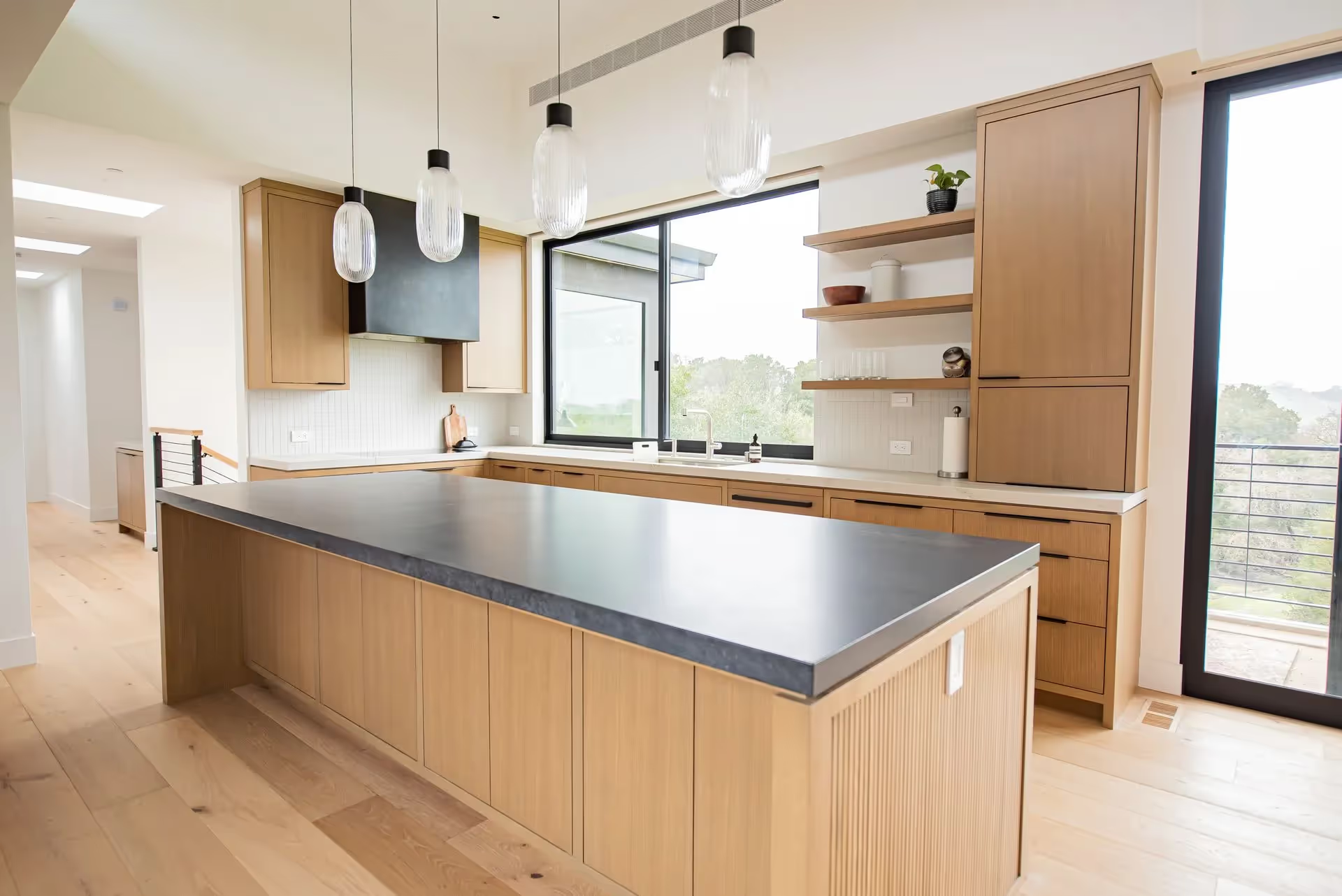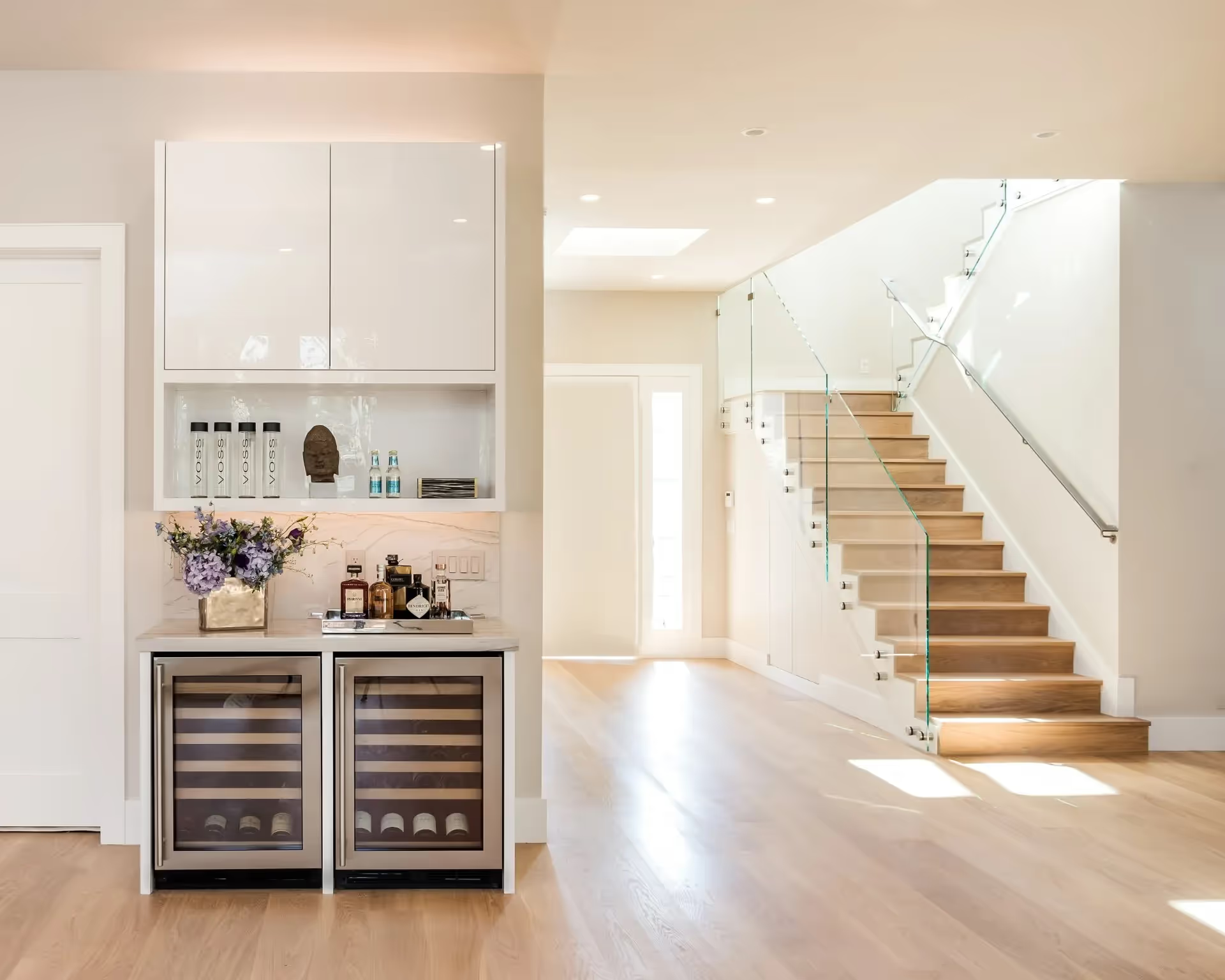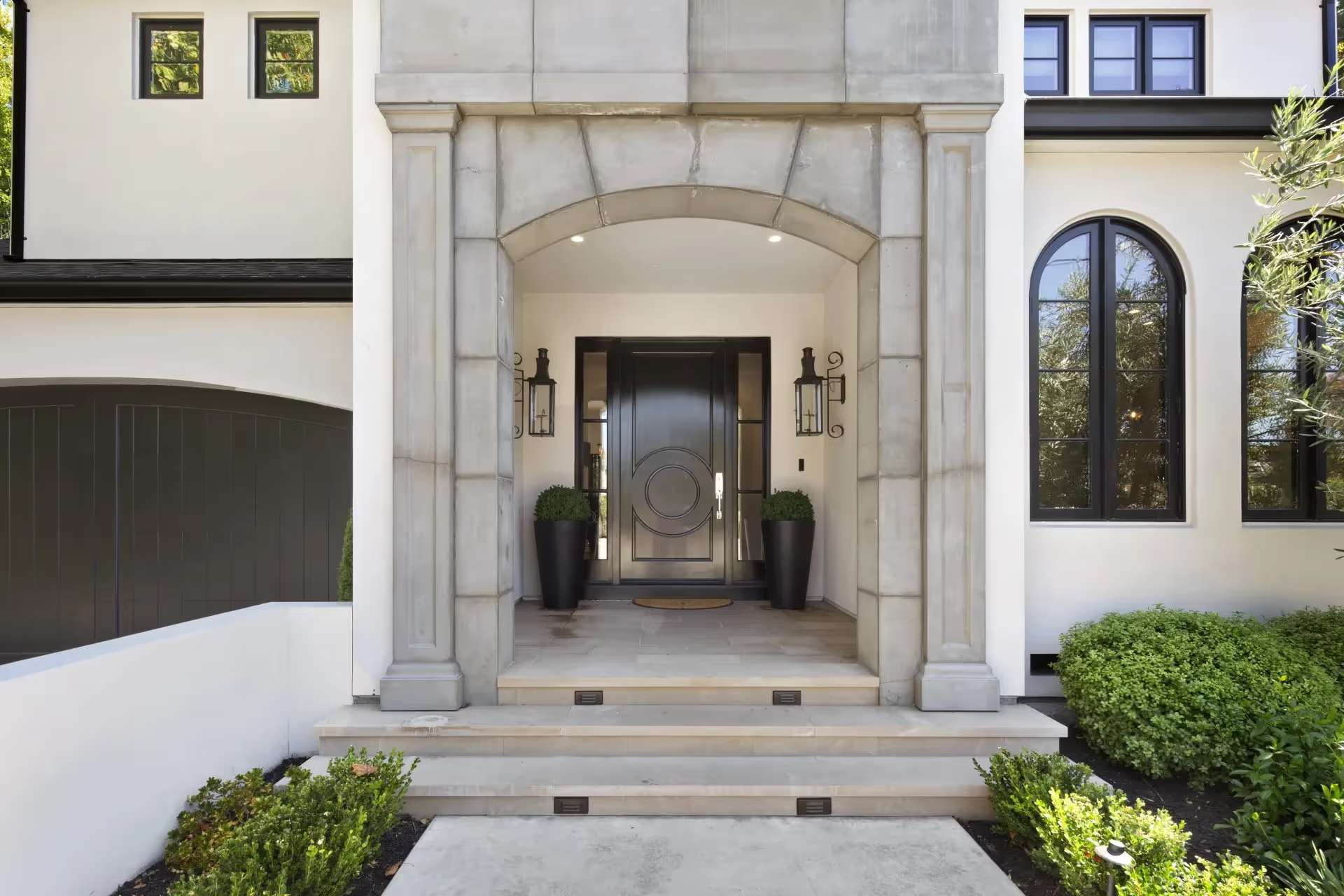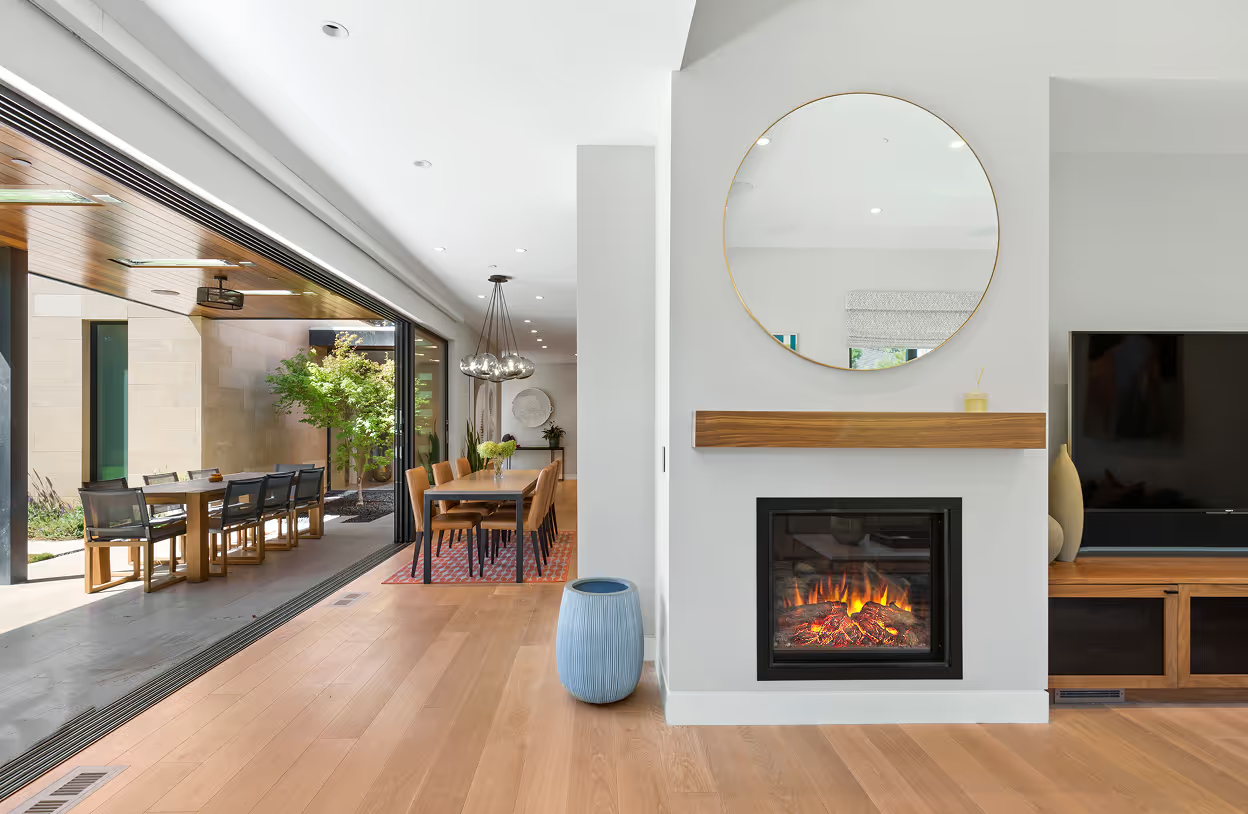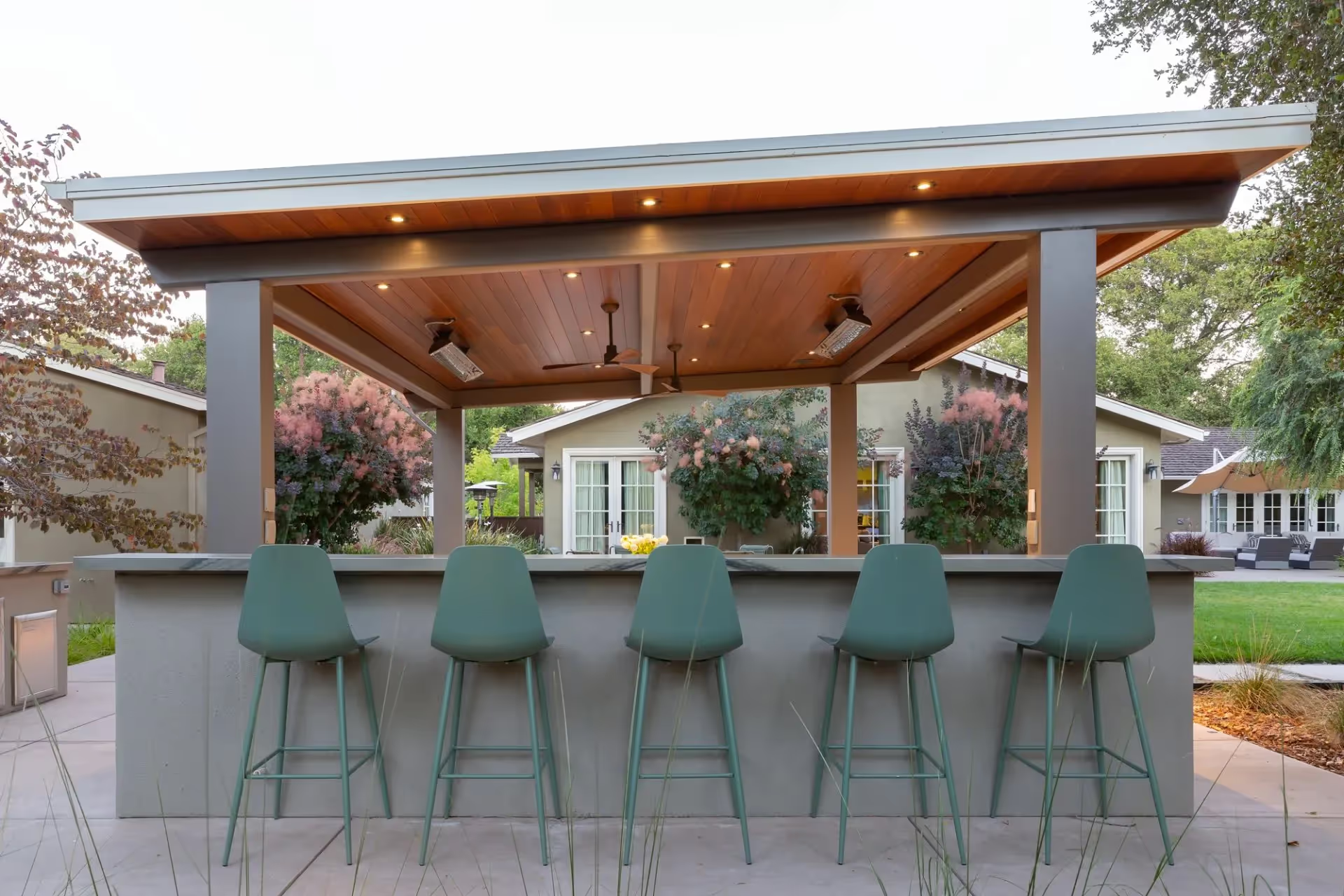
Building a luxury ADU on the San Francisco Peninsula means balancing smart design, privacy features, and flexible layouts that serve real daily needs. The best ADUs feel like self-contained residences rather than afterthoughts, with high-end finishes, thoughtful separation from the main home, and functional spaces that adapt over time. Working with an experienced custom builder makes a measurable difference in outcome quality.
Key Takeaways
- Luxury ADUs require deliberate privacy planning from the earliest design phase, not as a feature added later.
- Flexible layouts with convertible spaces, smart storage, and multi-use rooms extend the long-term usefulness of a smaller footprint.
- High-performance materials, sound insulation, and independent utilities separate a luxury ADU from a standard one.
- Smart home technology can meaningfully improve convenience and security in a compact space.
- Outdoor connection points, such as private patios or garden access, significantly increase the livability of an ADU.
- Permit requirements and setback rules on the Peninsula vary and should be confirmed early in the planning process.
An ADU done right does more than add square footage to a property. For Peninsula homeowners, a well-designed accessory dwelling unit can house a family member in comfort, generate reliable rental income, or provide a quiet workspace that feels completely separate from the main house. The difference between an average ADU and a luxury one usually comes down to three things: how well it handles privacy, how flexibly it adapts to changing needs, and how livable it feels day to day.
Things You Must Know
1. Privacy Cannot Be an Afterthought
Many ADU projects run into friction between occupants of the main house and the ADU because privacy was treated as a finishing detail rather than a structural decision. Entry points, sight lines, shared fencing, and sound separation all need to be resolved at the design stage. Retrofitting privacy features after construction is expensive and rarely as effective as building them in from the start.
2. Permit Requirements on the Peninsula Are Specific
California's ADU laws have made permitting more accessible statewide, but each city and county on the Peninsula still enforces its own setback distances, height limits, and design review processes. What's approved in one city may require additional steps in a neighboring one. Confirming local requirements before finalizing a design prevents costly revisions later in the process. A builder familiar with the local approval environment can save significant time here.
3. The Finish Level Drives Long-Term Value More Than the Square Footage
A 600-square-foot ADU built with luxury-grade materials, proper insulation, and thoughtful layout will hold its value and livability far longer than a larger unit built to minimum standards. Buyers and renters in the Peninsula market respond to quality, and the resale premium on well-finished ADUs is meaningful. Prioritizing craft over size tends to produce better long-term returns on investment.
What Makes a Luxury ADU Different From a Standard One?
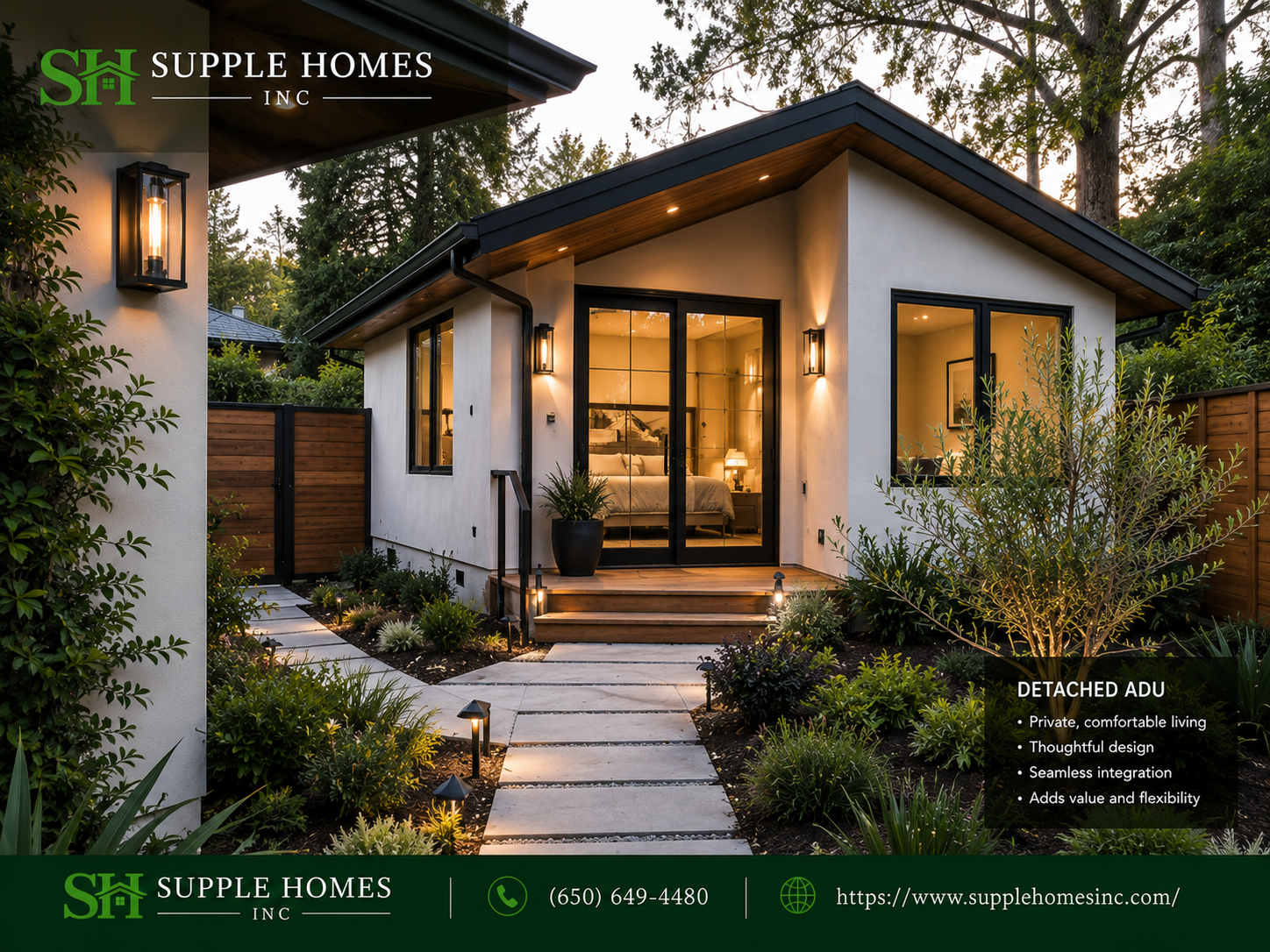
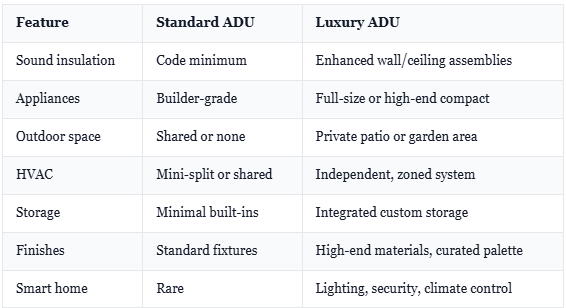
The distinction is not just about materials or price. A luxury ADU starts with a design philosophy that treats the unit as a complete, dignified residence rather than a secondary space. That means dedicated outdoor access, independently controlled utilities, quality acoustic separation, and finishes that match or complement the main home.
ADU rental values in high-demand Bay Area communities can vary significantly based on finish quality, with well-appointed units often commanding rental premiums compared to standard builds in the same neighborhood.
On the San Francisco Peninsula, where lot sizes are often constrained and property values are high, the return on a well-built ADU can be substantial. That makes it worth investing in design decisions that will hold up over years of use, whether the unit is for family, a tenant, or a home office setup. For a deeper look at what high-performance design means in this region, this overview of high-performance luxury homes on the San Francisco Peninsula covers the principles that apply across all residential construction at this level.
How Should You Approach the Layout for Privacy and Flexibility?
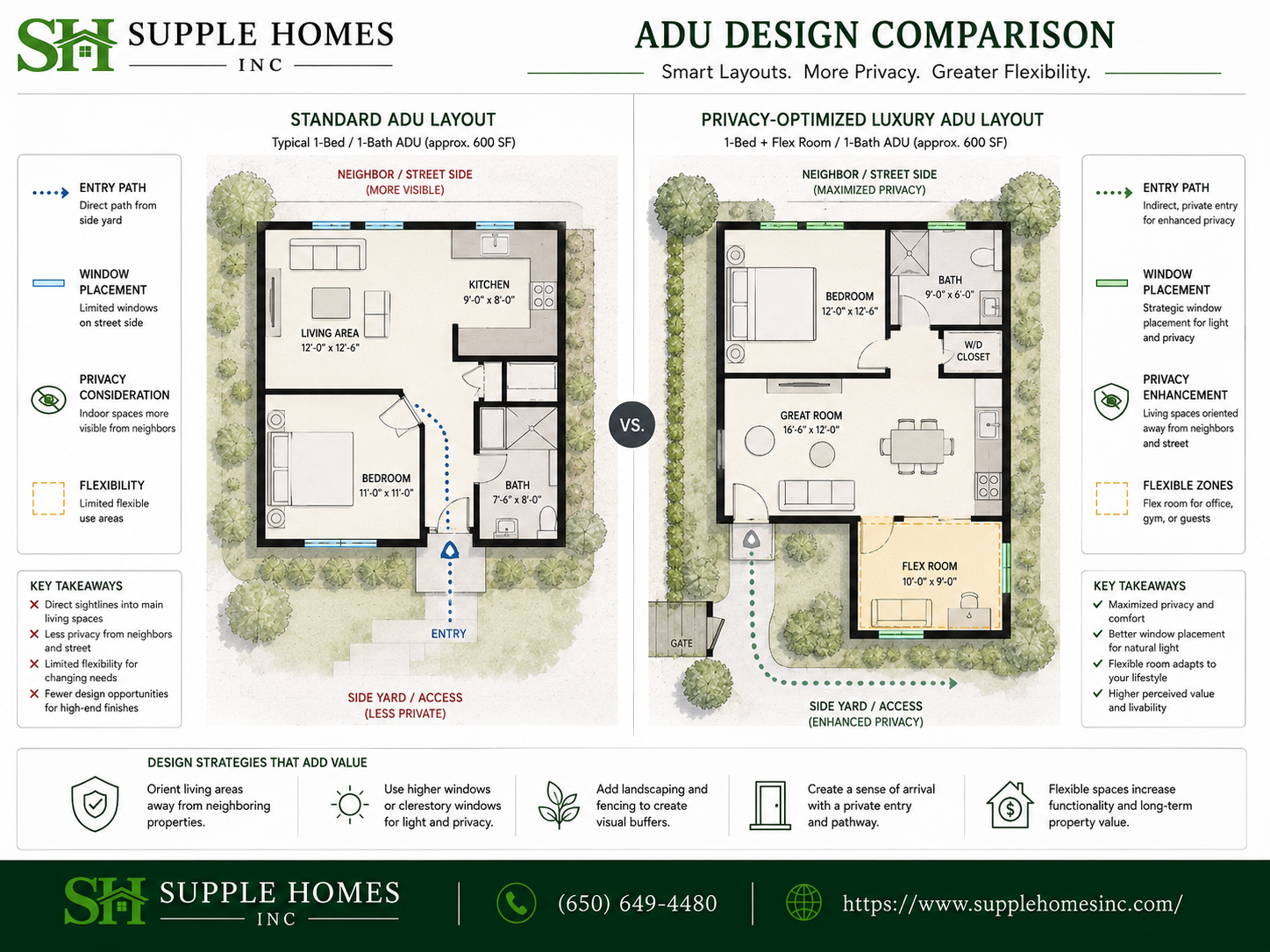
Layout decisions have the largest effect on how private and livable an ADU ultimately feels. A few principles guide the best outcomes.
Separate the Entry Completely
A private entry that doesn't pass through or alongside the main home's entry is the single most effective privacy measure available. This means a dedicated path, separate gate or fence line, and ideally a small transitional space like a covered porch or landing that gives the ADU occupant a sense of arrival at their own residence.
Position Windows Carefully
Sight lines between the ADU and the main home create daily friction if not addressed. Placing ADU windows to face outward toward a garden, street, or private patio rather than into the main home's living areas resolves most of this. Clerestory windows are a useful option for bringing in light without creating direct views.
Build in Flexible Spaces
A Murphy bed with integrated storage, a home office nook that converts to a sleeping area, or a dining space that opens into a small living room all extend the functional range of a compact footprint. The goal is to design rooms that serve more than one purpose without feeling like compromises.
Key Features That Define Everyday Livability
What Does the Building Process Actually Look Like?
- Understanding the sequence helps homeowners set realistic expectations and avoid delays. A well-managed ADU project on the Peninsula generally follows these stages:
- Site and feasibility assessment: Confirming what the lot allows under local zoning, including setbacks, height limits, and utility connections.
- Design development: Working with an architect or design-build team to develop a layout that meets both the homeowner's goals and permit requirements.
- Permit submittal and approval: Submitting to the local planning and building departments. Timeline varies by jurisdiction.
- Site preparation: Grading, foundation work, and utility rough-in.
- Framing and structural work: Walls, roof structure, and window/door openings.
- Mechanical, electrical, and plumbing (MEP): All systems installed and inspected before wall closure.
- Insulation and drywall: Acoustic assemblies are installed at this stage.
- Finish work: Cabinetry, flooring, fixtures, appliances, smart systems, and exterior finishing.
- Final inspection and certificate of occupancy: Sign-off from local building authority before occupancy.
For a thorough walkthrough of what this process involves from planning through final inspection, this guide on the custom home building process from planning to final walkthrough covers the decisions and checkpoints that matter most.
ADU permit approval timelines in California vary widely by municipality, with some jurisdictions processing applications in 30 days or fewer under streamlined state guidelines, while others may take several months depending on project complexity and local workload.
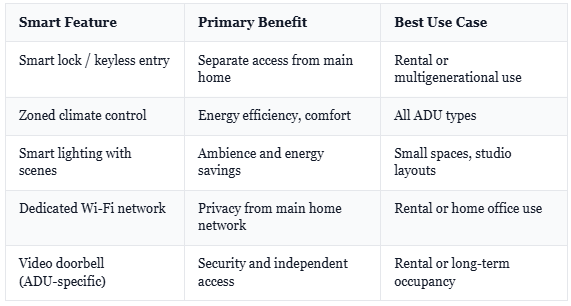
Smart Home Features Worth Including
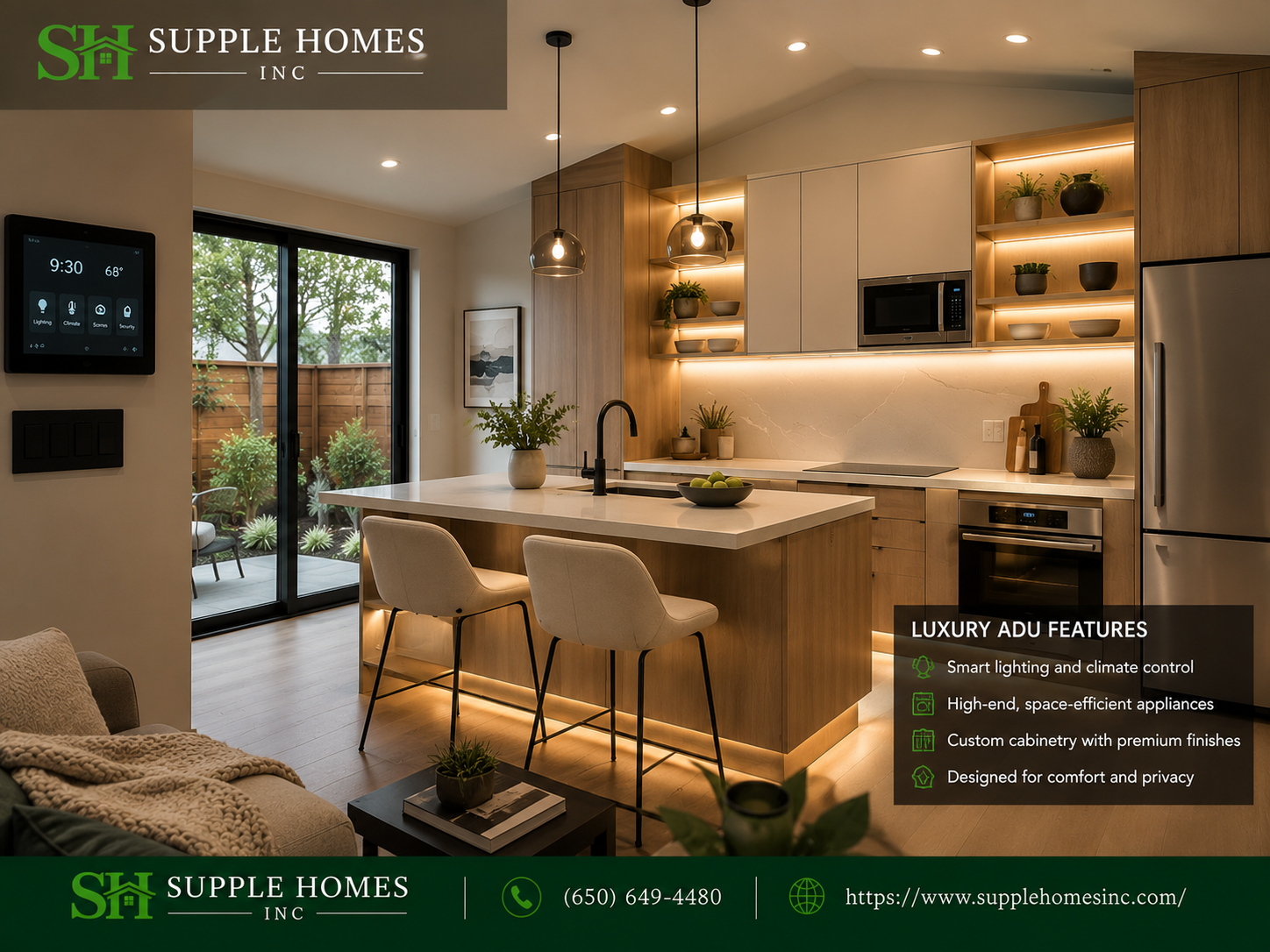
In a smaller space, smart technology earns its place faster than in a large home. The right integrations reduce friction in daily routines and give an ADU a level of polish that tenants and family members both appreciate.
Common Mistakes to Avoid When Building a Luxury ADU
- Skipping acoustic planning: Thin walls between an ADU and the main home create ongoing conflict. Sound-rated wall assemblies are not expensive to add during framing but are very expensive to retrofit later.
- Sharing utilities without metering: A shared utility connection without sub-metering creates billing disputes over time, especially in rental situations. Independent or sub-metered connections are worth the upfront cost.
- Over-optimizing for square footage at the expense of quality: A smaller, better-built ADU consistently outperforms a larger, poorly finished one in both livability and long-term value.
- Ignoring outdoor connection: ADUs without any private outdoor space feel constrained over extended occupancy. Even a modest private patio transforms the daily experience.
- Starting design before confirming local rules: Peninsula jurisdictions have real differences in what they allow. Beginning design work before a feasibility review leads to redesigns, delays, and frustration.
- Treating storage as optional: In a compact luxury unit, built-in storage is a core feature, not a nice-to-have. Thoughtful cabinetry and closet design determine how well the space functions day to day.
Properties with ADUs on the San Francisco Peninsula have shown stronger resale performance compared to comparable properties without ADUs, reflecting continued housing demand and the value buyers place on flexible living configurations.
If you're still in the early research phase, this resource on what to know before building a custom home on the San Francisco Peninsula covers the foundational considerations that apply to ADU projects as well as full custom builds.
Frequently Asked Questions
How do you design an ADU that feels both open and private?
The key is resolving those two goals at the floor plan level rather than treating them as opposing forces. High ceilings, open-plan living areas, and well-placed windows create a sense of spaciousness. Careful orientation of those windows, a separate entry path, and strategic screening handle privacy. The two objectives reinforce each other when addressed from the start of design.
What features ensure privacy for both the ADU and the primary residence?
The most effective features are a completely separate entry, acoustic wall assemblies between any shared structural elements, independent HVAC and utility systems, and landscaping or fencing that creates a visual buffer. A dedicated outdoor space for each unit, positioned so sightlines don't overlap, adds a significant layer of functional separation that both parties appreciate over time.
How can I make a small space feel luxurious yet flexible?
The feeling of luxury in a compact space comes from proportion, material quality, and the absence of visual clutter. Full-height cabinetry, consistent flooring throughout, high-quality fixtures, and concealed storage all contribute. Flexible elements like a murphy bed, fold-down dining surface, or pocket doors allow rooms to shift function without sacrificing the sense of quality.
What smart-home upgrades add everyday convenience and luxury?
For an ADU specifically, the highest-value upgrades tend to be a smart lock with individual access codes, a dedicated Wi-Fi network separate from the main home, zoned climate control, and smart lighting with preset scenes. These improve the daily experience without adding operational complexity, and they're easiest and least expensive to install during the construction phase rather than after.
What are the best ways to connect the indoor space with the outdoors?
A private patio accessible directly from the main living area, even if modest in size, significantly expands how the ADU feels and functions. Sliding or folding glass doors help blur the boundary between interior and exterior. Native or low-maintenance plantings that define the outdoor space as belonging to the ADU, rather than the main home, reinforce the sense of a complete, independent living environment.
Ready to Build an ADU That Works on Every Level?
A luxury ADU is a meaningful investment in your property's long-term value and versatility. Getting it right requires more than selecting nice finishes. It takes a design approach that puts privacy, flexibility, and livability at the center of every decision, from site planning through final construction.
Supple Homes Inc. works with Peninsula homeowners to plan and build ADUs that function as genuinely high-quality residences. If you're exploring what's possible on your property, their complete guide to building a luxury ADU with Supple Homes is a strong place to start.
To talk through your project directly, contact Supple Homes Inc. at (650) 649-4480. The earlier you bring in an experienced team, the more options you'll have and the smoother the entire process will be.