The custom home building process typically moves through several distinct phases: initial planning and design, permitting, site preparation, structural construction, interior work, and a final walkthrough before handoff. Each phase depends on decisions made in the one before it, so understanding the full sequence helps homeowners avoid costly delays and set realistic expectations before breaking ground.
Building a custom home is one of the largest financial and personal commitments most people ever make. The Bay Area adds its own layer of complexity, with strict permitting requirements, high land costs, hillside and soil considerations, and a competitive contractor market. Knowing what to expect at every stage makes the difference between a smooth build and a frustrating one.
Key Takeaways
- The custom home building process has six to eight major phases, each requiring sign-off before the next begins.
- Permitting in the Bay Area can add weeks or months to your timeline depending on the jurisdiction and project scope.
- Design decisions made early are far less expensive to change than those made during or after construction.
- A general contractor typically manages subcontractors, inspections, and daily site operations on your behalf.
- The final walkthrough is a formal review, not just a casual tour. It should be thorough and documented.
- Budget contingencies of 10 to 15 percent are considered standard practice for custom builds of any size.
Things You Must Know
1. Your Permit Timeline Is Not Predictable Without Local Knowledge
Bay Area jurisdictions vary widely in how long they take to review and approve building permits. Some cities process applications in a matter of weeks; others take several months, particularly for custom homes on hillside lots or in areas with environmental review requirements. A builder with local experience will know which agencies to engage early and how to structure your application to avoid common rejection reasons.
2. Locking Down Finishes Early Protects Your Budget
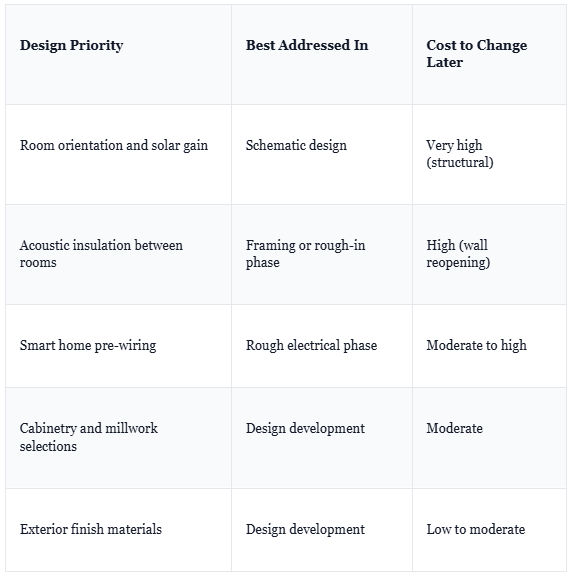
One of the most common reasons custom home budgets spiral is late-stage material and finish selections. When flooring, cabinetry, plumbing fixtures, and tile choices are left open-ended into the framing or rough-in phase, suppliers quote longer lead times and contractors charge for schedule disruptions. Completing your finish selections during the design phase keeps pricing accurate and the build on schedule.
3. A Custom Home Contract Should Define Change Order Procedures in Detail
Changes during construction are normal, but how those changes are priced and documented varies significantly between builders. Before signing anything, ask specifically how change orders are handled, what markup is applied to owner-initiated changes, and whether there are any restrictions on scope modifications during active construction phases. Vague contracts create disputes; detailed ones protect both parties.
What Does the Custom Home Building Process Actually Look Like?
Most custom builds follow a defined sequence, even if the specific details change by project. Understanding the full arc from the start helps you make smarter decisions at each stage rather than reacting to surprises.
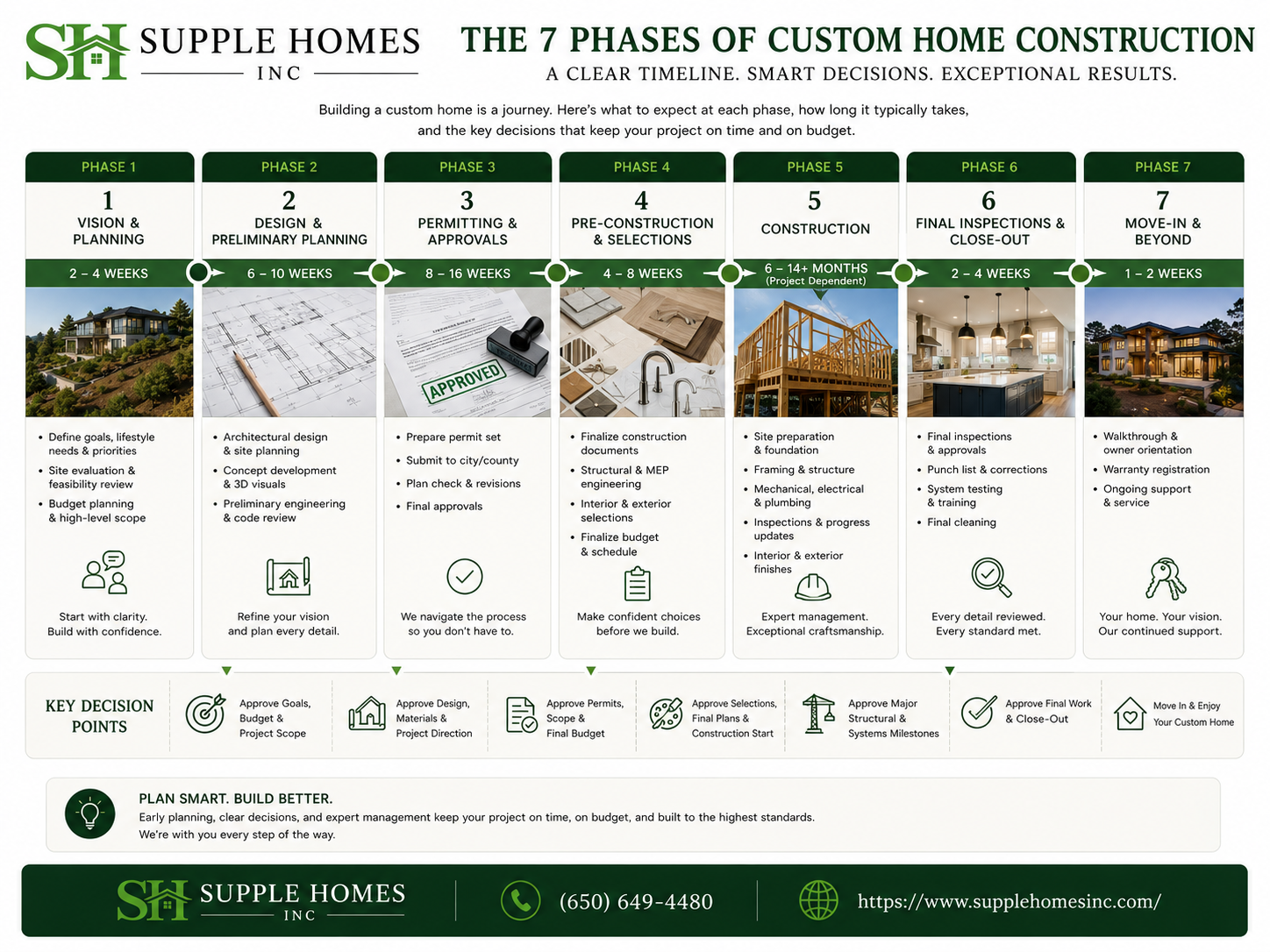
Here is a step-by-step overview of how the process typically unfolds:
- Initial Planning and Goal Setting: You define your budget range, desired square footage, must-have features, and timeline. This is also when you select your lot if you haven't already, and begin evaluating builders.
- Architect and Builder Selection: You engage an architect for design work and a general contractor for construction. Some firms handle both under one roof. The right pairing here shapes everything downstream.
- Schematic Design and Design Development: The architect produces conceptual drawings based on your goals, then refines them through multiple rounds of review. Structural, mechanical, and energy compliance consultants are often brought in during this phase.
- Construction Documents and Permitting: Final construction drawings are submitted to the local building department. This phase includes any environmental, geological, or planning review required by your jurisdiction.
- Site Preparation and Foundation: Once permits are approved, grading and excavation begin. The foundation is poured and inspected before any framing starts.
- Framing and Rough-In Work: The structural frame goes up, followed by rough electrical, plumbing, and HVAC. Each trade is inspected before walls are closed.
- Insulation, Drywall, and Interior Finishes: This is when the home starts to look like a home. Flooring, cabinetry, trim, tile, and fixtures are installed in a coordinated sequence.
- Final Inspections and Punch List: The building department conducts a final inspection. Your builder compiles a punch list of any items requiring correction or touch-up before the Certificate of Occupancy is issued.
- Final Walkthrough and Handoff: You walk the completed home with your builder, review all systems, document any outstanding items, and receive your keys and warranty documentation.
How Long Does Each Phase Take?
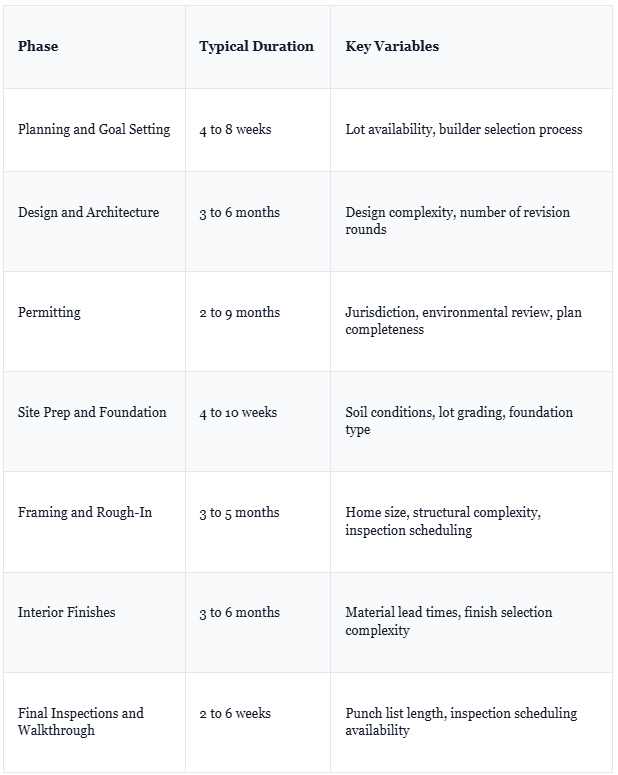
Custom home builds in the Bay Area commonly take 18 to 36 months from initial planning to final walkthrough, depending on project size, lot complexity, and permitting timelines. Simpler single-story homes on straightforward lots may fall toward the lower end of that range, while larger or architecturally complex projects routinely exceed 30 months total.
What Should You Expect During Pre-Construction?
Pre-construction is where most of the strategic decisions get made. It covers everything from the first meeting with your builder through the moment a permit is approved and a shovel hits the ground. For many homeowners, this phase feels like a lot of waiting, but it is actually the highest-leverage stage of the entire project.
During pre-construction, your architect and builder work together to ensure the design can be built within your budget. Value engineering, where design choices are evaluated against cost and performance tradeoffs, often happens here. If you're building in an area with specific design review requirements or HOA guidelines, those approvals also occur before construction begins.
If you're exploring what goes into creating a home that performs well for daily living on the Peninsula, this guide on what to know before building a custom home on the San Francisco Peninsula covers the local considerations in depth.
How Do Bay Area Lot Conditions Affect the Build?
A significant portion of custom home lots in the Bay Area involve slope, fill soil, or proximity to fault zones, all of which require geotechnical investigation before design can be finalized. Soils reports and structural engineering responses to those reports directly influence foundation design, drainage planning, and overall construction cost.
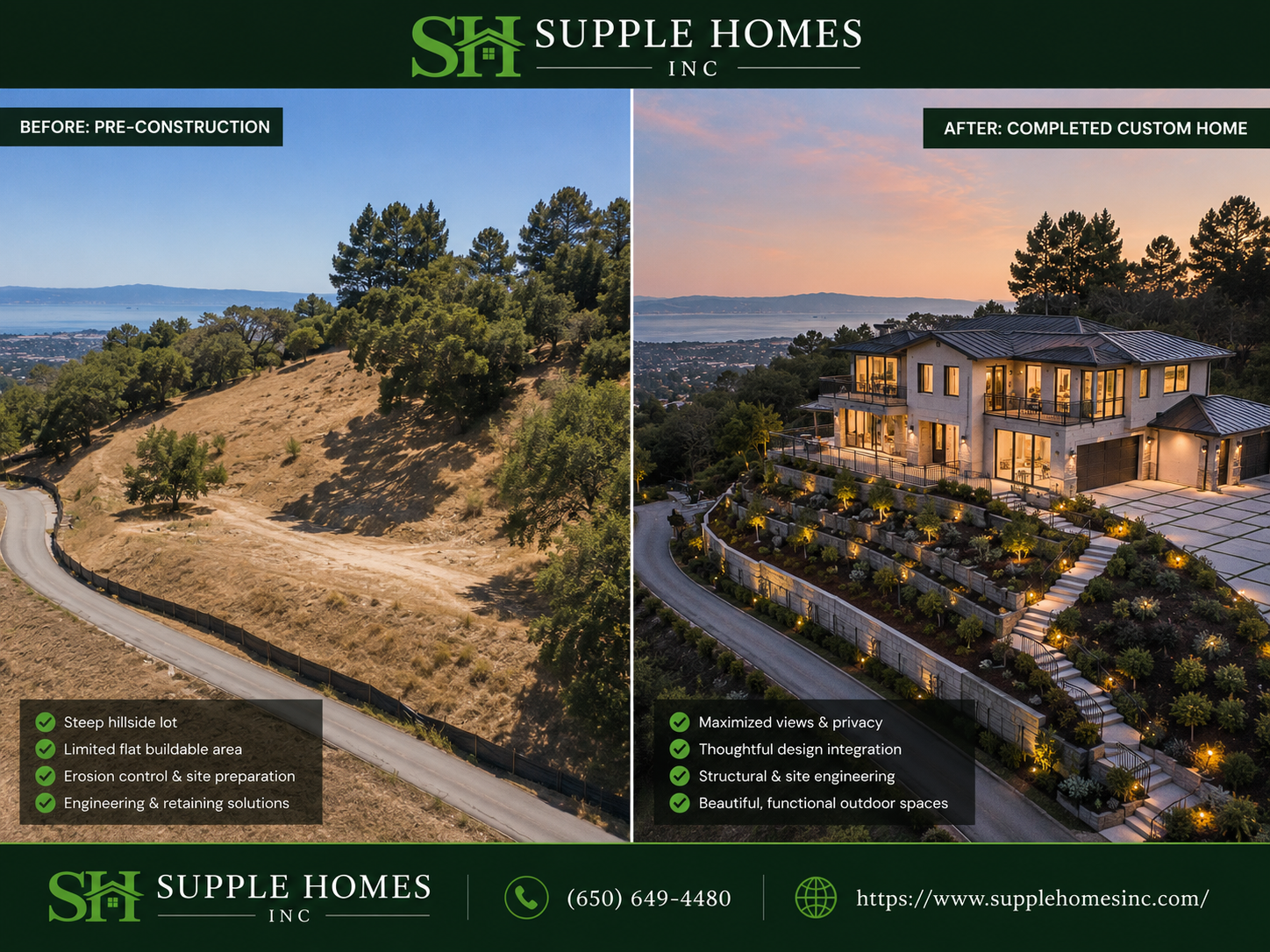
Hillside lots often require retaining walls, special drainage systems, and more complex foundations than flat sites. These are not problems to solve during construction. They need to be understood during design so your structural engineer and architect can account for them properly in the permitted drawings.
Lot-specific constraints also affect what can be built in terms of setbacks, height limits, and impervious surface coverage. Your builder should review these zoning parameters early, before you commit to a design direction that may require costly variances.
What Are the Most Common Mistakes Homeowners Make During a Custom Build?
- Underestimating permitting timelines: First-time custom home clients often assume permits take four to six weeks. In many Bay Area cities, complex projects can take six months or longer. Build that reality into your schedule before signing any contractor agreements.
- Choosing a builder on price alone: The lowest bid is rarely the most accurate bid. Significant gaps between quotes often reflect different scopes, excluded line items, or optimistic assumptions about site conditions that will surface later as change orders.
- Making major design changes after construction begins: Moving a bearing wall, relocating plumbing stacks, or changing window sizes after framing begins is expensive and can trigger re-inspection requirements. Decisions made in the design phase cost a fraction of what the same change costs mid-build.
- Neglecting to plan for temporary housing: Custom builds rarely finish on the original target date. Having a flexible housing plan throughout construction reduces stress significantly when the timeline shifts.
- Skipping the final walkthrough checklist: A verbal acknowledgment that the home looks good is not the same as a documented punch list with written commitments from your builder. The walkthrough is a contractual event and should be treated accordingly.
For a deeper look at where Silicon Valley custom home projects commonly go off track, the article on common mistakes when building a custom home in Silicon Valley is worth reviewing before you finalize your plans.
Design Priorities That Affect Long-Term Livability
Research on residential satisfaction consistently shows that acoustic comfort, natural light quality, and private outdoor connectivity rank among the top factors homeowners wish they had prioritized more during the design phase of a new build.
Custom homes offer the rare opportunity to build around how you actually live, not around a developer's floor plan assumptions. That means thinking carefully about morning light in the primary bedroom, acoustic separation between shared and private areas, and how interior spaces connect to outdoor areas.
Builders who work at the higher end of the custom market often bring these considerations into the design conversation early. If wellness-oriented design is a priority for your project, the piece on how luxury home builders in the Bay Area design homes for privacy, quiet, and wellness offers useful framing on what's possible.
What Happens at the Final Walkthrough?
The final walkthrough is more than a handoff moment. It is the formal mechanism through which you document the condition of the home, confirm that all permitted work has been completed and inspected, and establish a written record of any items the builder agrees to address post-occupancy.
You should walk every room systematically, test all operable systems (HVAC, plumbing fixtures, electrical switches and outlets, garage doors, windows, and doors), and note anything that doesn't meet the standard described in your contract or the approved drawings. Your builder should provide you with all warranty documentation, appliance manuals, and contact information for subcontractors who worked on major systems.
Industry estimates suggest that the average custom home punch list at final walkthrough contains between 20 and 50 individual items, most of which are minor cosmetic or adjustment issues. Identifying these before taking possession is significantly easier than following up on them after move-in.
Frequently Asked Questions
How long does the entire custom home building process take?
For most Bay Area custom builds, the full timeline from initial planning to final walkthrough runs between 18 and 36 months. That range is wide because permitting timelines vary significantly by jurisdiction, and design complexity can extend pre-construction considerably. Simpler projects on straightforward lots may come in closer to 18 months; larger or architecturally complex homes often take longer. Getting a realistic schedule from your builder before you start is essential for planning purposes.
What happens during the pre-construction phase?
Pre-construction covers everything from the first planning conversations through permit approval. This includes hiring your architect, completing design and engineering drawings, obtaining geotechnical reports if required, submitting permit applications, and finalizing your construction contract. It also typically includes finalizing your finish selections so pricing can be accurately reflected in the bid. This phase sets the foundation for how smoothly the actual construction will go.
Can I make changes once construction has already started?
Yes, changes can be made during construction, but they become progressively more expensive as the build advances. Changes to structural elements or rough-in systems after walls are closed can require reopening completed work, potentially triggering new inspections. Any approved change should be documented in a formal change order that specifies scope, cost, and any schedule impact. Ask your builder to walk you through their change order process before construction begins.
Who manages the construction site and subcontractors?
Your general contractor is responsible for managing the day-to-day operations of the construction site, including scheduling and overseeing all subcontractors such as framers, electricians, plumbers, and HVAC technicians. A site superintendent typically handles on-site coordination while the project manager handles scheduling, procurement, and owner communication. Understanding who your primary point of contact is and how often you'll receive progress updates is an important question to ask before signing a contract.
What is the purpose of the final walkthrough?
The final walkthrough serves two purposes: it confirms that the home has been completed per the approved plans and contract, and it creates a documented record of any items that still need attention before or after you take possession. This walkthrough happens after the Certificate of Occupancy is issued, meaning all required inspections have passed. Bring your contract, a copy of the approved drawings, and a thorough checklist to the walkthrough. Anything identified should be put in writing with agreed timelines for resolution.
Ready to Start Your Custom Home Project?
Building a custom home in the Bay Area is a significant undertaking, but when each phase is approached with clear expectations and experienced guidance, it's also one of the most rewarding things you can do. The difference between a smooth build and a frustrating one usually comes down to planning, communication, and choosing the right team from the start.
Supple Homes Inc. works with homeowners across the Bay Area to manage custom builds from the earliest planning conversations through final walkthrough and beyond. If you're in the early stages of exploring what building a custom home involves, or if you already have a lot and are ready to move forward, reach out to the team directly.
Call Supple Homes Inc. at (650) 649-4480 to start a conversation about your project.