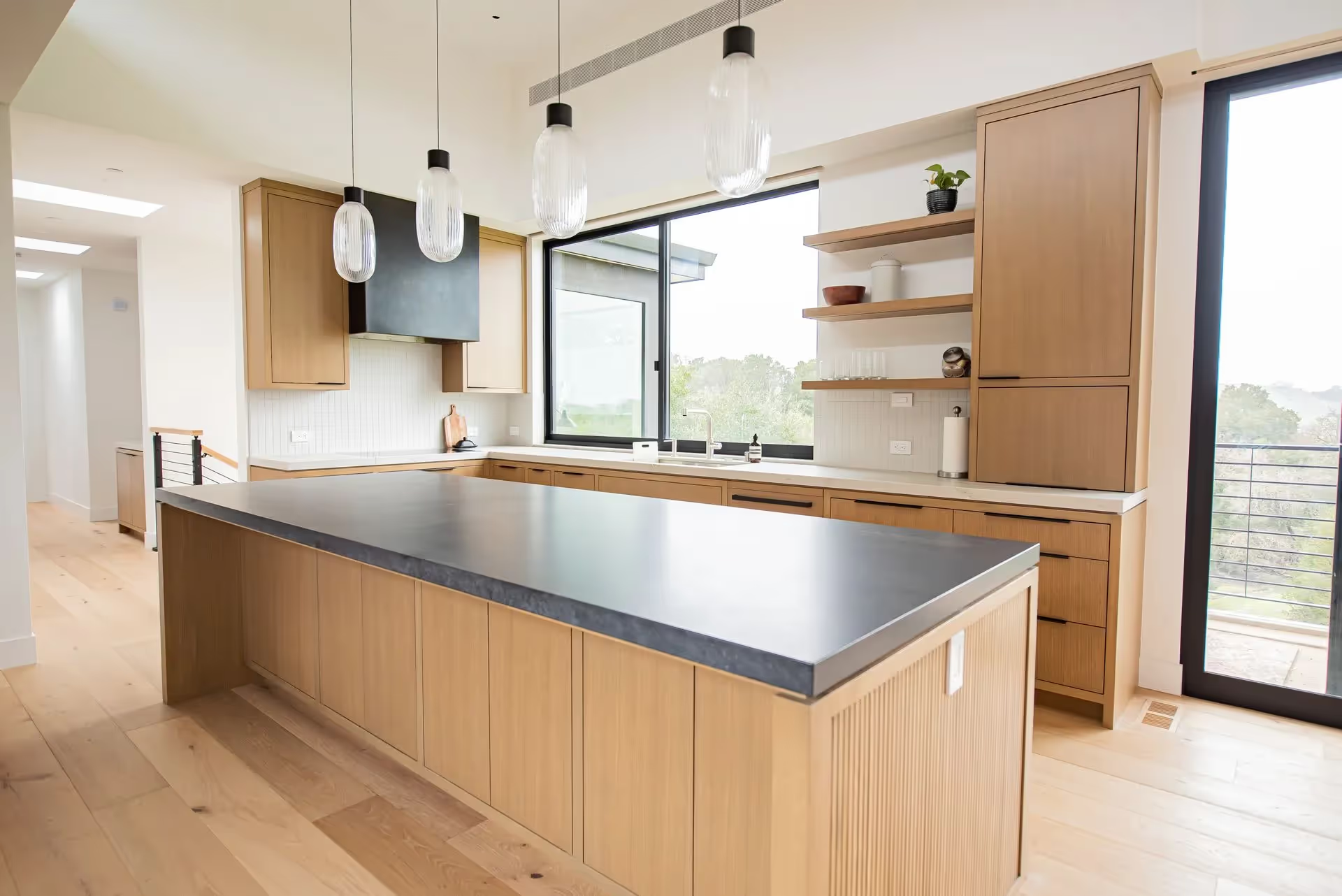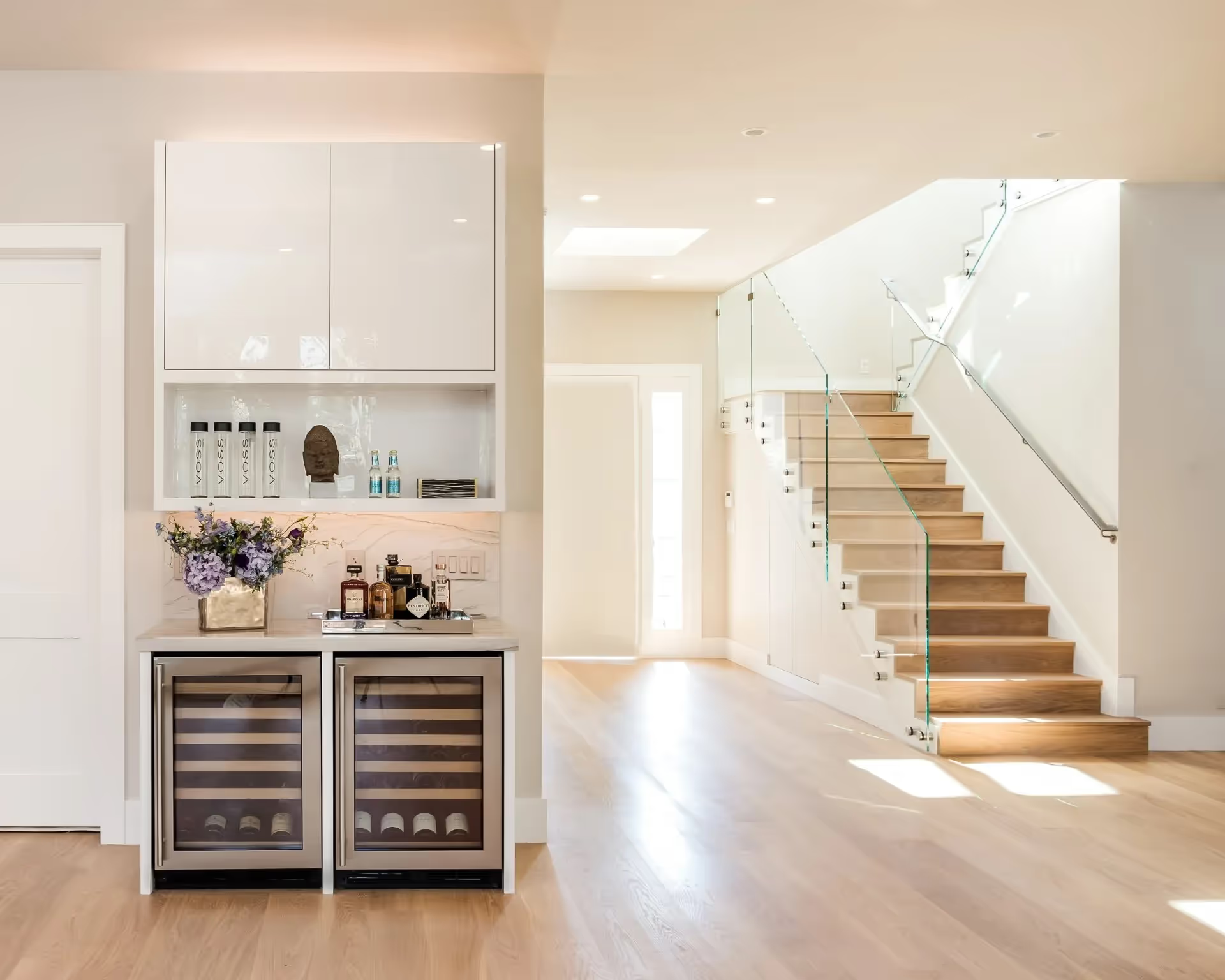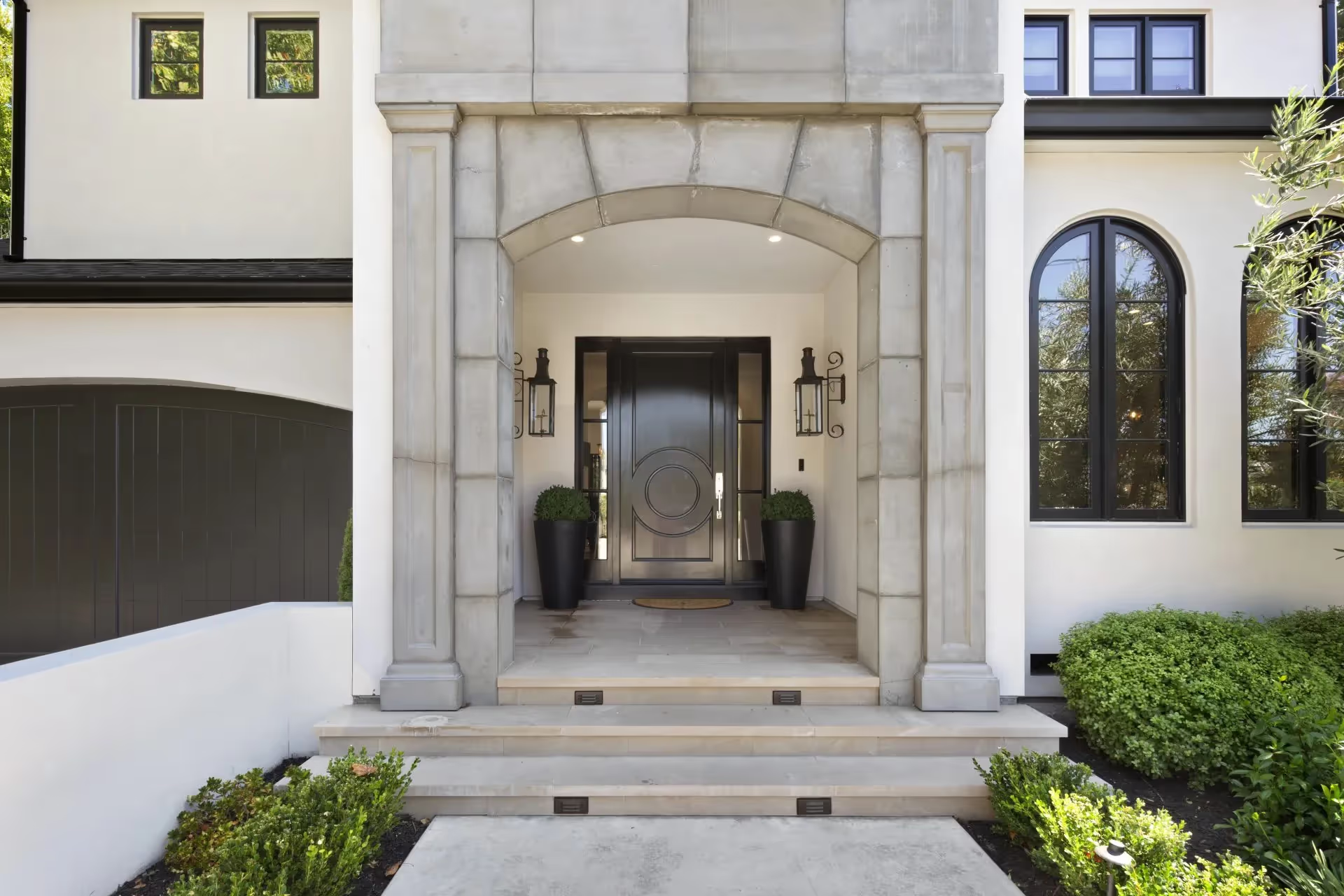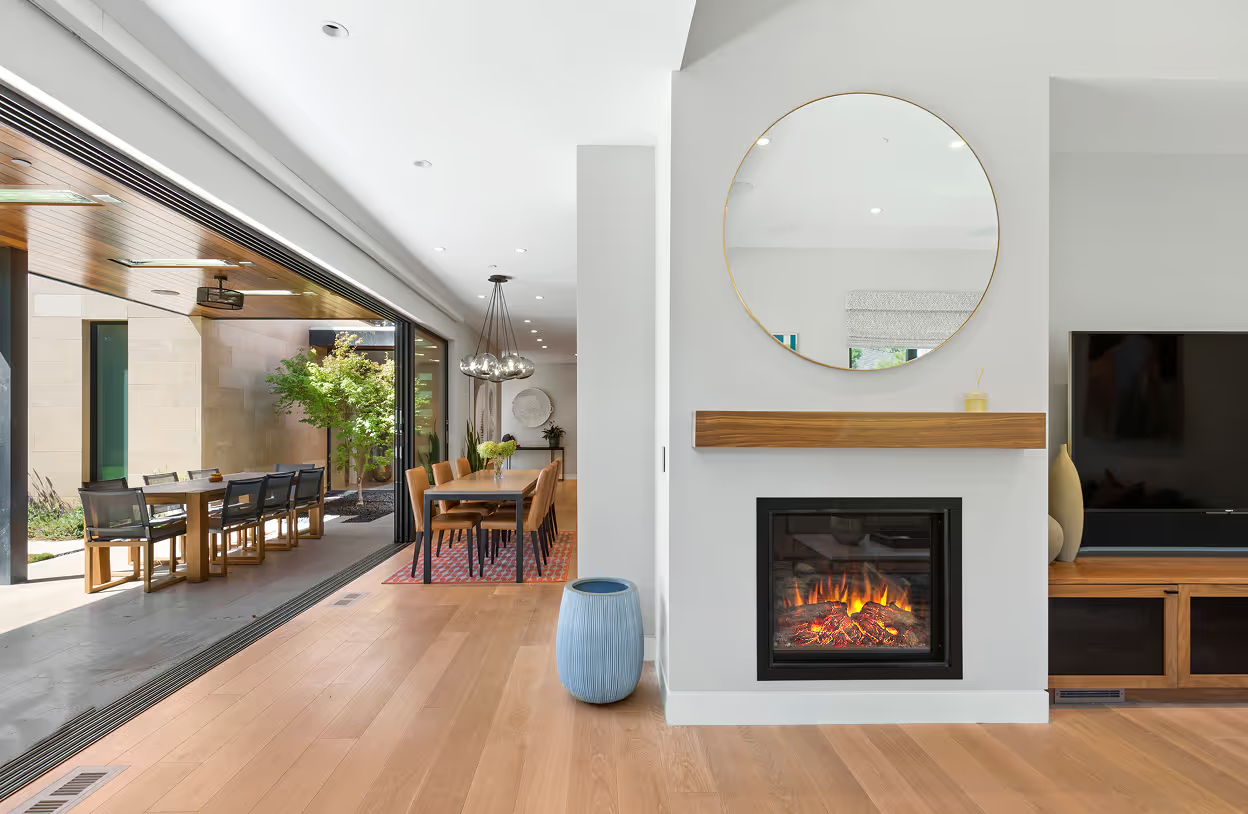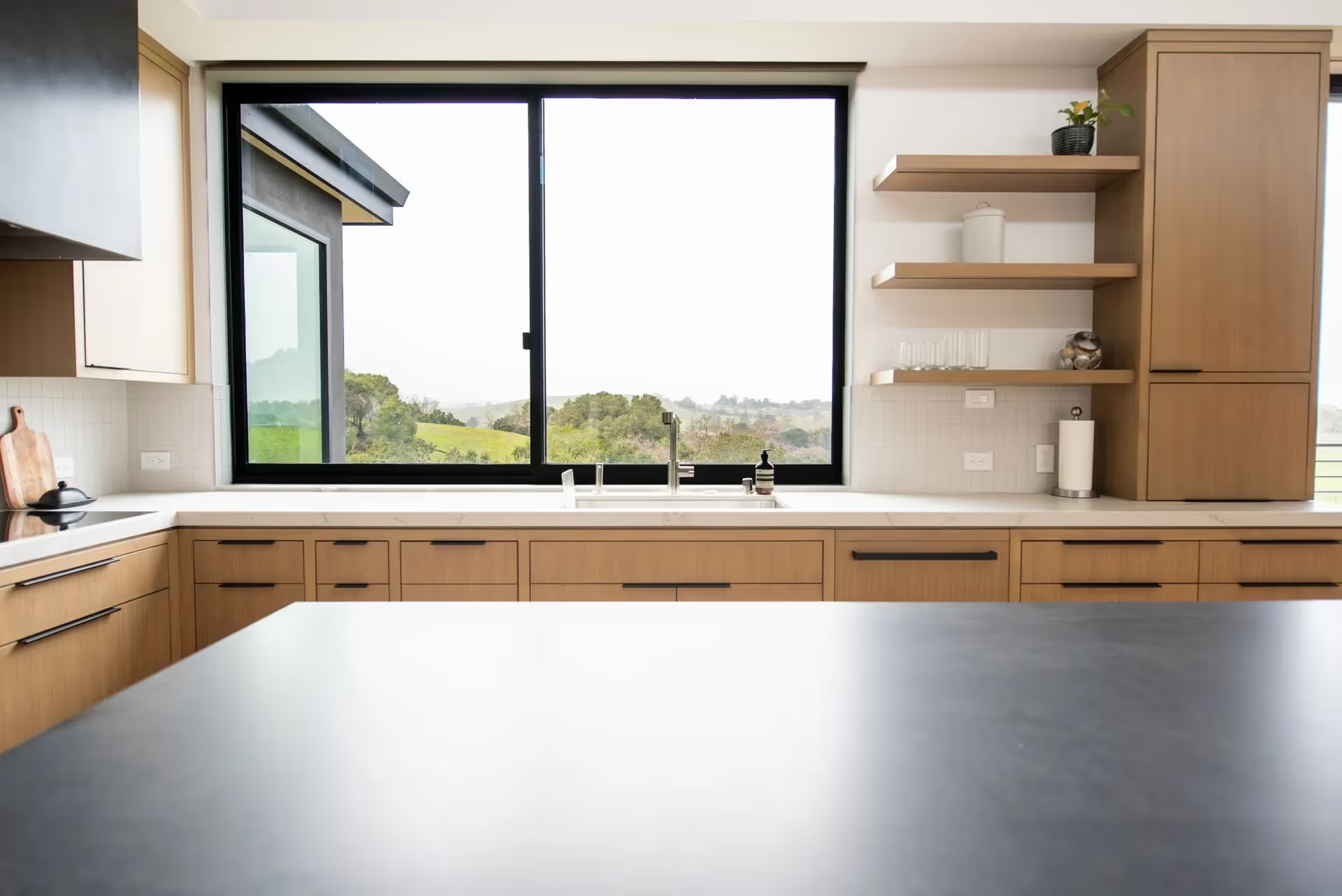
A large-scale luxury home renovation in the Bay Area requires careful planning well before construction begins. Homeowners should align on realistic budgets, understand how long the process genuinely takes, and prioritize finding a builder whose communication and transparency hold up throughout the entire project, not just during the initial sales conversation. The decisions you make in the planning phase set the tone for everything that follows.
Before You Review a Single Proposal, Read This
Most renovation regrets do not start on the job site. They start in the weeks before a contract is ever signed, when expectations and reality quietly begin to diverge. For homeowners undertaking a renovation at this scale, the stakes are too high for that gap to go unaddressed.
This guide covers what experienced Bay Area homeowners wish they had known before starting, from how to evaluate a builder's fit to what drives timelines and costs on projects ranging from $3 million to $8 million and beyond.
Key Takeaways
- Budget alignment should happen before design begins, not after — and realistic Bay Area renovation budgets often exceed initial estimates once full scope is defined.
- The planning and permitting phase in cities like Palo Alto, Los Gatos, and surrounding areas can add months to a project before a single wall is touched.
- The person who leads your sales conversation should remain your primary point of contact throughout construction — if that changes at signing, take notice.
- Communication structure matters more than communication promises — ask how a builder delivers updates, not just whether they do.
- Relocating during the most intensive construction phases is worth planning for financially and logistically from the start.
- A builder who pushes back on decisions that do not serve you is more valuable than one who agrees with everything.
Things You Must Know
1. Your Initial Budget Will Almost Always Underestimate Full Scope
This is not a flaw in your planning. It reflects the reality that design details, infrastructure upgrades, and lifestyle-specific amenities become clearer as the project develops. A home theater, smart home integration, an ADU for aging parents, or a fully reimagined indoor-outdoor living space each carry costs that are easy to undercount early. Working with a builder who walks you through detailed allowance structures and cost breakdowns before signing protects you from surprises that damage both timelines and trust mid-project.
2. Permitting in the Bay Area Takes Longer Than Most Homeowners Expect
Municipalities across the Peninsula and South Bay vary significantly in how quickly they process permits for large-scale residential projects. In cities like Palo Alto or Los Gatos, the permitting process alone can add several months to your project schedule before construction begins. A builder with direct experience navigating local jurisdictions can give you a realistic planning window, not an optimistic one. That transparency upfront is one of the clearest signals of operational maturity.
3. The Sales-to-Production Handoff Is Where Many Projects Fall Apart
A common source of renovation disappointment is the transition between the person who sold the project and the team executing it. If the individual who built your trust during the sales process is no longer your primary contact after signing, communication tends to degrade at exactly the moment it matters most. Before committing, ask specifically who your point of contact will be from contract through completion, and whether that person is involved in both the sales and production process.
What Does a Large-Scale Luxury Renovation Actually Cost in the Bay Area?
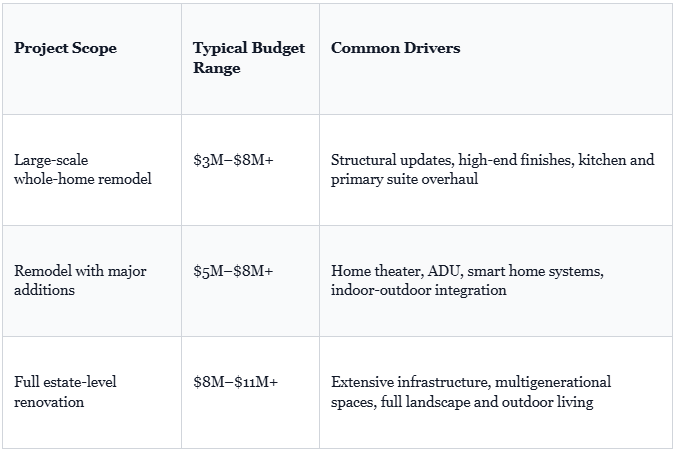
For homes ranging from 4,000 to 11,000 square feet in the Bay Area, high-end renovation budgets typically start around $3 million and can reach $8 million or more. Projects with significant structural complexity, full smart home integration, ADU additions, or custom indoor-outdoor living spaces sometimes push above that range.
The table below shows how scope and amenities typically affect overall project investment at this level:
The majority of homeowners undertaking luxury renovations at this scale in the Bay Area pay cash, with a smaller segment using construction financing. Cost-plus pricing models are generally preferred at this level because they offer line-item transparency, which is especially important on projects where scope evolves during design development.
If you are weighing whether to renovate or build new, the decision often comes down to lot constraints, existing structure condition, and your design goals. This comparison of luxury home renovation vs. new construction in Palo Alto breaks down how to approach that decision thoughtfully.
How Long Does a Project Like This Actually Take?
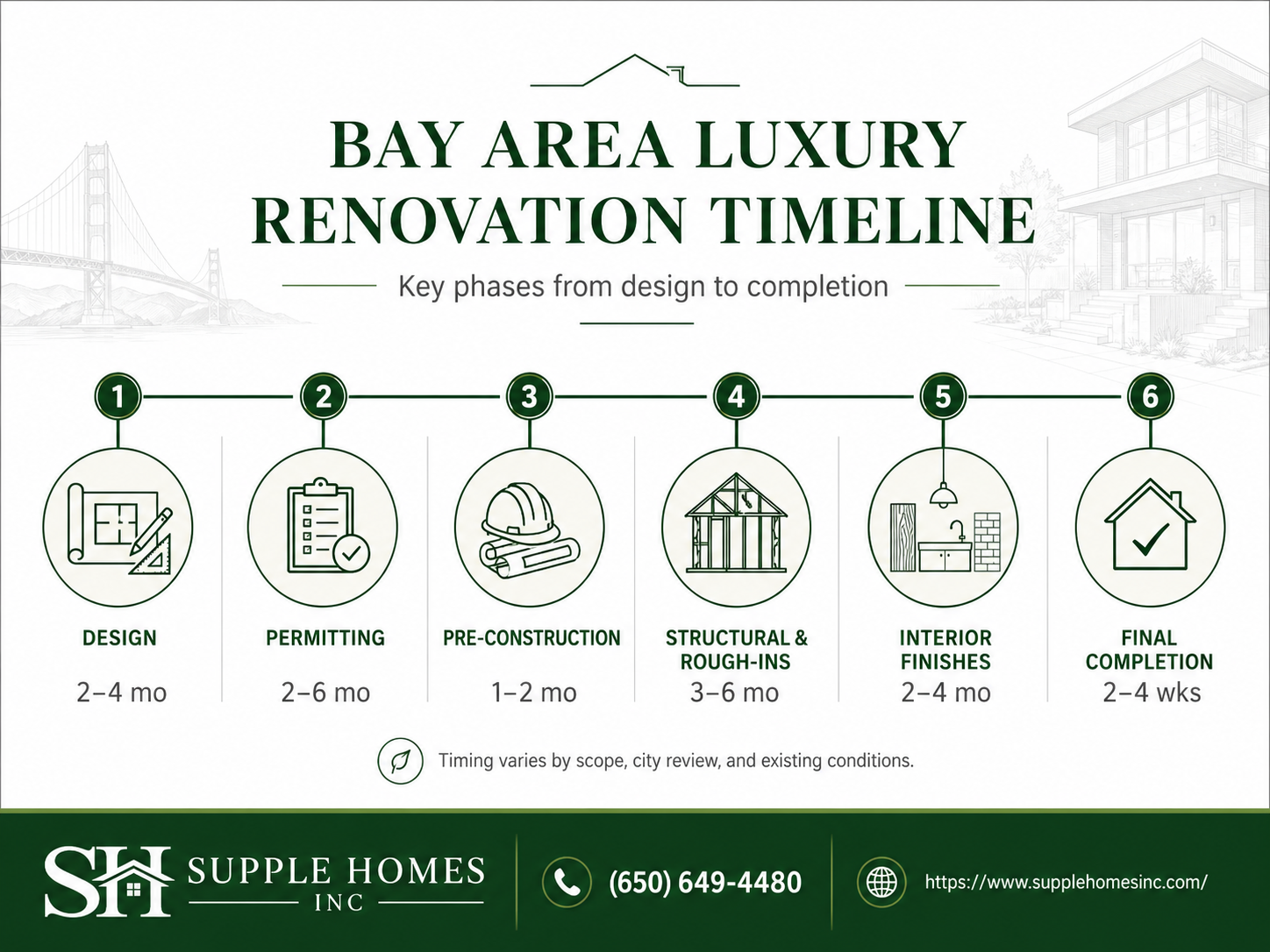
A large-scale luxury renovation spanning significant structural work, custom finishes, and smart home integration typically runs 12 to 24+ months from design finalization through construction completion. Timelines vary considerably based on permit complexity, materials lead times, and any scope changes during the build. Projects with ADUs or major additions often sit toward the upper end of that range.
Here is a realistic sequence of how a project at this scope tends to unfold:
- Pre-Design Alignment: Define your program, lifestyle priorities, and budget parameters with your builder before the architect finalizes drawings. This step is often skipped, which leads to costly redesigns later.
- Architectural Design and Engineering: Custom homes and large renovations require detailed architectural drawings and structural engineering. This phase typically takes two to five months depending on scope.
- Permitting: Permit timelines vary by municipality. In South Bay cities, plan for a minimum of two to four months. Some jurisdictions take longer, especially for ADUs or major structural additions.
- Pre-Construction and Procurement: Long-lead materials (custom cabinetry, specialty tile, smart home equipment, fixtures) must be ordered well before installation. A builder who manages procurement proactively prevents schedule gaps that add months without any construction progress.
- Construction: Active construction on a project of this scale typically spans eight to sixteen months. Subcontractor sequencing, inspections, and finish work each have their own dependencies.
- Punch List and Final Walkthrough: Allow four to eight weeks at the end for inspections, corrections, and final sign-off. Rushing this phase creates the unfinished details that linger for months after move-in.
How to Evaluate a Builder Before You Commit
Finding the right builder for a project at this level is less about credentials on paper and more about the quality of the relationship you experience before a contract is signed. Here is what to assess:

One of the most overlooked signals is how a builder handles your questions about surprises. On any project at this scale, unexpected conditions will arise — behind walls, under slabs, or in aging infrastructure. A builder who speaks plainly about how they handle those moments, before one ever occurs, is demonstrating a level of operational honesty that matters far more than a polished proposal.
Common Mistakes to Avoid Before Starting Your Renovation
- Skipping the pre-design budget conversation. Design development without an agreed budget framework almost always produces drawings that exceed what you intended to spend, requiring costly revisions before permitting can even begin.
- Underestimating the planning phase duration. Many homeowners budget for construction time but not for the months of design, engineering, and permitting that precede it. Build those months into your planning from day one.
- Choosing a builder based on the lowest bid. At this level, a lower number in a proposal often reflects scope that has been quietly removed or costs that will reappear as change orders. Transparent pricing from the start is worth more than a favorable initial number.
- Not planning for where the family will live during construction. Trying to occupy a home during heavy demolition and structural work adds stress, creates safety concerns for children and aging family members, and can slow the crew's ability to work efficiently.
- Treating the builder relationship as transactional. The best outcomes at this level come from relationships built on trust, not just contracts. Clients who invest in that relationship early tend to get better communication, faster problem resolution, and a builder who genuinely advocates for their project.
If one of your goals is designing spaces that serve your family's daily life as well as they photograph, it is worth reading about luxury home features that create genuine joy for gathering and everyday living. It is a useful lens to apply during your design phase.
Should You Stay in Your Home During the Renovation?
For renovations of significant scope, this question deserves a direct answer. In most cases, relocating for the most intensive phases is the more practical choice, not just for comfort but for safety, sanity, and construction efficiency.
Construction on projects involving major structural work, full kitchen demolition, or whole-home systems upgrades exposes occupants to noise levels, dust, and site access conditions that make normal family routines difficult to maintain. The presence of young children or aging parents on-site during heavy construction phases raises additional safety and practical concerns worth addressing in your planning.
Many families in this situation factor relocation costs into the overall project budget from the beginning, treating it as a known line item rather than an afterthought. A builder experienced with clients at this life stage can help you sequence the project phases to minimize disruption if a full relocation is not feasible. The key is making that decision with clear, upfront information about what each phase realistically involves.
For families also planning an ADU as part of their renovation — whether for aging parents, adult children, or multigenerational living — the planning and design considerations deserve their own attention. This guide to building a luxury ADU on the San Francisco Peninsula covers what to think through before that scope is added to a larger project.
Frequently Asked Questions
How do I know if a luxury home renovation contractor is the right fit before signing anything?
The clearest signal is how a contractor communicates before a contract is ever signed. A builder who is genuinely qualified will ask detailed questions about your lifestyle, your timeline, and your family's priorities, not just square footage and finishes. Pay attention to whether they push back thoughtfully on ideas that may not serve you well, because the best builders act as trusted advisors rather than vendors who agree with everything. Ask for references from clients with comparable project scopes, and note whether those clients describe peace of mind as an outcome, not just a finished product. If the person leading the sales conversation disappears once the contract is signed, that is a red flag worth taking seriously.
We have been burned by a past contractor. What should we look for to avoid that experience again?
Most renovation disappointments trace back to three failure points: poor communication, unclear pricing, and a handoff between the person who sold the project and the team that executes it. Before signing, ask specifically how the builder structures weekly updates, who your primary point of contact will be throughout the entire project, and how scope changes are documented and priced. Request a sample budget breakdown to see whether costs are transparent or vague, and ask how the builder handles surprises when they arise. On any large-scale renovation, surprises will occur. A builder who can speak plainly and specifically to all of these questions, rather than offering reassurances, is worth taking seriously.
What is a realistic budget range for a large-scale luxury home renovation in the Bay Area?
For a high-end renovation spanning 4,000 to 11,000 square feet in the Bay Area, budgets typically start around $3 million and can reach $8 million or more depending on scope, finishes, structural complexity, and additions like home theaters, smart home systems, ADUs, or indoor-outdoor living spaces. It is common for homeowners to enter the process with an initial budget that underestimates full scope once design details and lifestyle-specific amenities are factored in. Working with a builder who offers cost-plus pricing or detailed allowance structures from the beginning helps prevent the kind of mid-project surprises that damage trust and timelines. The clearest path to budget confidence is a contractor who is willing to show you exactly where the money goes before the project starts.
How long does a large-scale luxury home renovation typically take from planning to completion?
A renovation at this scale typically spans 12 to 24+ months from design finalization through construction completion, though timelines vary significantly based on permit complexity, materials lead times, and scope changes during the build. The planning and design phase alone — including architectural drawings, engineering, and permitting in cities like Palo Alto or Los Gatos — can add several months before a single wall is touched. One of the most important questions to ask any builder upfront is how they protect the schedule, specifically how they manage subcontractor sequencing, material procurement, and permit dependencies. A builder who answers that question with specificity is demonstrating the kind of operational maturity a project of this complexity requires.
Should we stay in our home during a large-scale renovation, or is it better to relocate?
For renovations involving major structural work, full kitchen or primary suite demolition, or whole-home systems upgrades, relocating for at least the most intensive phases is usually the more practical and less stressful choice. Living on-site during heavy construction affects family routines, exposes children and aging parents to noise, dust, and safety concerns, and can slow the crew's efficiency. Many families choose to stay in a rental, a second home, or extended-stay accommodations and factor that cost into the overall project budget from the start. A builder experienced with clients at this life stage can help you sequence the project in a way that minimizes disruption if full relocation is not feasible, but full transparency about what each phase involves is what makes that decision a clear one.
Starting Right Makes All the Difference
A renovation at this scale is one of the most significant investments a family can make, not just financially but in terms of the life they are building inside those walls. The homes that turn out well are rarely the ones with the biggest budgets or the most elaborate design plans. They are the ones where the right relationship was established early, expectations were set honestly, and a builder showed up as a trusted partner rather than a vendor.
If you are in the early stages of thinking through a large-scale luxury renovation in the Bay Area, the best first step is a conversation with a builder who will tell you what you need to hear, not just what you want to hear.
Supple Homes Inc. works with homeowners in Los Gatos, Palo Alto, and surrounding Bay Area communities on large-scale luxury renovations and custom builds. Reach out at (650) 649-4480 to start a conversation about your project.