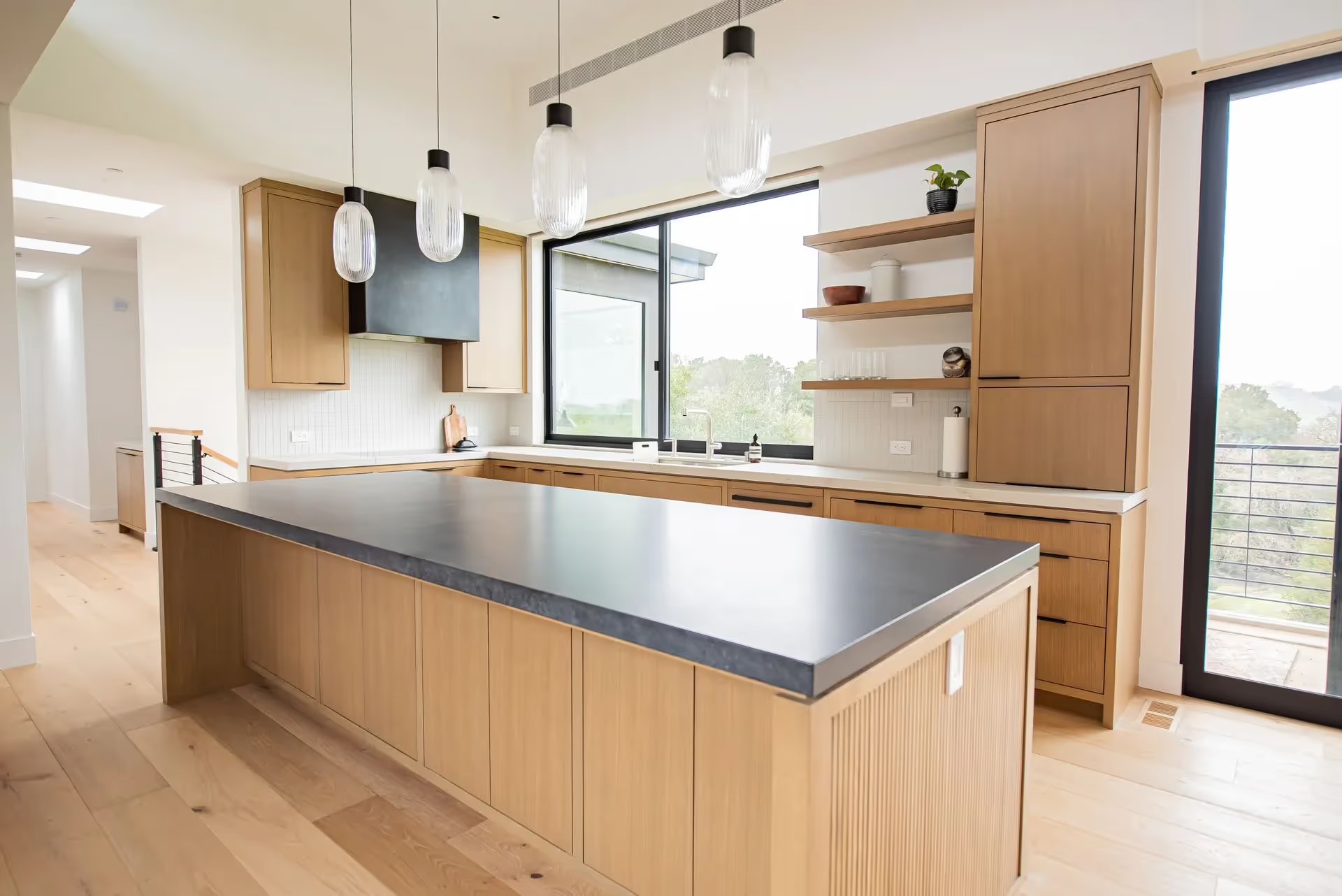
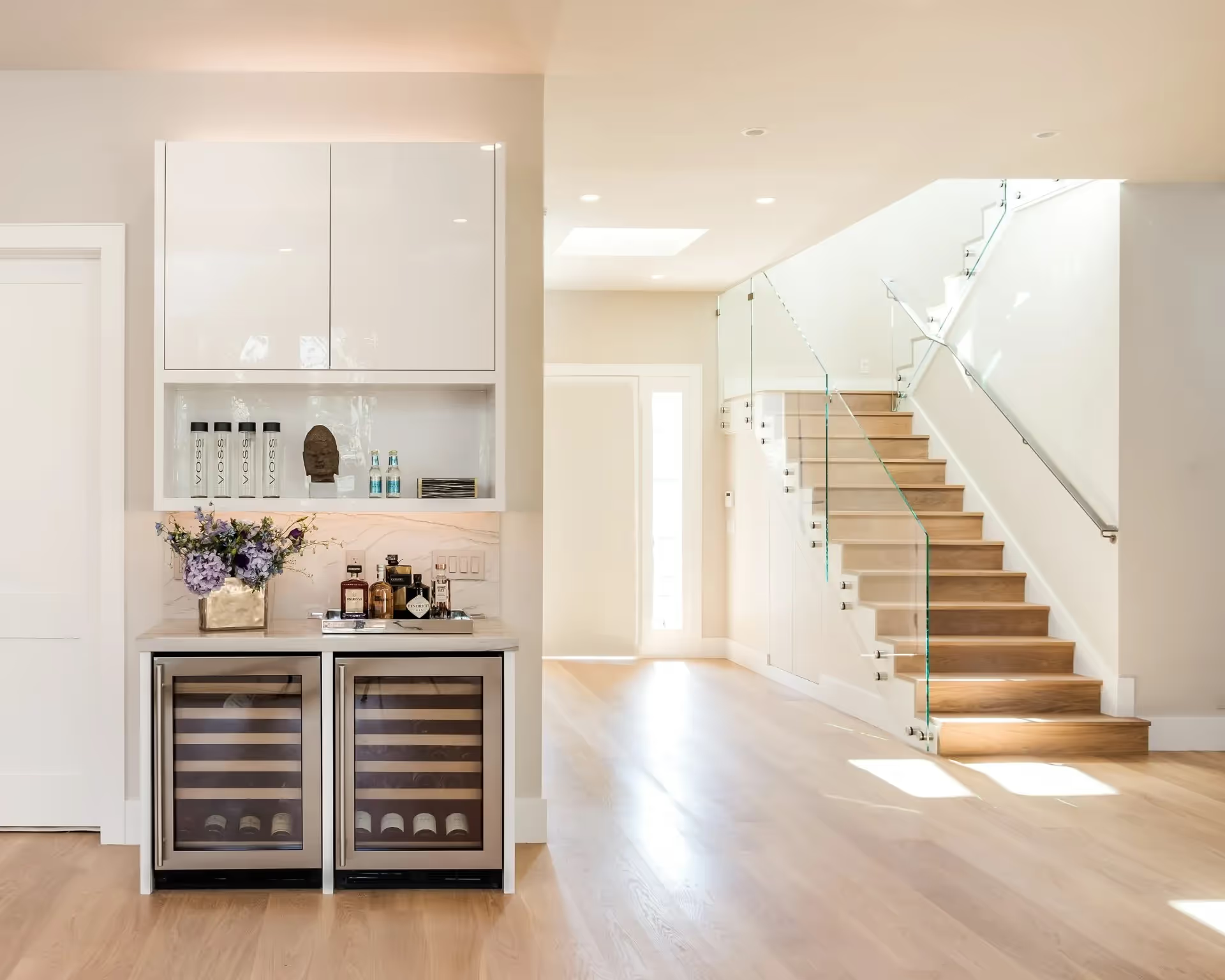
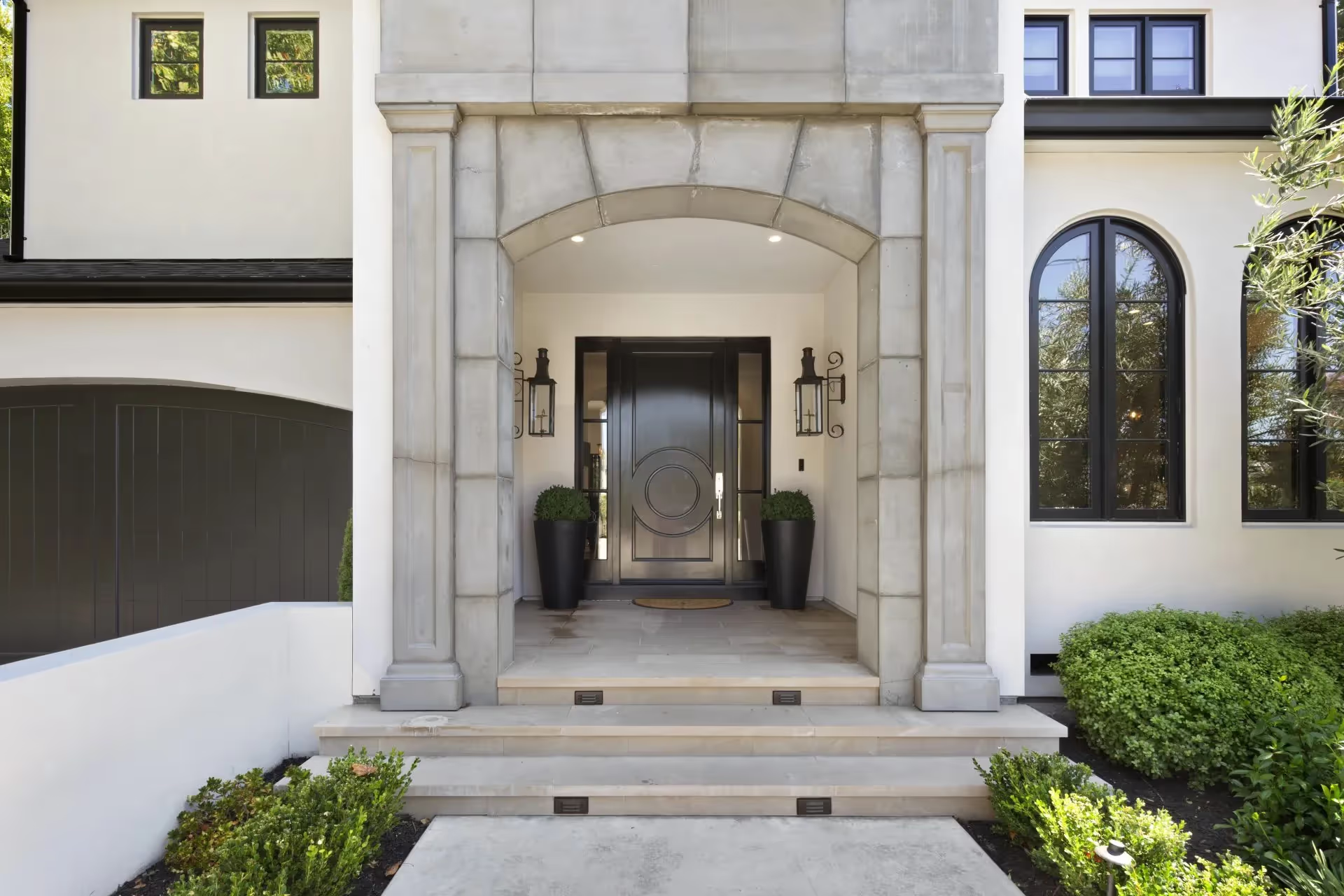
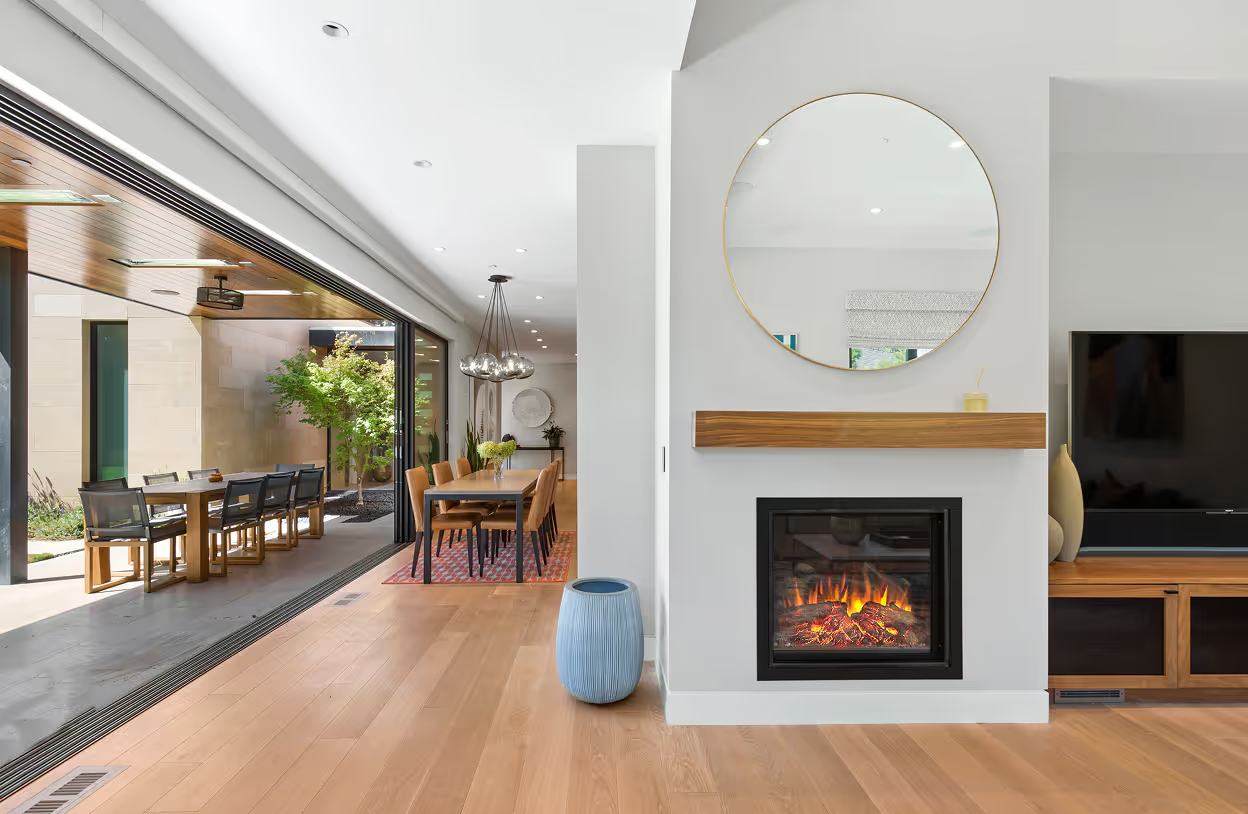
In Palo Alto, the choice between renovating a luxury home and building new comes down to land value, existing structure condition, and your long-term financial goals. Renovation can cost $500–$900 per square foot for high-end work, while new construction typically runs $800–$1,200+ per square foot in this market. Neither option is universally better; the right answer depends on a lot of constraints, zoning, and how much value your existing foundation actually holds.
Palo Alto real estate operates in a different financial universe than most of the country. Land here routinely sells for $3–5 million before a single nail is driven, which changes the math on every construction decision you face. Homeowners in Old Palo Alto, Professorville, and Crescent Park are regularly wrestling with a question that sounds simple but isn't: do I tear down and rebuild, or do I work with what I have? The answer affects not just your budget but your timeline, your financing options, and ultimately the resale value of one of the most expensive properties in California.
Key Takeaways
- Luxury renovation in Palo Alto typically costs $500–$900 per square foot, while new construction runs $800–$1,200+ per square foot, depending on design complexity and finishes.
- New construction allows full control over layout, systems, and energy efficiency, but permitting alone can add 6–18 months to your timeline in Santa Clara County.
- Renovation preserves existing square footage and can avoid triggering certain zoning restrictions, which matters enormously on non-conforming lots.
- The condition of your existing foundation, framing, and MEP systems (mechanical, electrical, plumbing) is the single biggest variable in whether renovation delivers real value.
- From a pure ROI standpoint, neither path guarantees a higher return; location and finish quality drive resale value more than the construction method itself.
- Working with an experienced luxury home builder in Palo Alto early in the decision process can prevent costly assumptions from driving your planning.

Why Palo Alto Changes the Math Entirely
In most U.S. markets, the renovation-versus-rebuild decision leans heavily toward renovation because land is relatively cheap and existing structures represent meaningful value. Palo Alto flips that logic. When a teardown lot in a desirable neighborhood fetches $3 million or more, the land itself dominates the asset, the structure sitting on it can almost be treated as a bonus or a liability depending on its condition.
Palo Alto's median home price consistently ranks among the top five most expensive ZIP codes in the United States, with single-family homes regularly trading above $3.5 million. In neighborhoods like Professorville and Old Palo Alto, properties with dated structures but prime lot sizes often sell for land value alone, with buyers immediately demolishing the existing home.
This context shapes everything. A homeowner sitting on a 7,000-square-foot lot in Crescent Park with a 1960s ranch house isn't just deciding between renovation and construction; they're deciding how to maximize the return on a multi-million dollar land asset. Understanding the role that Palo Alto luxury homes architecture plays in long-term value helps frame that decision beyond just square footage and finishes.
What Does Luxury Renovation Actually Cost Here?
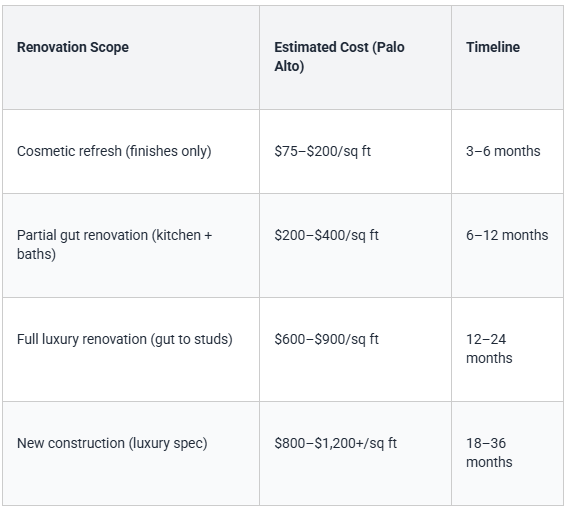
The word "renovation" covers an enormous range of scopes, and the cost gap between a cosmetic refresh and a gut renovation is staggering. In Palo Alto's luxury market, a true high-end renovation, one that meaningfully upgrades a home to compete with new construction, is rarely a light lift.
A full luxury renovation in the Bay Area ,including kitchen, bathrooms, primary suite, updated MEP systems, and new finishes throughout ,typically costs between $500 and $900 per square foot. For a 3,000-square-foot home, that places total renovation costs anywhere from $1,500,000 to $2.7 million before contingency, design fees, or permit costs are factored in.
What surprises most homeowners is how quickly hidden costs compound. Opening walls in a home built before 1980 frequently reveals asbestos, knob-and-tube wiring, or undersized plumbing that must be remediated before any cosmetic work begins. One Palo Alto project, scoped at $800,000 in renovations, can quietly become $1.2 million once the existing structure reveals its full condition. This isn't a contractor warning; it's a pattern that shows up repeatedly in older Peninsula homes.
The Real Cost of Building New in Palo Alto
New construction gives you a blank canvas, modern structural systems, optimized floor plans, energy efficiency built in from day one, and no surprise discoveries inside old walls. For a luxury buyer who wants a home that performs and feels like a true custom build, that control has real value. But the premium is significant, and the timeline is longer than most people anticipate.
In Santa Clara County, demolition permits, design review, and building permit approvals for new residential construction can take anywhere from 6 to 18 months, depending on project complexity and whether the property falls within a historic district or requires discretionary review. Palo Alto's planning department is known for thorough review timelines relative to neighboring cities.
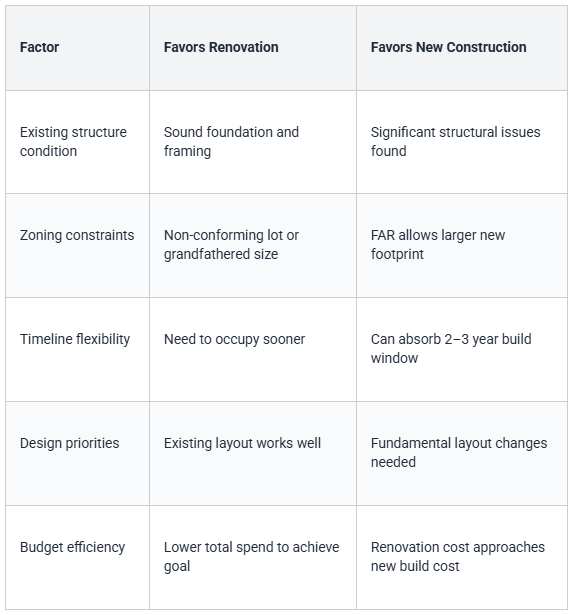
Understanding permits and zoning before committing to new construction is critical. Palo Alto has specific floor area ratio (FAR) rules, height restrictions, and setback requirements that may limit how large a new home can be, even on a generous lot. In some cases, a teardown and rebuild results in a home that's smaller than what you're replacing because the existing structure was built under more permissive historical codes.

How to Decide: A Step-by-Step Framework
- Commission a structural and systems assessment first. Before any financial modeling, have a licensed inspector evaluate the foundation, framing, roof structure, electrical panel, and plumbing. This single step determines how much hidden cost a renovation actually carries.
- Calculate the total renovation cost with a 20% contingency built in. Most luxury renovation budgets in the Bay Area run over initial estimates. Price the full scope, then add 20% as a realistic buffer before comparing to new construction costs.
- Check current zoning allowances for your lot. Request a zoning summary from the City of Palo Alto to understand your maximum buildable square footage, setbacks, and any applicable design review requirements. This tells you whether new construction can actually deliver what you want.
- Model both paths against current market comps. Pull recent sales data for comparable renovated homes and new builds in your specific neighborhood. The price gap between a beautifully renovated 1970s home and a new construction home on the same street may be smaller or larger than you expect.
- Factor in carrying costs and displacement. New construction typically requires the homeowner to rent elsewhere for 18–30 months. In Palo Alto's rental market, that can add $60,000–$150,000 or more to the true cost of building new.
- Consult with a builder who has completed both types of projects locally. A contractor experienced only in new construction will naturally push that direction. Find someone who can honestly evaluate both paths for your specific property.
The ROI Question: Does New Construction Pay Off?
Many homeowners assume new construction automatically delivers a stronger return on investment. That assumption deserves scrutiny. In Palo Alto's market, buyers pay for location and lot size first; the quality of the structure matters, but it rarely moves the needle as dramatically as people expect.
Studies of Bay Area luxury real estate transactions suggest that a high-quality renovation in a prime neighborhood can achieve 85–95% of the price per square foot commanded by comparable new construction nearby. The gap narrows significantly when the renovation includes updated MEP systems, modern kitchen and bath finishes, and energy efficiency upgrades.
The honest answer is that ROI depends heavily on what you're comparing. A $1.5 million full gut renovation on a home already worth $4 million in land value will likely pencil out well. Spending $2 million on renovations for a property where the total value, land plus structure, caps at $3.5 million is a different story entirely. The renovation has to make sense within the ceiling that the neighborhood sets.
Common Mistakes Palo Alto Homeowners Make
- Underestimating renovation scope. Cosmetic estimates balloon quickly once walls open and reveal aging systems. Always budget for full MEP replacement in homes built before 1990.
- Assuming demolition is straightforward. In Palo Alto, tear-downs trigger environmental review, potential heritage tree assessments, and neighborhood notification requirements that can delay the start of new construction by months.
- Ignoring the rental displacement cost. Homeowners regularly forget to add 18–30 months of luxury rental costs when comparing new construction to renovation budgets.
- Letting design scope creep drive costs past neighborhood value ceilings. Spending $3 million on construction in a neighborhood where homes sell for $4 million leaves almost no margin for land cost recovery.
- Skipping the zoning check before committing to new construction. Discovering that your lot's FAR limits the new home to the same square footage as what you're tearing down, after paying for architectural plans, is an expensive and avoidable surprise.
- Choosing a contractor based on cost alone. In luxury construction, the gap between an experienced Peninsula builder and a cheaper generalist often shows up in permit delays, subcontractor quality, and finish execution.
Nearby Areas Where This Decision Looks Different
Palo Alto homeowners often compare notes with neighbors in Menlo Park, Atherton, Los Altos, and Mountain View, but the decision calculus shifts meaningfully between these cities. Atherton, for instance, has even stricter design review processes and larger minimum lot sizes, which can make new construction both more complex and more rewarding when done well. Menlo Park offers somewhat faster permitting timelines for straightforward residential projects. Los Altos Hills, with its rural residential zoning and larger parcels, may allow construction scopes that aren't possible on typical Palo Alto infill lots.
Understanding how the specific city's planning department operates, what the neighborhood value ceiling looks like, and what your lot's zoning actually permits is the foundation of every smart decision in this market.
Frequently Asked Questions
Is it cheaper to renovate or build new in Palo Alto?
In most cases, renovation carries a lower total cost, but not always by the margin homeowners expect. A full luxury renovation runs $300–$700 per square foot, while new construction typically starts at $600 and can exceed $1,200 per square foot for high-specification builds. The real comparison has to include contingency costs, permitting timelines, and displacement costs, which often narrow the gap significantly.
Does new construction guarantee a higher return on investment (ROI)?
Not automatically. In Palo Alto, where land value dominates the asset, the incremental premium between a well-executed renovation and new construction is smaller than people expect, often 5–15% in the final sale price. A renovation that brings systems and finishes to a modern standard frequently captures most of that premium at a lower total cost. ROI depends on your specific neighborhood's value ceiling and how much you're spending relative to that ceiling.
What is the average timeline for these projects in the Bay Area?
A partial luxury renovation typically takes 6–12 months. A full gut renovation with significant structural changes can run 18–24 months. New construction in Palo Alto, including design, permitting, and build, realistically takes 24–36 months from initial planning to certificate of occupancy. Permit timelines with the City of Palo Alto are a meaningful variable that contractors familiar with the local market are best positioned to estimate accurately.
How do zoning laws in Palo Alto affect my choice?
Zoning has a direct impact on whether new construction delivers what you want. Palo Alto's floor area ratio rules, setback requirements, and height restrictions may limit a new build to less square footage than the structure you're replacing, especially if the existing home was built under older, more permissive codes. Renovation, in some cases, allows you to preserve grandfathered square footage or non-conforming setbacks that a tear-down would permanently forfeit. Reviewing permits and zoning specifics with a local expert before making any commitment is essential.
Which option is better for financing?
Renovation financing can be structured through home equity lines of credit, renovation loans, or cash-out refinancing, all of which are generally more accessible and faster to secure than construction financing. New construction typically requires a construction-to-permanent loan, which involves more complex underwriting, draw schedules, and lender oversight of the build process. For buyers without significant equity or liquid capital, renovation often represents the more accessible financing path. Both options benefit from working with a lender who has experience with luxury residential projects on the Peninsula.
Conclusion: Making the Decision That Fits Your Property
There's no universal right answer to the renovation-versus-new-construction question in Palo Alto. The decision comes down to the specific condition of your existing structure, what your lot's zoning actually permits, the total cost comparison when all variables are on the table, and your personal timeline. What's clear is that the stakes in this market are high enough that getting the early analysis right matters enormously.
Homeowners who approach this decision with accurate cost data, an honest structural assessment, and an understanding of what the neighborhood's value ceiling will bear consistently make better choices than those who rely on assumptions or general rules of thumb.
If you're working through this decision for a Palo Alto property, Supple Homes Inc. offers the kind of local expertise that makes these comparisons meaningful. With deep experience in both luxury renovation and custom new construction on the Peninsula, the team can help you evaluate your specific property honestly, not just pitch you toward one path or the other. Reach out at (650) 649-4480 to start a conversation about which direction actually makes financial sense for your home.