Building a custom home in Palo Alto, Atherton, or Menlo Park requires navigating three distinct municipal permit and zoning systems. Each city enforces its own setback rules, height limits, design review thresholds, and environmental overlays. Understanding these differences before you design can save months of delays and thousands of dollars in redesign costs.
Most custom home projects on the Peninsula hit their first serious obstacle not during construction, but during the planning phase. Owners arrive with architectural plans only to discover that their lot's zoning classification, neighborhood design guidelines, or a missed heritage tree ordinance requires a complete rework. Getting ahead of these requirements is not a luxury; it's the difference between a 12-month build and a 24-month ordeal.
Key Takeaways
- Palo Alto, Atherton, and Menlo Park each operate under separate zoning codes with meaningfully different rules around height, setbacks, and lot coverage.
- Atherton's design review process is among the most thorough in San Mateo County, often requiring Architectural Review Board approval even for single-family new construction.
- Palo Alto enforces environmental overlays and historic resource reviews that can add review cycles before a permit is issued.
- Menlo Park's permit timeline has improved with digital submission tools, but discretionary review triggers are still common on lots over a certain size or near sensitive areas.
- Accessory structures such as pool houses and guest units are regulated separately and often require independent permit applications in all three cities.
- Engaging a builder familiar with Peninsula municipal processes early, like Supple Homes INC, reduces the risk of costly plan revisions mid-review.
Why Zoning Rules Vary So Much Across Three Neighboring Cities
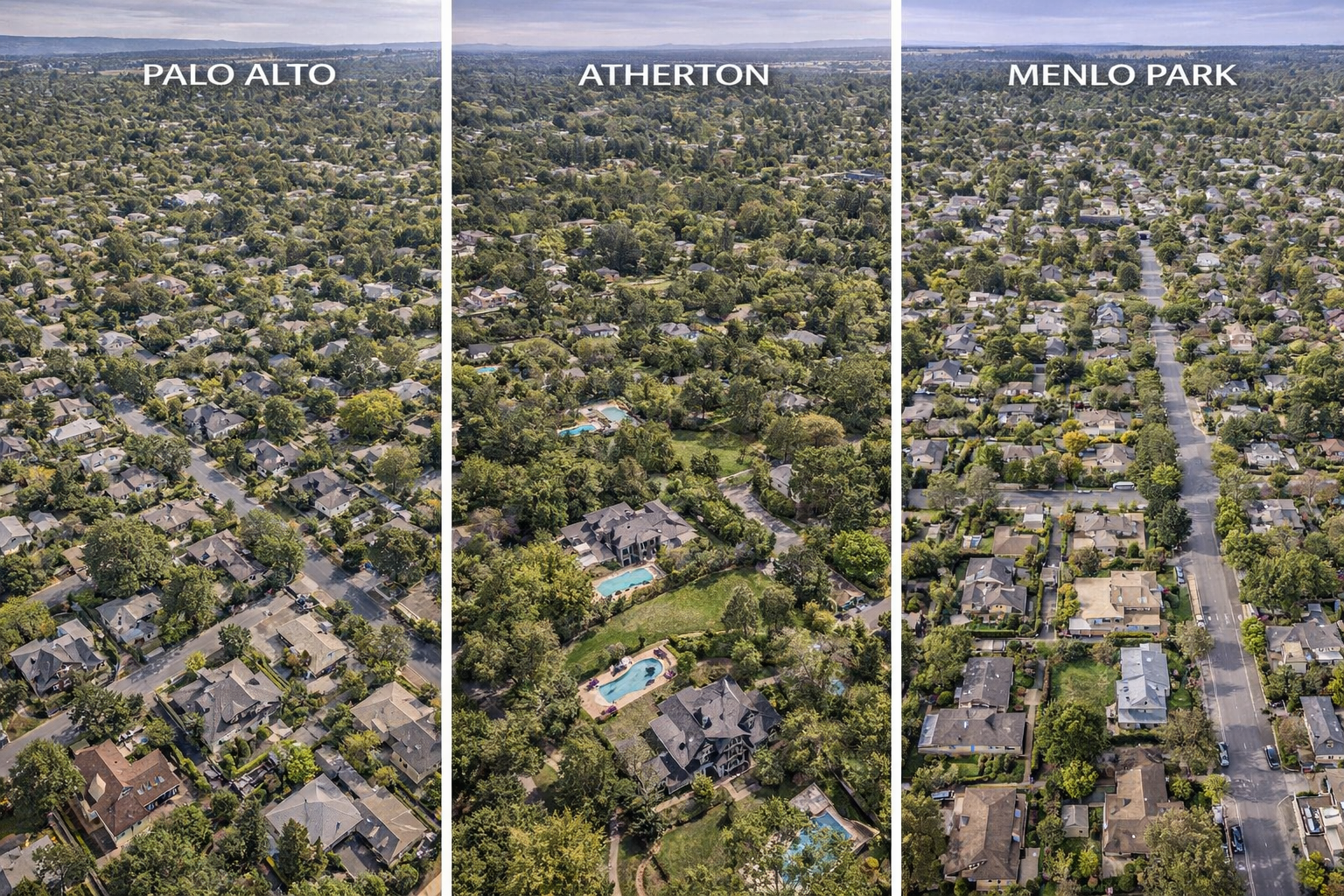
It surprises many homeowners that three cities separated by a few miles can have such different regulatory environments. The reason comes down to incorporation history and local governance priorities. Atherton is a general law city with a strong tradition of low-density residential protection, while Palo Alto operates under a charter city model with its own environmental review protocols layered on top of state CEQA requirements. Menlo Park sits in between, balancing residential preservation with active mixed-use corridors along El Camino Real and downtown.
The practical effect is that the same house design could be fully compliant in one jurisdiction and require two rounds of redesign in another. Understanding which city your lot falls under, and what that city's review thresholds are, is the foundation of any successful custom home project on the mid-Peninsula.
Palo Alto: Environmental Overlays and Design Review Triggers
Palo Alto's zoning code is detailed and actively enforced. The city uses a tiered review system: projects that fall within standard parameters may qualify for over-the-counter administrative approval, while anything exceeding certain thresholds triggers a formal discretionary review before the Architectural Review Board (ARB) or Planning Commission.
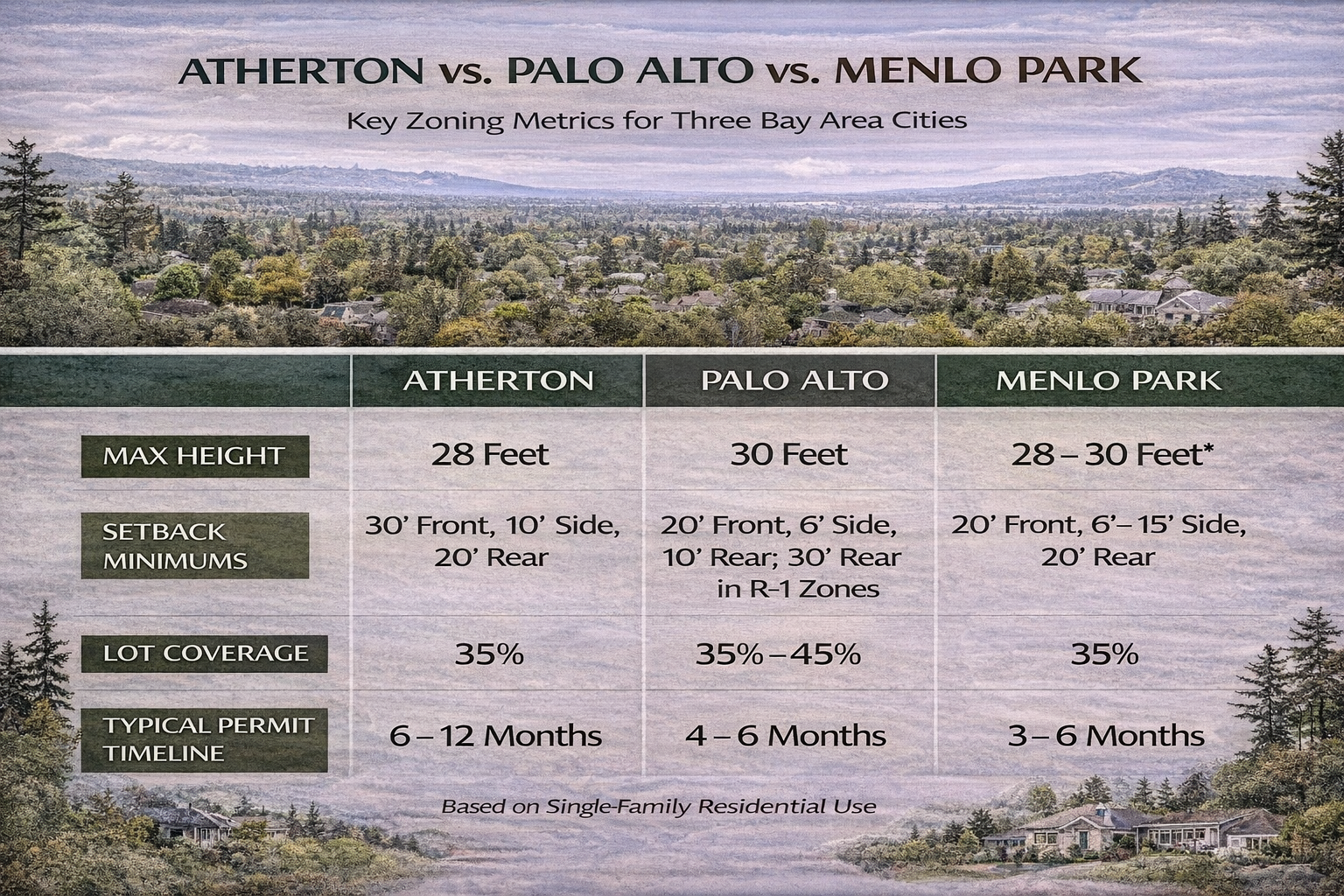
In Palo Alto's single-family residential zones, the base maximum floor area ratio (FAR) typically ranges from 0.35 to 0.45 depending on the specific zone designation. Lots under 10,000 square feet face stricter proportional limits, and second-story additions often trigger neighbor notification requirements with a comment period that can extend the review timeline by four to six weeks.
The city also enforces a heritage tree ordinance that requires a certified arborist report and possible tree protection plan before any grading or foundation work begins. This is not a minor procedural step. Missing it can result in a stop-work order and fines that affect your project schedule significantly. If you're exploring what goes into building a luxury home in Palo Alto, understanding these environmental constraints early shapes everything from site planning to grading strategy.
Atherton: Low Density, High Scrutiny
Atherton has the smallest population of the three cities and by design keeps it that way. The entire town is zoned for single-family residential use at very low density, with minimum lot sizes that historically start around one acre. This exclusivity comes with a rigorous review process that new custom home applicants frequently underestimate.
Atherton's Planning Commission and Architectural Review Board both play active roles in new construction approvals. Projects that exceed 35% lot coverage or reach toward the 28-foot height limit are virtually guaranteed a discretionary hearing. The Architectural Review Board reviews exterior materials, massing, landscaping plans, and compatibility with neighboring properties, a process that typically adds two to four months to pre-permit timelines for larger custom builds.
What makes Atherton distinctive is the depth of neighbor notification protocols. Adjacent and nearby property owners receive formal notice, and their comments carry weight in the review. Building something that reads as out of scale or out of character with the neighborhood is a real risk that experienced architects and builders plan around from the very first site study. For a closer look at what distinguishes successful projects there, the overview of Atherton's luxury homes explores the design and planning considerations that matter most.
Menlo Park: Streamlined Process With Key Exceptions
Menlo Park has invested in digital permitting infrastructure that makes initial submissions and plan check communication faster than it used to be. For straightforward residential projects on standard lots, this can meaningfully compress the pre-construction timeline. That said, exceptions exist and they come up frequently in custom home projects.
Menlo Park's residential zones include several Special Purpose overlays near creeks, flood zones, and historic districts. Projects near San Francisquito Creek or within the Felton Gables or Allied Arts neighborhoods may trigger additional environmental or historic resource review, adding four to eight weeks to the approval process. Homes exceeding roughly 6,000 square feet of gross floor area have also historically required a more detailed planning review.
The city's approach to accessory dwelling units and guest structures has evolved rapidly under state ADU law, but custom guest houses intended as premium lifestyle amenities rather than affordable housing units still face separate permitting requirements. Anyone pursuing design-build in Menlo Park should map out the full structure of their project early to identify which components need independent permit tracks.
The Step-by-Step Permit Process for a Custom Home on the Mid-Peninsula
- Pre-Application Research: Pull the parcel's zoning designation, overlay districts, and any recorded deed restrictions from the city's GIS portal. This takes one to two hours and can surface deal-altering constraints before you spend money on design.
- Pre-Application Meeting: Request a pre-application or pre-submittal meeting with the city's planning department. All three cities offer this. It gives you direct feedback on whether your project concept will trigger discretionary review before you finalize plans.
- Schematic Design and Plan Set Preparation: Work with your architect to prepare a complete plan set meeting the city's submittal checklist. Missing sheets or incomplete site plans are the single most common cause of first-round plan check rejections.
- Planning Application Submittal: Submit your planning application (if discretionary review is required) or proceed directly to building permit submittal for over-the-counter projects. Pay applicable fees at this stage.
- Plan Check and Response Cycles: The city's plan check team reviews for zoning compliance, building code compliance, and fire safety. Expect one to three rounds of comments and responses. Each cycle typically takes two to four weeks per city.
- Permit Issuance and Construction Start: Once all plan check comments are resolved and fees are paid, the building permit is issued. Construction may begin, with required inspections at foundation, framing, rough MEP, and final stages.
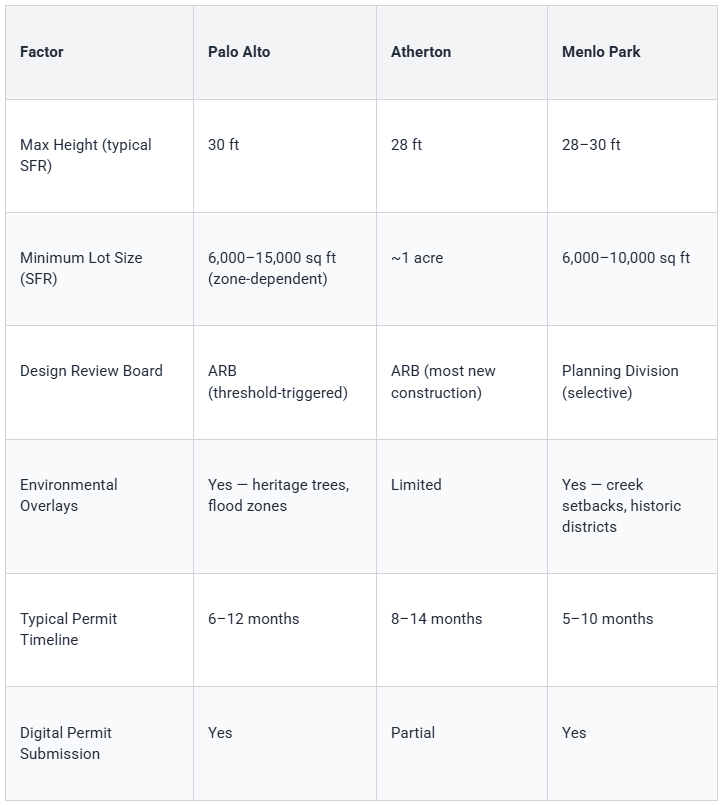
City-by-City Zoning Comparison at a Glance
Common Mistakes That Derail Permit Applications
- Skipping the pre-application meeting. Owners who go straight to full plan submittal without a pre-app conversation frequently discover zoning conflicts that force expensive redesigns after fees have already been paid.
- Underestimating setback complexity. Setbacks in all three cities are not always simple front/side/rear measurements. Corner lots, flag lots, and lots adjacent to public open space often face additional setback requirements that standard plans don't account for.
- Ignoring the arborist requirement in Palo Alto. A heritage tree that falls within your proposed building footprint or grading area can halt the entire project until a tree protection or removal permit is separately resolved.
- Treating guest houses and ADUs as the same application. A detached guest suite designed as a premium entertainment or family accommodation is not always eligible for the streamlined ADU permit pathway, particularly in Atherton.
- Not accounting for neighbor comment periods. In Atherton especially, formal neighbor notification windows are built into the review timeline. Missing a neighbor's objection or responding to it poorly can send a project back for an additional hearing.
- Submitting incomplete plan sets. Each city publishes a submittal checklist. Missing a grading plan, a landscape plan, or an energy compliance document (Title 24) triggers an immediate incomplete-application notice and resets the review clock.
Custom home projects on the mid-Peninsula that go through at least one round of discretionary review add an average of four to seven months to their pre-construction timeline compared to ministerial (over-the-counter) approvals. This delay directly translates to carrying costs on land loans and design fees that can total tens of thousands of dollars for high-value Peninsula properties.
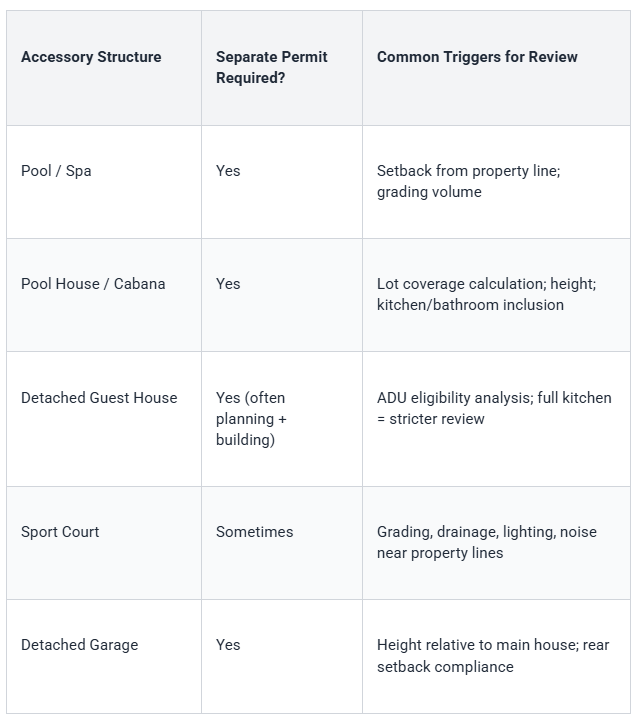
What Accessory Structures Require Separate Permits
Pool houses, detached garages, sport courts, and guest quarters are not typically covered under a main house building permit. Each of these structure types may require its own planning review, building permit, and in some cases, a conditional use permit if the use is deemed non-standard for the zone.
Nearby Areas Also Served
While this guide focuses on Palo Alto, Atherton, and Menlo Park, Supple Homes INC also works with homeowners across the broader mid-Peninsula and South Bay, including Los Altos, Los Altos Hills, Portola Valley, Woodside, and Redwood City. Each of these communities has its own permit and zoning framework, though several share the same general complexity level as the three cities covered here.
Frequently Asked Questions
What are the key zoning differences between the three cities?
Palo Alto has the most complex overlay system, with environmental and heritage tree protections layered on top of standard residential zoning. Atherton applies near-universal design review to new custom construction and has larger minimum lot sizes than the other two cities. Menlo Park's system is somewhat more streamlined but includes specific protections near waterways and within designated historic neighborhoods.
How long does the building permit process take?
For a straightforward custom home with no discretionary triggers, expect five to eight months from initial submittal to permit issuance in Menlo Park, six to ten months in Palo Alto, and eight to twelve months in Atherton. Projects that require ARB hearings, environmental review, or multiple plan check cycles can extend well beyond these ranges. Starting the permit process before finalizing construction contracts is strongly advisable.
What are the common pitfalls that cause project delays?
The most frequent causes of delay are incomplete plan submittals that get rejected on the first review, overlooked heritage tree or creek setback constraints discovered mid-design, and underestimating the time needed for neighbor notification periods in Atherton. Hiring a builder or project manager with direct experience in the target city's process is one of the most effective ways to avoid these issues.
What is required to get a permit for a new accessory structure such as a pool house or guest house?
Accessory structures generally require a separate building permit application and, depending on the structure's use and size, may also require a planning application. Guest houses with full kitchens can trigger ADU analysis, which changes the applicable regulations. In Atherton, even smaller accessory buildings may require Architectural Review Board sign-off. Each city's planning department publishes submittal requirements, and a pre-application meeting is strongly recommended before designing these structures.
How are setbacks and building heights determined?
Setbacks are defined in each city's zoning code by zone classification, and they specify minimum distances from property lines for different parts of a structure. Heights are measured from existing or finished grade depending on the city's methodology, and the measurement point matters, since a sloped lot can interact with height limits in non-obvious ways. Both setbacks and heights can be affected by special overlay districts, easements, or recorded conditions of approval on the parcel.
Final Thoughts: The Permit Process Rewards Preparation
The regulatory environment across Palo Alto, Atherton, and Menlo Park is genuinely complex, but it isn't unpredictable. Every rule has a logic, every timeline has a structure, and every risk can be identified in advance with the right research and the right team. The homeowners who move through this process with the least friction are not the ones who hire the most aggressive advocates; they're the ones who invest in understanding the process before committing to a design.
Supple Homes INC has guided clients through the permit and zoning process across all three of these cities. The team understands the specific triggers, timelines, and review board expectations that shape how projects move forward in each jurisdiction. If you're planning a custom home and want a clear picture of what your specific lot and vision will require before you begin, call Supple Homes INC at (650) 649-4480 to start with a conversation grounded in real local knowledge.