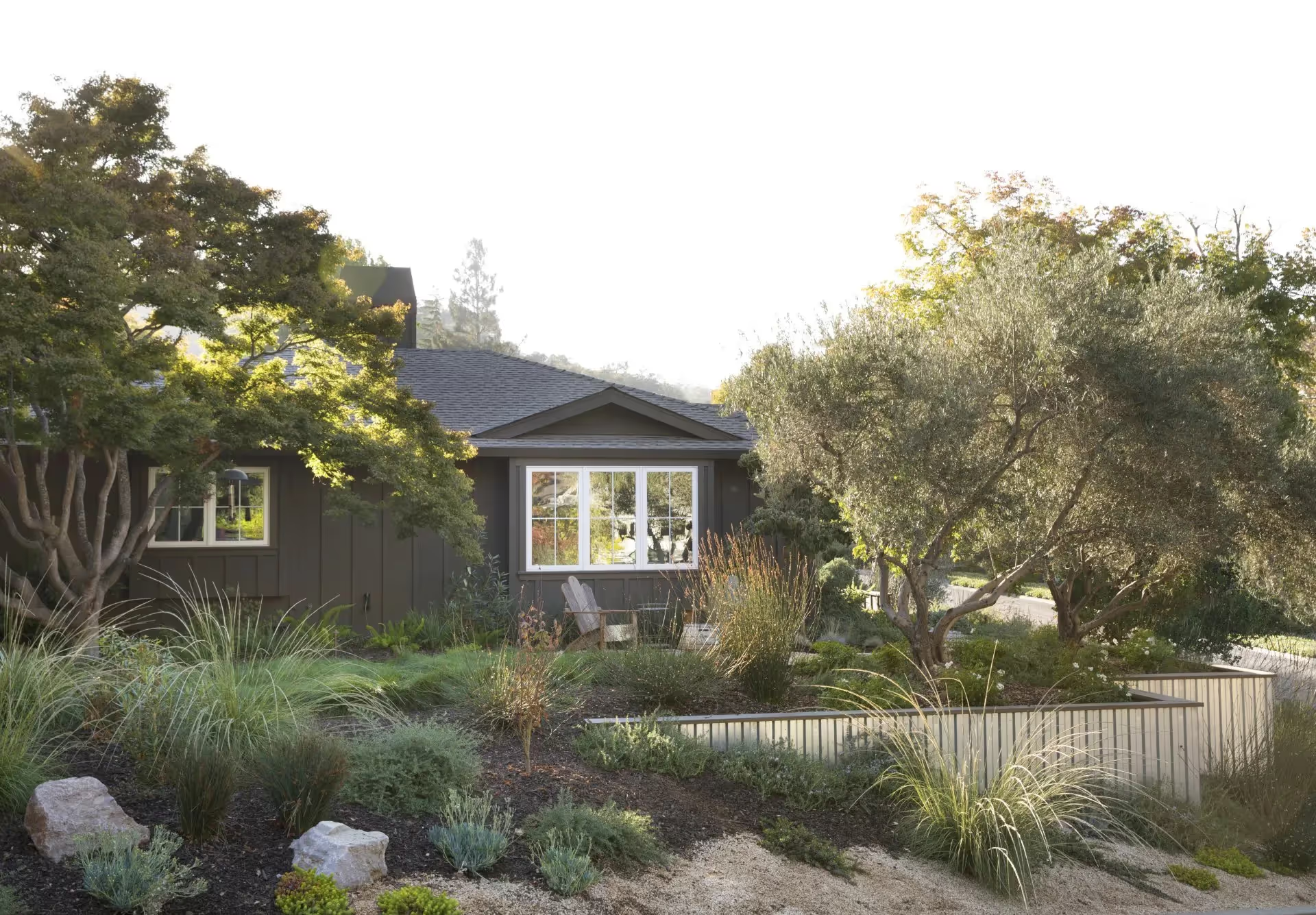
In Silicon Valley's high-net-worth real estate market, resale value in luxury custom homes is driven by a specific set of upgrades: smart home integration, high-efficiency systems, premium finishes, and functional outdoor living spaces. Generic renovations rarely move the needle here. What buyers at this price point pay a premium for are features that signal quality, reduce long-term costs, and align with the region's tech-forward lifestyle.
Silicon Valley buyers are sophisticated. They've toured dozens of properties, they have advisors, and they know when something is genuinely premium versus cosmetically staged. If you're planning to sell a custom luxury home in this market, or if you're building one now and want to protect your investment for the future, the upgrades you prioritize matter enormously. The wrong ones won't just fail to add value. They can actually raise questions about the judgment behind the build.
Key Takeaways
- Smart home systems with centralized control are among the highest-demand features for Silicon Valley luxury buyers.
- Energy efficiency and solar infrastructure directly impact resale pricing in California's regulatory environment.
- Kitchen and primary bathroom quality are the two rooms that most influence perceived home value at the high end.
- Outdoor living spaces with year-round usability add significant square footage to a buyer's effective living area.
- Structural and material quality matters more than décor at resale; buyers do their due diligence.
- Over-improving relative to the neighborhood sets a ceiling that the market won't break through regardless of quality.
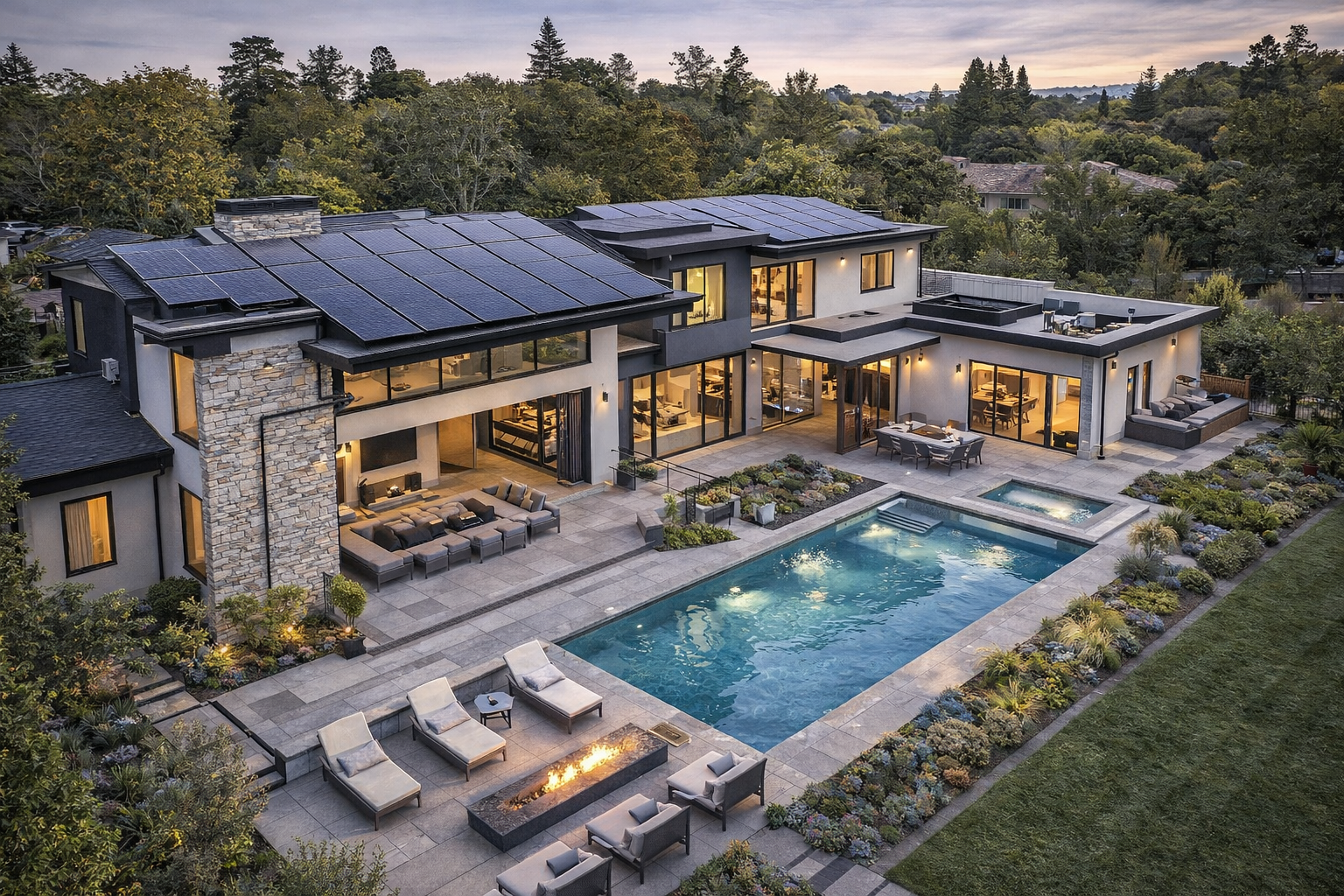
Why Silicon Valley Luxury Homes Are a Different Category Entirely
The median luxury home sale in Silicon Valley regularly exceeds $3 million, and in communities like Los Altos Hills, Atherton, and Saratoga, $6 to $10 million transactions aren't unusual. At these price points, buyers aren't choosing between homes based on square footage alone. They're evaluating a complete package, quality of construction, efficiency of systems, and the lifestyle the home enables.
That distinction changes everything about how you should think about resale value. A granite countertop upgrade that adds value in a mid-range market is barely noticed here. What moves the needle is the sophistication of how the home was designed, how its systems interact, and whether it genuinely supports the way high-net-worth professionals in this region live and work.
Luxury homes in Santa Clara County that include integrated smart home systems, solar-plus-storage, and high-end outdoor entertainment spaces have been selling at a premium of 8–15% over comparable homes without these features, according to regional real estate data from recent transaction cycles.
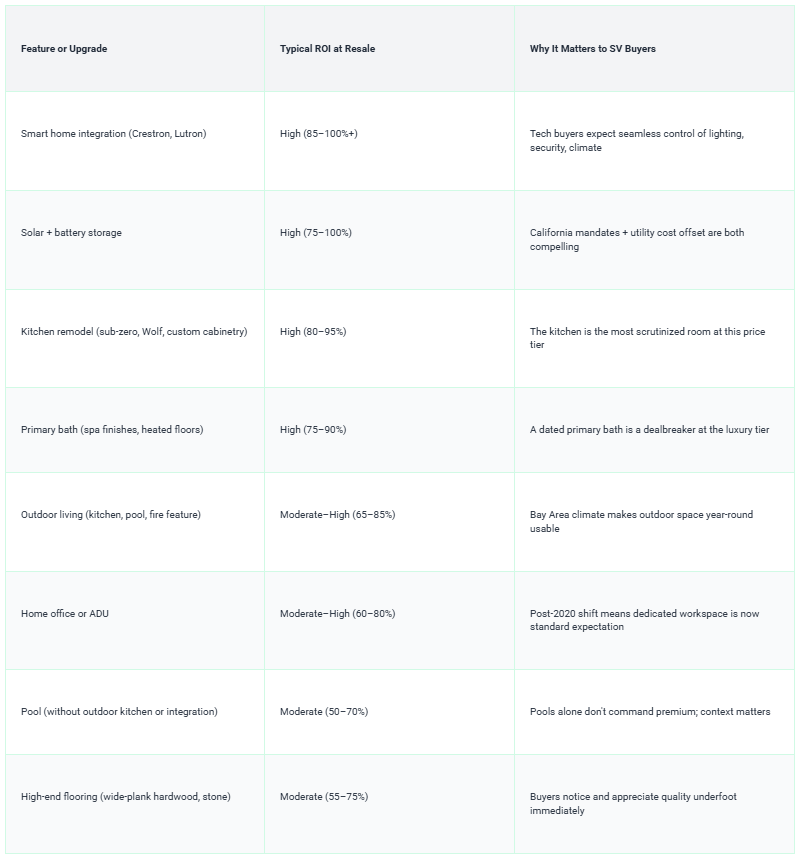
Which Upgrades Actually Drive Resale Value?
Not all improvements are created equal, and the ranking changes based on the buyer profile. In Silicon Valley, the typical luxury buyer works in tech, finance, or runs a company. They think systemically. They want homes that operate well, not just homes that photograph well. With that context, here's how the major investment categories compare.
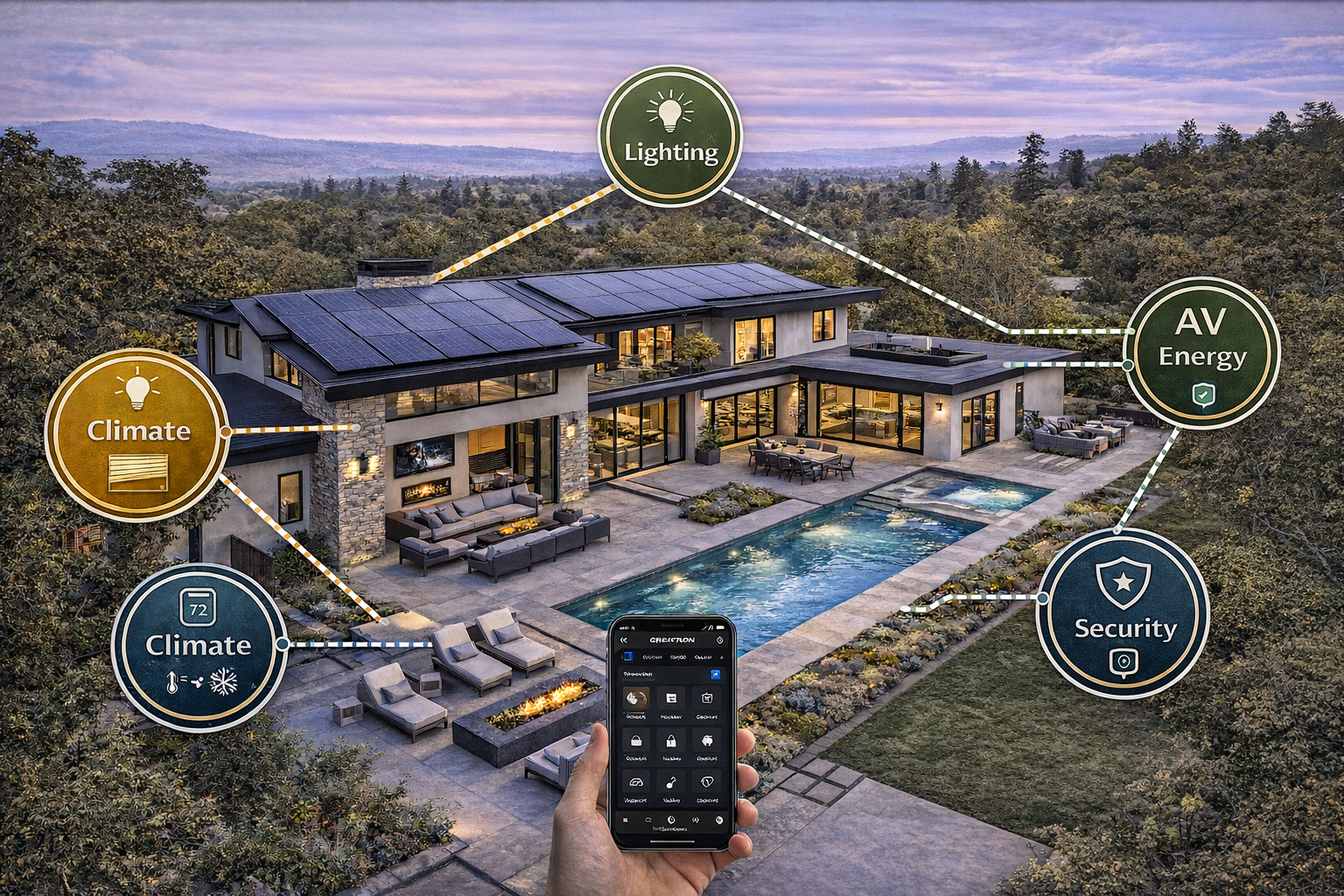
Smart Home Technology: The Expectation, Not the Exception
A decade ago, a home automation system was a luxury differentiator. In Silicon Valley's luxury market today, its absence raises red flags. Buyers in this segment work at companies building the technology that runs the world. Walking into a home where they have to manage five separate apps to control the lights, thermostat, security, and AV systems feels like a step backward in their daily life.
The systems that carry the most weight at resale are those built on professional-grade platforms: Crestron, Savant, or Lutron for lighting and shading, integrated security with professional monitoring, and whole-home audio-visual systems with clean, hidden infrastructure. Partial systems or consumer-grade retrofits often detract from value because they suggest the rest of the home may have similar shortcuts.
Energy Systems and California's Regulatory Context
California's Title 24 energy standards and the state's mandate requiring solar on new residential construction have made energy systems a standard part of any new luxury build. Homes with battery storage systems, such as Tesla Powerwall or Enphase, can command an additional $20,000 to $50,000 in resale pricing because they offer energy independence during grid outages, which are increasingly common in the region.
Beyond the regulatory baseline, buyers at this price point are often environmentally conscious and appreciate a home that aligns with those values. High-performance HVAC systems with MERV-16 filtration, triple-pane windows, and spray foam insulation all contribute to a lower utility footprint, and in a state with high energy costs, that's a tangible monthly benefit that informed buyers factor into their offers.
If you're curious how these decisions fit into the broader build-versus-buy calculus, exploring the question of whether to build or buy in Silicon Valley can help you think through your long-term investment strategy before committing to either path.
Step-by-Step: How to Prioritize Value-Adding Upgrades in Your Luxury Build
- Start with the structural and mechanical envelope. Before any cosmetic decision, confirm that the foundation, framing, roofing system, plumbing, and electrical infrastructure are overbuilt for longevity. Buyers at this price point hire inspectors who look hard at what's behind the walls.
- Lock in your energy and smart home infrastructure early. Conduit, wiring pathways, panel sizing, and solar-ready roof design need to be designed into the structure, not added later. Retrofitting these is expensive and often imperfect.
- Design the kitchen as the centerpiece. Allocate budget generously here. Wolf or Thermador ranges, Sub-Zero refrigeration, custom cabinetry with soft-close hardware, and a functional layout with a large island are table stakes at the $3M+ level.
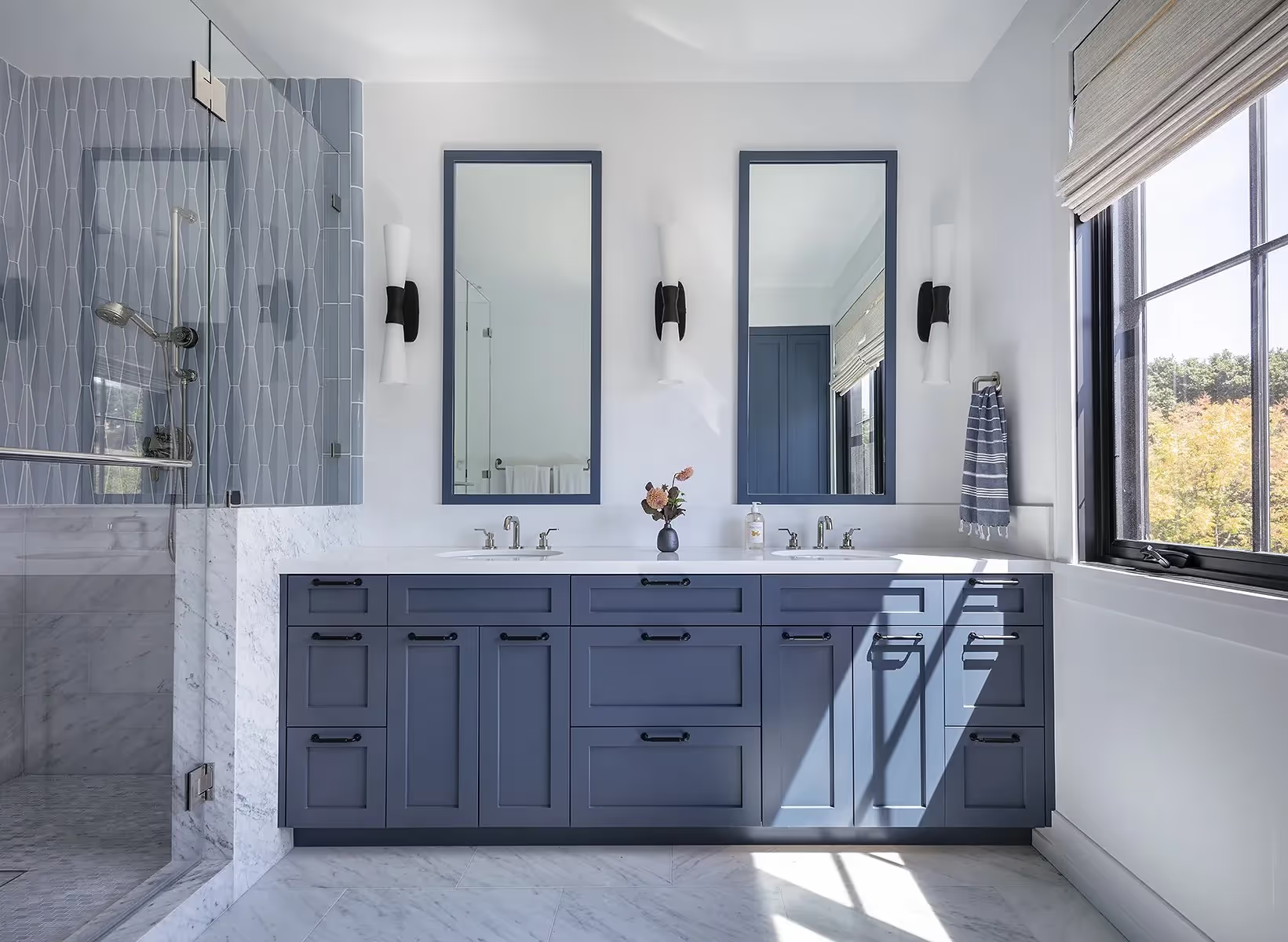
- Treat the primary suite as a private retreat. A spa-quality bathroom with radiant floor heating, a freestanding soaking tub, a large walk-in shower with multiple heads, and quality stone work creates the emotional anchor of the home for buyers.
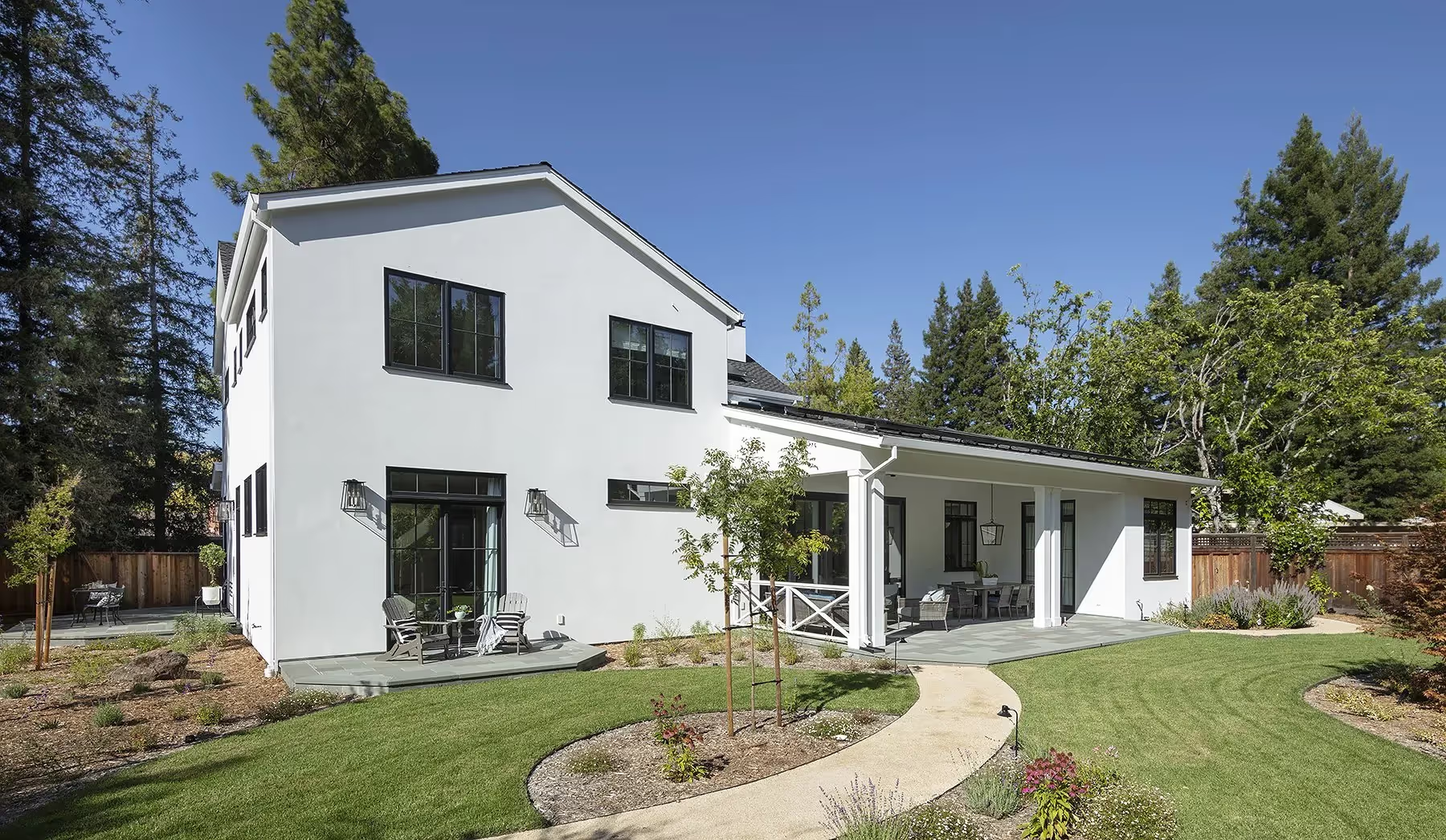
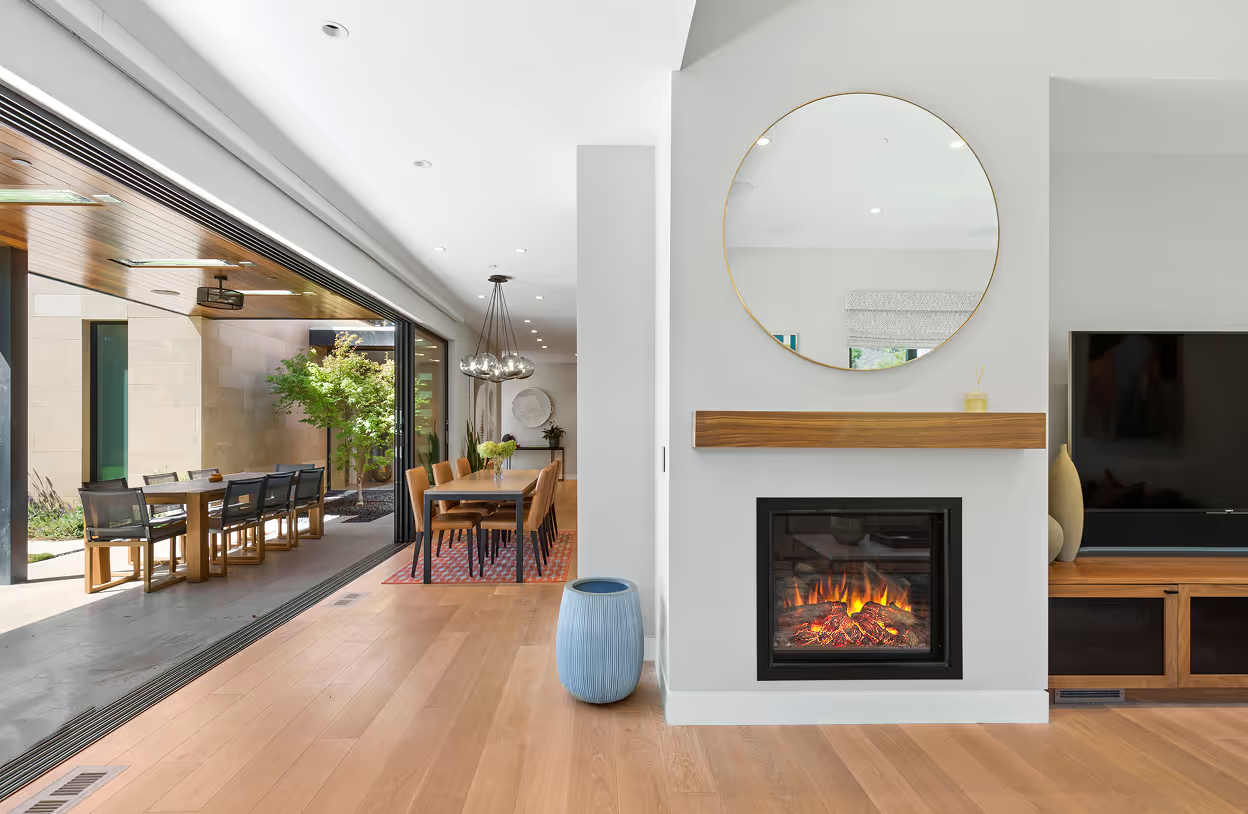
- Design outdoor spaces for year-round use. The Bay Area climate allows outdoor living almost every month. A covered outdoor kitchen, fire feature, pool with integrated spa, and mature landscaping for privacy extend the effective square footage of the home.
- Add a flexible work-from-home space or detached ADU. A thoughtfully designed home office with built-ins, soundproofing, and quality lighting signals that the home was designed for the way people in this region actually live. An ADU adds rental income potential and multigenerational flexibility, both highly valued.
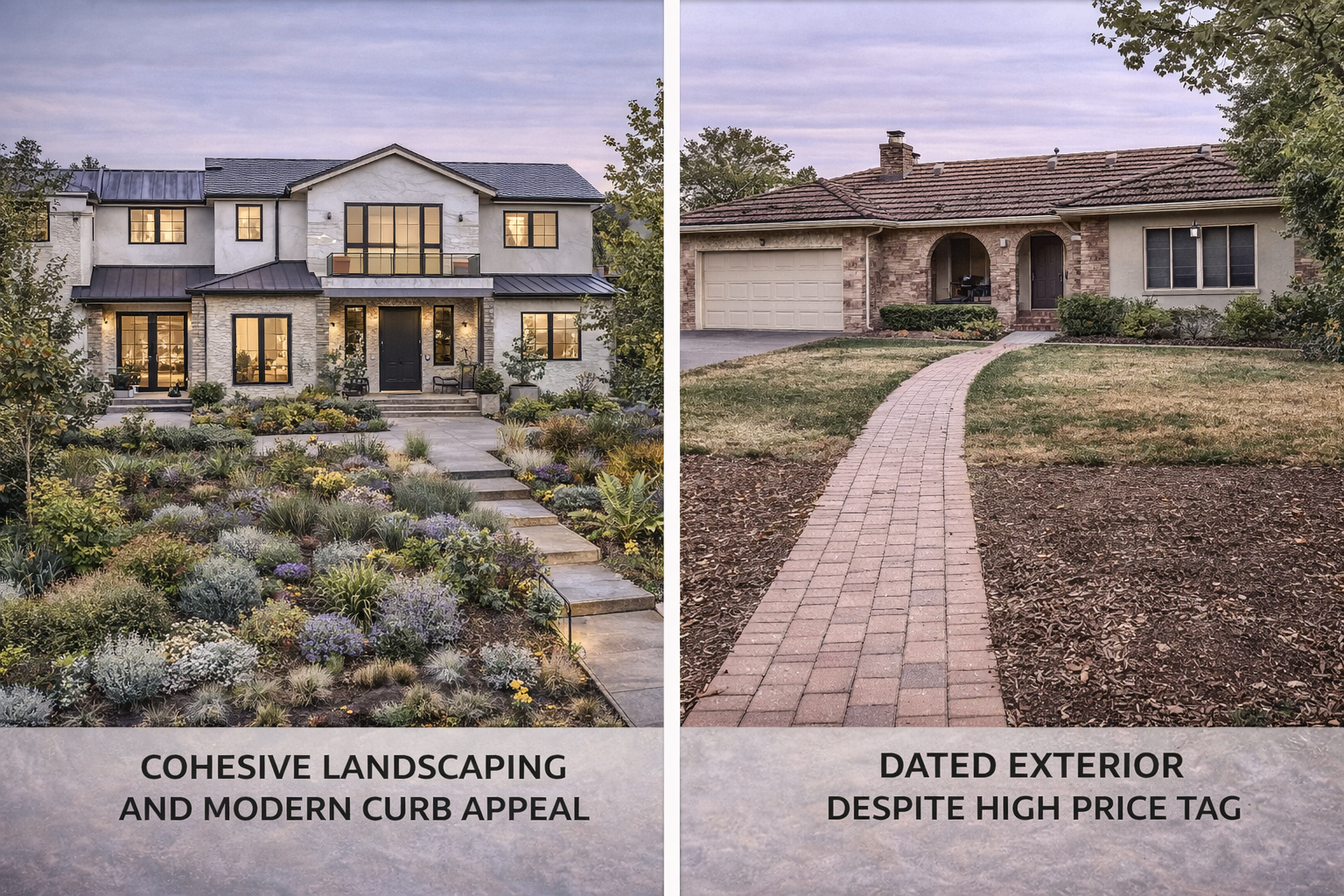
- Finish with landscaping and curb appeal as a final impression layer. First impressions shape buyer perception before they've walked through the door. Mature trees, clean hardscaping, a well-lit approach, and a striking front entry all contribute to a buyer's confidence in what they're about to see inside.
What About Square Footage?
Adding square footage to a luxury home in Silicon Valley carries a price-per-square-foot return that diminishes above roughly 7,000 square feet. Beyond that threshold, the cost of construction often exceeds the marginal value added at resale, and the increased property tax basis and maintenance costs can make larger homes harder to sell in a slower market.
Square footage matters up to a point, but usability matters more. A 5,500 square foot home with exceptional flow, natural light, and a cohesive design will consistently outperform a 7,000 square foot home with awkward room proportions, underutilized formal spaces, and poor indoor-outdoor connection. Luxury buyers in this market are increasingly prioritizing quality of experience over quantity of rooms.
The best custom house builder in Silicon Valley will push back on square footage for its own sake and instead focus your budget on the rooms and systems that genuinely improve daily life and resale performance.
Neighborhoods Matter: The Ceiling Problem
Even the most beautifully executed luxury home can't transcend its neighborhood's price ceiling. If comparable homes on your street are selling in the $3.5–4.5 million range and you've built or renovated to $6 million, no amount of quality will close that gap at resale. This is the "over-improvement trap," and it's more common than you'd think in neighborhoods just outside the most prestigious zip codes.
Before committing to major upgrades, a realistic assessment of neighborhood comps and what the market ceiling looks like for your specific block is essential. This is especially relevant in transitional areas between established luxury enclaves and adjacent communities.
Common Mistakes That Hurt Resale Value
- Over-customizing to personal taste. A bold architectural statement or ultra-specific interior style can narrow the buyer pool significantly. Luxury finishes should be high quality and timeless, not polarizing.
- Skipping the mechanical infrastructure upgrades. A stunning kitchen in a home with an aging HVAC system or original plumbing will be heavily discounted once inspection findings come back to the buyer.
- Treating outdoor space as an afterthought. In Silicon Valley's climate, outdoor living is not a bonus feature, it's an expectation. Minimal or neglected outdoor spaces read as incomplete at this price tier.
- Installing mismatched technology systems. A hodgepodge of consumer-grade smart devices with no central integration actually creates friction. Buyers who expect seamless control will see this as a project to undo.
- Ignoring energy compliance and certification. As California's energy standards tighten, homes that can't document compliance or efficiency performance become harder to sell and refinance.
- Under-investing in storage and organization systems. Built-in closet systems, a functional mudroom, a well-designed pantry, and proper garage storage signal a home that was thoughtfully planned for real life.
The Role of Design Cohesion in Perceived Value
One of the least-discussed but most powerful drivers of luxury resale value is whether the home tells a consistent design story. When a buyer walks through a property where the architecture, interior finishes, outdoor materials, and landscaping all feel like they belong together, the home feels intentional. That sense of intentionality is what luxury buyers are paying for, and it's remarkably hard to fake or retrofit.
Working with a builder who integrates design thinking from the ground up, rather than treating it as a finishing layer, produces homes that hold their value differently than those assembled from disconnected decisions. Designing spaces that feel cohesive and purposeful isn't just an aesthetic goal. It's a resale strategy.
Real estate appraisal studies suggest that design cohesion, measured by consistent material palettes, architectural continuity, and interior-exterior flow, can contribute a 5–12% premium to perceived home value compared to homes of similar square footage and finish quality that lack design consistency.
Nearby Areas Where These Principles Apply
The dynamics described throughout this article apply broadly across Silicon Valley's luxury corridor, including Atherton, Los Altos Hills, Saratoga, Monte Sereno, Los Gatos, Cupertino, Palo Alto, Menlo Park, and Woodside. Each community has its own micro-market nuances, lot sizes, HOA restrictions, school district overlaps, and architectural expectations vary, but the core principles around smart systems, energy performance, kitchen and bath quality, and outdoor living translate consistently across all of them.
If you're exploring what's possible with custom construction in any of these communities, the first step is understanding how your specific neighborhood's ceiling and buyer profile should shape your investment decisions.
Frequently Asked Questions
What is the most popular amenity for Silicon Valley luxury homes?
Integrated smart home systems consistently rank as the most in-demand amenity among Silicon Valley luxury buyers. Because much of the buyer pool works in or adjacent to the technology industry, the expectation of seamless, professional-grade home automation is high. Outdoor entertainment spaces with pools and covered kitchens are a close second, given the region's year-round mild climate.
Is increasing square footage always worth it?
Not always. Beyond a certain threshold, generally around 6,000 to 7,000 square feet in this market, the cost of adding square footage outpaces the marginal value it returns at resale. Buyers at the luxury level increasingly prioritize livability, flow, and functionality over sheer size. Dollars are often better spent improving the quality of existing spaces than expanding the footprint.
How important is curb appeal?
Curb appeal is critically important because it shapes buyer expectations before they've crossed the threshold. A home that photographs well and presents a strong first impression generates more interest, more competitive offers, and fewer pre-offer hesitations. In the luxury segment, a dated or neglected exterior can cause buyers to question what else may have been deprioritized inside the home.
How can I make my home feel "move-in ready"?
Move-in readiness at the luxury tier means more than clean and painted. It means systems are updated, appliances are current, technology is integrated and functional, and the home requires no immediate capital expenditure from the buyer. Pre-listing inspections, deferred maintenance addressed proactively, and fresh staging that showcases the home's best features all contribute to that perception. Buyers willing to pay a premium rarely want a project.
What finishes offer the best return?
In kitchen and bath spaces, professional-grade appliances, natural stone countertops, and custom cabinetry consistently yield the strongest return at resale. Wide-plank hardwood or large-format porcelain tile flooring throughout the main living areas also performs well. The principle is that finishes should be timeless and clearly high quality rather than trendy, buyers at this tier know the difference, and dated trends can work against perceived value.
Final Thoughts and Next Steps
Resale value in Silicon Valley's luxury custom home market isn't built through a single upgrade or a last-minute renovation push. It's built through thoughtful decisions made at every stage of design and construction, from the infrastructure up through the finishes, and from the front gate to the back garden. The homes that hold value and attract competitive offers are the ones where quality is visible at every turn, systems work seamlessly, and the overall experience of the home matches what buyers at this level genuinely expect.
If you're planning a custom build or a significant renovation and want to make sure your investment is positioned to hold and grow its value, the team at Supple Homes INC brings deep experience with home remodeling in Silicon Valley at the luxury level. Every project is approached with resale strategy in mind from day one, because building beautifully and building smart aren't competing goals.
To talk through your project and what it could mean for your home's long-term value, call Supple Homes INC directly at (650) 649-4480. The conversation is the first step toward a home that performs as well as it looks.