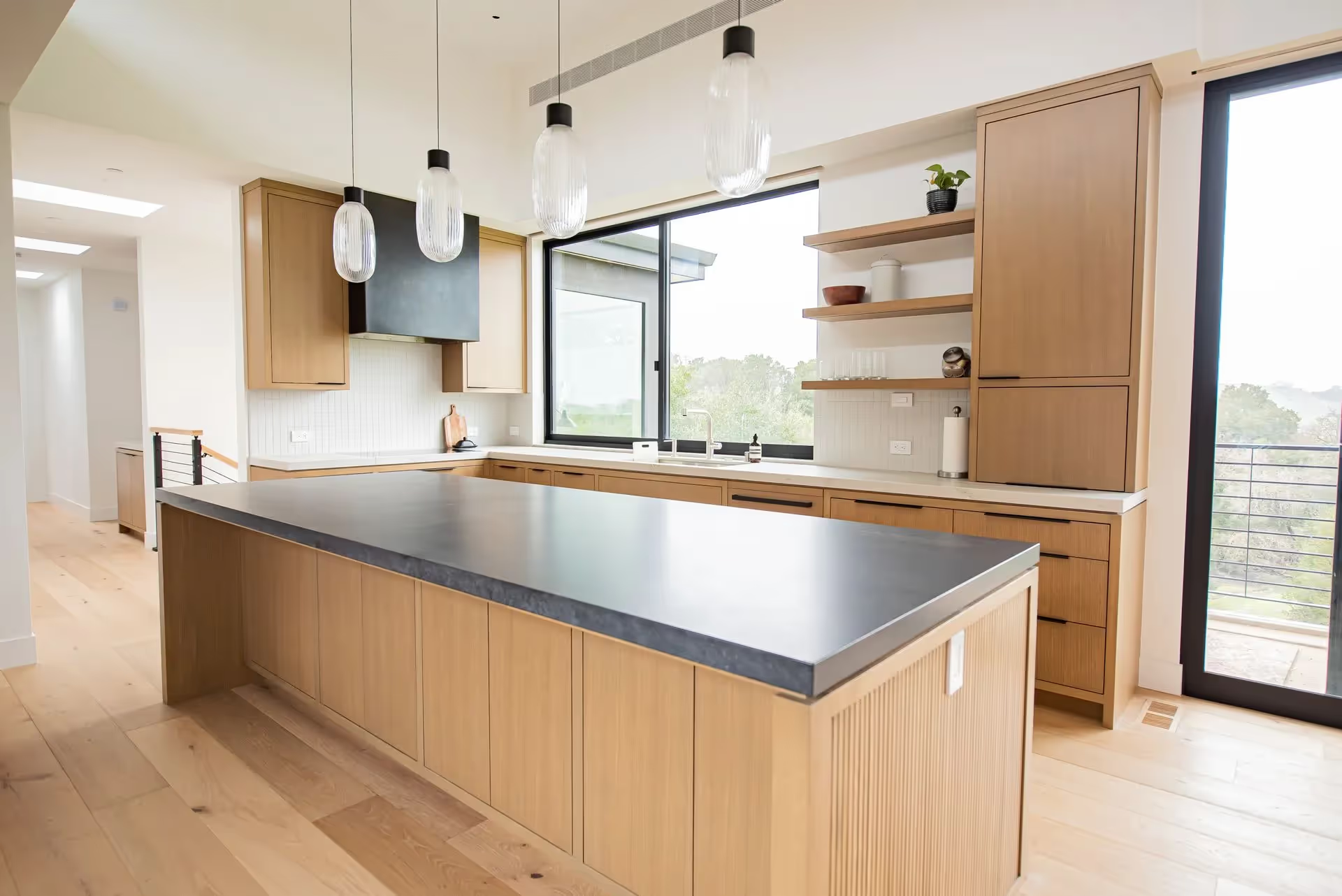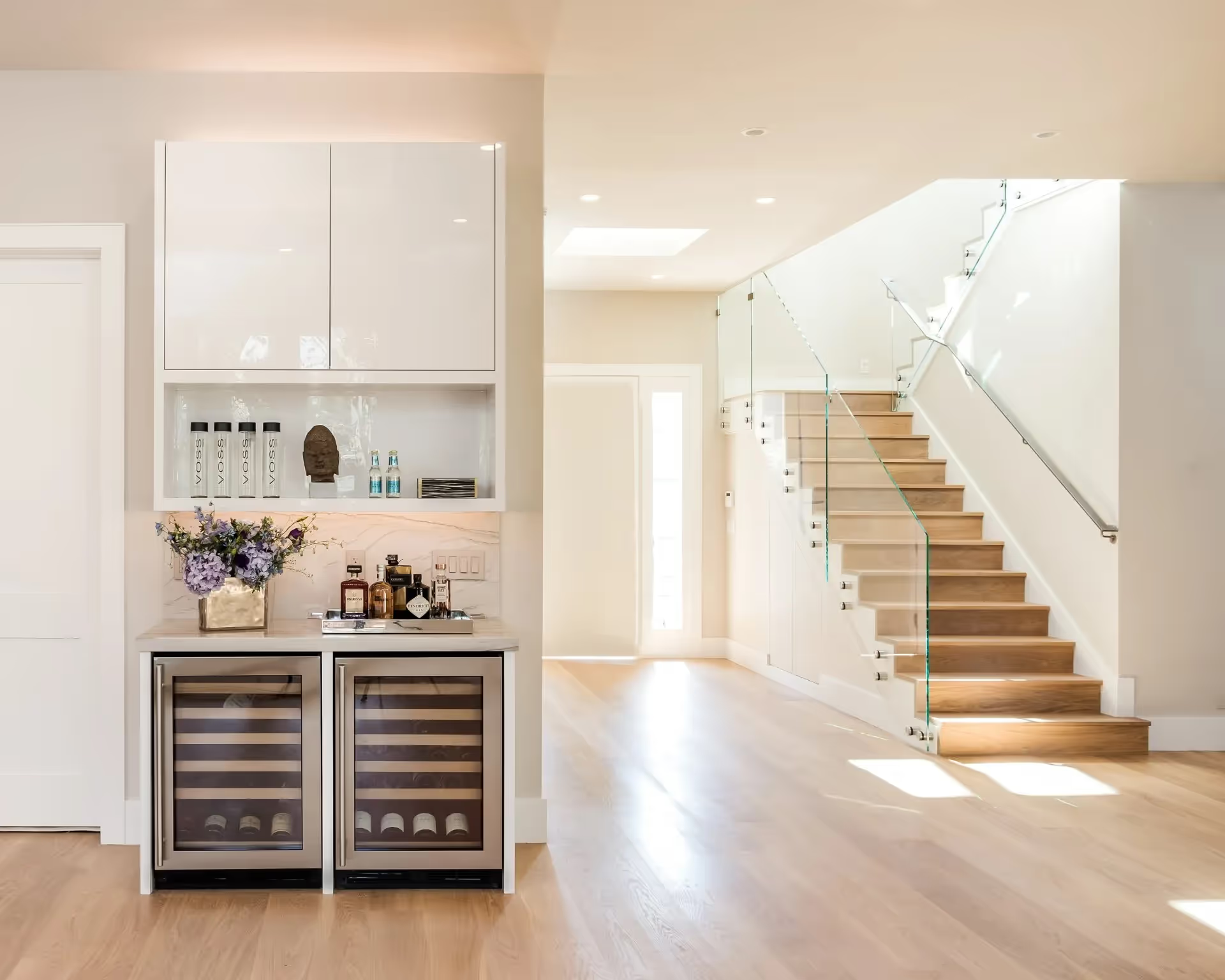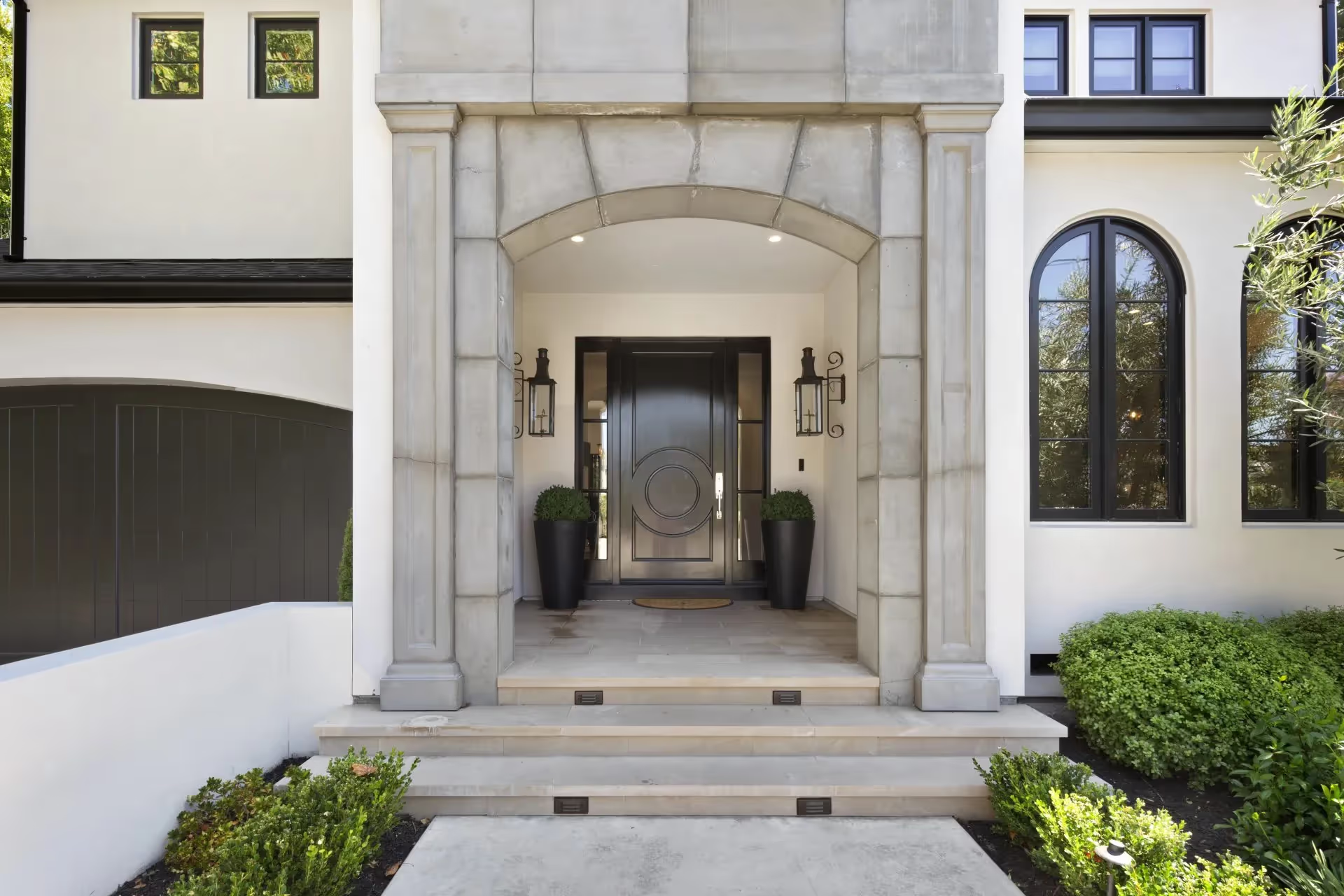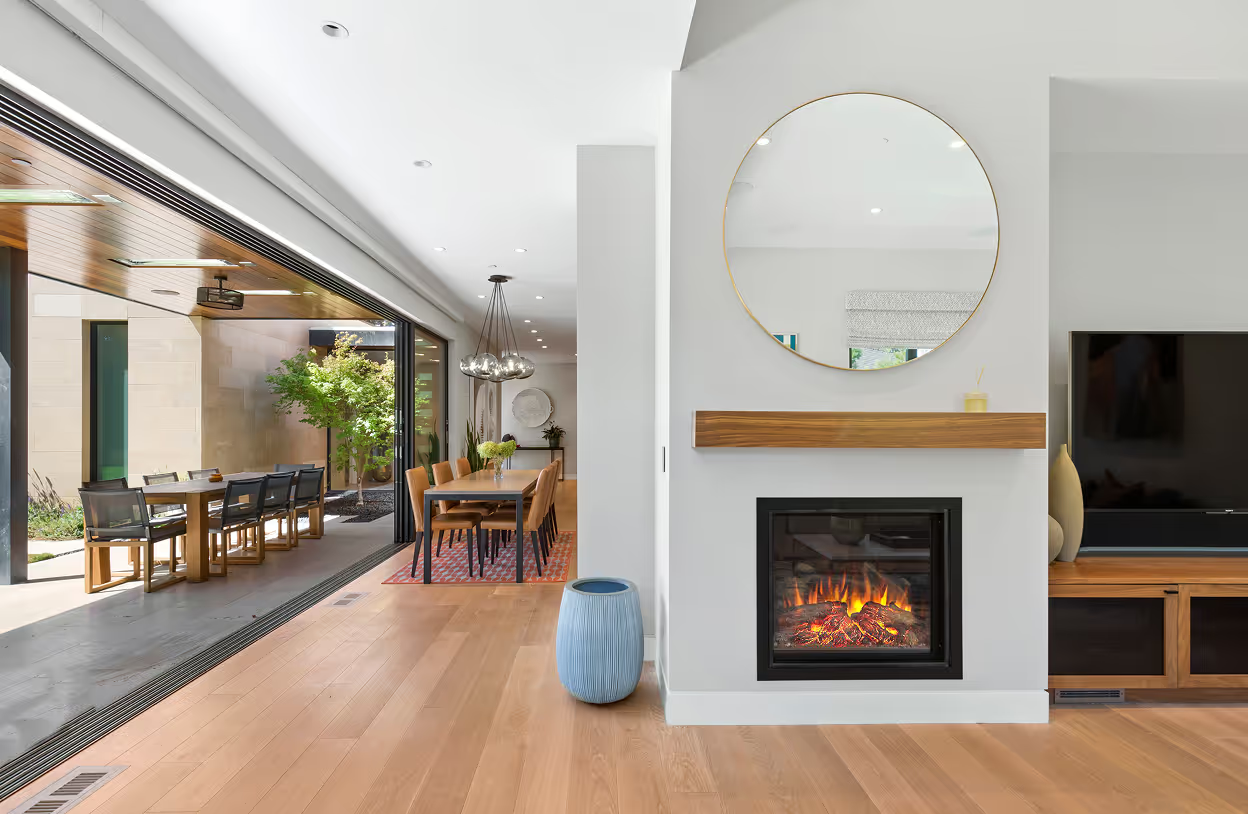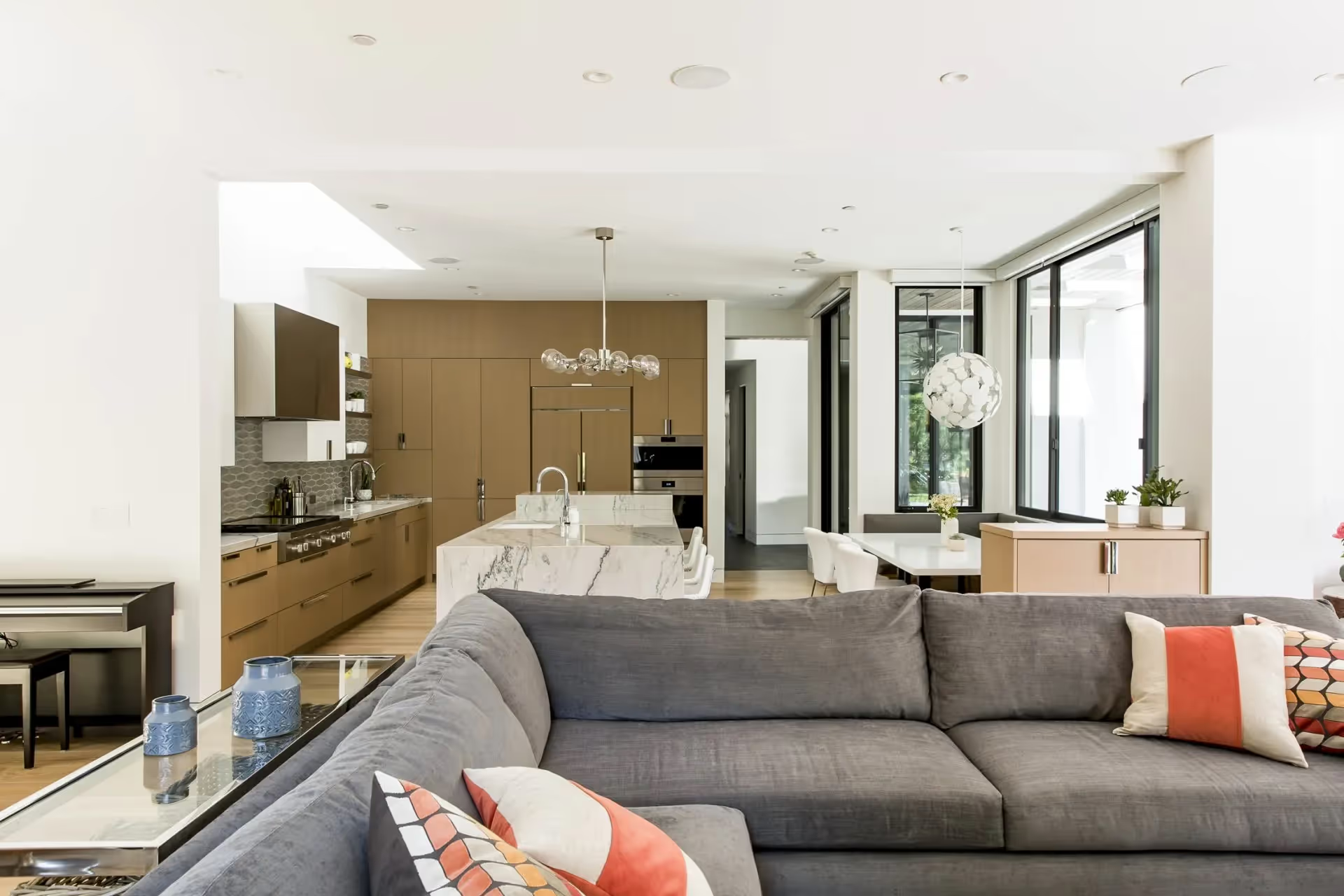
A high-performance luxury home on the San Francisco Peninsula combines premium craftsmanship with advanced building systems, including energy efficiency, structural resilience, smart home integration, and climate-appropriate design. Unlike standard upscale construction, these homes are engineered to perform at a higher level over time, addressing the Peninsula's specific seismic, fog, and coastal conditions while meeting the expectations of discerning buyers.
On the San Francisco Peninsula, the word "luxury" gets used a lot. But there's a meaningful difference between a home that looks expensive and one that actually performs at a high level. For homeowners building or renovating in communities like Atherton, Menlo Park, Palo Alto, Woodside, or Hillsborough, understanding that difference isn't just a matter of preference. It shapes long-term comfort, safety, resale value, and the quality of daily life inside the home.
Key Takeaways
- High-performance luxury homes go beyond aesthetics to include advanced energy, structural, and mechanical systems.
- The Peninsula's microclimates, seismic activity, and coastal air exposure require construction approaches that differ from inland California.
- Smart home integration in a performance context means systems that work together reliably, not just individual gadgets.
- The quality of materials and building envelope matters as much as interior finishes in a true high-performance home.
- A performance-focused build typically involves closer collaboration between architect, builder, and mechanical engineer from early in the design phase.
- Long-term operating costs, indoor air quality, and occupant comfort are measurable outcomes of high-performance construction.
Things You Must Know
1. "Luxury" and "High-Performance" Are Not Automatically the Same Thing
A home can have imported stone, custom millwork, and a designer kitchen without delivering meaningfully better performance than a standard build. High performance refers specifically to how a home functions: how it manages energy, handles seismic stress, controls moisture and air quality, and maintains comfort across seasons. Buyers should ask specifically about building envelope quality, HVAC design, and structural engineering rather than assuming luxury finishes signal performance.
2. Peninsula Microclimates Create Real Engineering Requirements
The Peninsula is not climatically uniform. Hillside properties above the fog line in Woodside or Portola Valley experience different temperature swings than flatland Palo Alto homes, and coastal-adjacent properties in areas like Pacifica or Half Moon Bay face salt air and moisture exposure that demand specific material choices. A builder who understands these local conditions will specify differently than one applying generic California construction standards. This can vary significantly depending on elevation, lot orientation, and proximity to the Bay or ocean.
3. Seismic Performance Is a Non-Negotiable in This Region
The Peninsula sits near active fault systems, and seismic engineering is not optional here. In a high-performance build, structural systems are designed beyond minimum code compliance to protect both the structure and the people inside it. Soft-story conditions, cripple walls, and foundation types all affect how a home responds to seismic events. A professional structural assessment is essential before or during any major custom build or renovation in this area.
What Does "High-Performance" Actually Mean in a Home?
The term gets applied loosely in marketing materials, but performance in construction has a more precise meaning. A high-performance home is one where the building systems, envelope, structure, and mechanical components are designed to work together efficiently and durably over time.
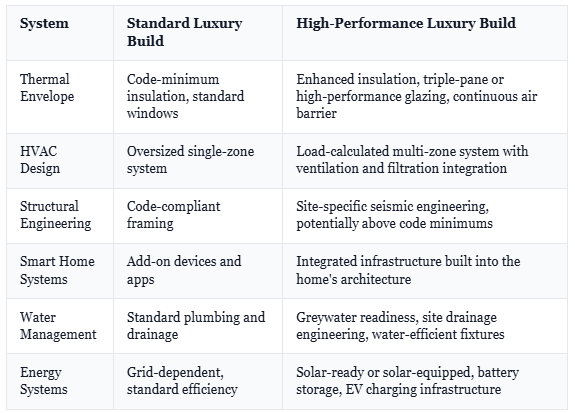
That includes the thermal envelope (insulation, windows, air sealing), HVAC and ventilation design, water management systems, structural engineering, electrical capacity for current and future needs, and smart home infrastructure. The goal isn't any single feature. It's an integrated approach where decisions in one system reinforce the others.
How Does the Peninsula's Environment Shape These Requirements?
Most of the country builds for predictable seasonal extremes. The Peninsula is different. The climate here is mild but highly variable at a micro scale, with marine layer influence, afternoon wind patterns, and soil conditions that shift significantly across short distances.
San Mateo County sits within one of the most seismically active regions in the United States, with several active fault traces running through or near Peninsula communities. Building codes in the area reflect this, but high-performance construction typically exceeds code minimums in structural design to provide an additional margin of safety.
Hillside lots in Woodside, Portola Valley, and the Los Altos Hills bring their own set of considerations: drainage engineering, retaining structures, grading, and wildfire defensibility all factor into what a performance-focused build requires. Flat Bay-adjacent lots in Palo Alto or Menlo Park deal with different soil conditions and potential liquefaction zones.
A builder working on the Peninsula who doesn't account for these specifics isn't building to the standard the region demands. Understanding this is one of the first things to clarify when evaluating a custom home builder here. You can read more about what these decisions involve in this overview of what to know before building a custom home on the San Francisco Peninsula.
The Core Systems That Separate High-Performance Luxury Homes
Why Indoor Air Quality Has Become a Priority Feature
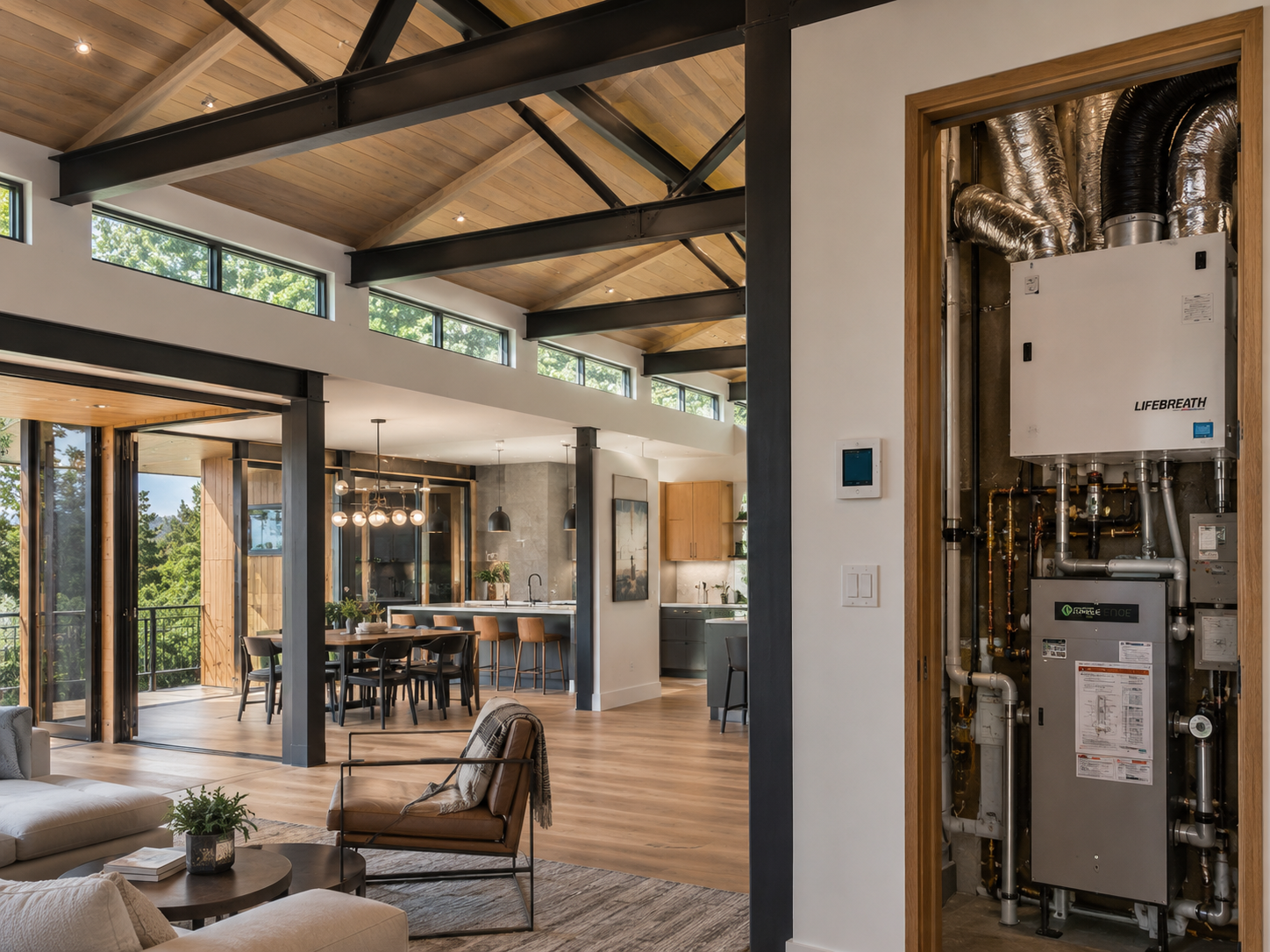
In the post-2020 period, indoor air quality moved from a niche concern to a mainstream one for luxury buyers. High-performance homes on the Peninsula now regularly incorporate MERV-13 or better filtration, energy recovery ventilators (ERVs), and low-VOC or zero-VOC finishes throughout.
Studies on indoor air quality in tightly sealed homes have found that without proper mechanical ventilation, indoor pollutant concentrations can exceed outdoor levels by a significant margin, particularly in newer construction with limited infiltration. ERVs address this by exchanging stale indoor air with fresh outdoor air while recovering the thermal energy, maintaining both air quality and energy efficiency.
The Peninsula's wildfire smoke seasons, which affect air quality across the Bay Area during summer and fall, have also made air filtration a practical necessity rather than a luxury add-on. A performance home accounts for this in its HVAC design from the beginning.
Smart Home Integration: Built-In vs. Bolted-On
There's a real difference between a home where smart systems were installed after the fact and one where the infrastructure was planned from the design phase. In a true high-performance luxury home, the technology layer is part of the architectural intent.
That means low-voltage wiring runs are mapped before walls are closed. Lighting control, shading, security, access, climate, and AV systems share a common backbone. The user experience is consistent across the home rather than fragmented across five different apps and systems that don't communicate well with each other.
In the Bay Area luxury real estate market, integrated smart home systems have increasingly become an expected feature in high-end listings, with buyers in the $5M+ range often requesting detailed documentation of the home automation infrastructure as part of due diligence.
Retrofitting smart systems into an existing home is always more expensive and less elegant than designing for them from the start. This is one of the reasons pre-construction planning matters so much in performance-focused builds, a point covered in more detail in this guide to the custom home building process from planning to final walkthrough.
How High-Performance Construction Affects Long-Term Value
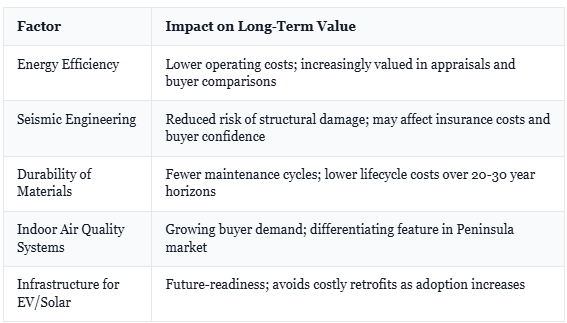
In California's luxury housing market, energy-efficient and sustainably certified homes have shown a measurable premium over comparable non-certified properties in several regional studies, though the exact premium varies by location, market conditions, and certification type.
Common Mistakes to Avoid When Planning a High-Performance Build
- Treating performance features as optional upgrades rather than foundational decisions. Seismic engineering, air sealing, and mechanical design need to be incorporated at the design stage, not added later. Retrofitting these elements after framing is complete costs significantly more and often yields inferior results.
- Selecting a builder based on aesthetic portfolio alone. A builder's ability to deliver beautiful interiors doesn't automatically reflect their systems knowledge or engineering coordination capability. Ask specifically about their experience with mechanical engineers, energy consultants, and low-voltage contractors.
- Underspecifying the electrical system for future needs. EV charging, battery storage, induction cooking, and home office infrastructure all draw on electrical capacity. Designing for today's load without headroom for the next 15 years is a common oversight in otherwise high-quality builds.
- Overlooking site-specific drainage and grading requirements. On hillside lots especially, water management failures are one of the most common and costly issues in Peninsula construction. This should be addressed in civil engineering before design is finalized.
- Conflating high-end finishes with high-performance systems. These two things are not the same budget category or the same skillset. A high-performance home can have modest finishes, and a home with premium finishes can have mediocre mechanical and structural systems. Both matter; neither substitutes for the other.
Many of these mistakes are preventable with the right builder partnership and early planning. For a detailed look at the most common pitfalls in Silicon Valley custom construction, this resource on common mistakes when building a custom home in Silicon Valley is worth reviewing before you begin.
The Planning Process for a High-Performance Home
- Site analysis and due diligence: Evaluate soil conditions, seismic zone, drainage patterns, solar orientation, microclimate exposure, and any HOA or local design review requirements before finalizing a design direction.
- Architect and builder alignment early: In high-performance builds, the builder needs to be involved in design development, not just brought in after plans are complete. Systems coordination requires builder input before walls are drawn.
- Mechanical, electrical, and plumbing (MEP) engineering: Engage MEP engineers separately from the general contractor when the scope warrants it. Load calculations for HVAC, electrical panel sizing, and plumbing layout all benefit from dedicated engineering attention.
- Envelope and energy modeling: Use energy modeling software to test wall assemblies, window specifications, and insulation strategies before committing to materials. This is standard practice in high-performance construction but often skipped in standard luxury builds.
- Low-voltage and smart home design: Map all technology infrastructure requirements before framing. Confirm backbone architecture, panel locations, and conduit runs with the integrator in the design phase.
- Construction administration: Maintain active architect and engineer oversight during construction, not just at design and final inspection. Performance outcomes depend on installation quality as much as specification quality.
- Commissioning and testing: Before occupancy, test the building envelope for air leakage, verify HVAC performance under real load conditions, and confirm that all integrated systems are functioning as specified.
Frequently Asked Questions
What is the 3-3-3 rule in real estate?
The 3-3-3 rule is an informal buyer guideline suggesting that a home should cost no more than three times your annual income, that you should put down at least 30 percent, and that your monthly payment should not exceed one-third of your monthly income. It's a rough heuristic, not a lending standard, and in high-cost markets like the San Francisco Peninsula, where median home prices far exceed national norms, most buyers operate outside these ratios. Working with a financial advisor familiar with Bay Area real estate is a more reliable approach.
What is the hardest month to sell a house?
Historically, January and February tend to be the slowest months for residential real estate sales nationally, including in the Bay Area, due to post-holiday buyer fatigue, fewer active listings, and general market quietness. However, the Peninsula luxury market can behave differently from broader trends. In some years, well-prepared listings in early spring attract strong competition from buyers who have been waiting through winter. Timing should be evaluated with a local agent who tracks Peninsula-specific inventory cycles.
Where do billionaires live in San Francisco?
Within the city of San Francisco, Pacific Heights and Presidio Heights have historically housed a high concentration of ultra-high-net-worth residents, along with Sea Cliff for its waterfront access. On the broader Peninsula, communities like Atherton, Woodside, Hillsborough, and Portola Valley are consistently associated with the region's wealthiest residents, due to large lot sizes, privacy, and proximity to Sand Hill Road and major tech headquarters. Atherton in particular frequently appears on national rankings of the most expensive zip codes in the United States.
What is the least desirable style of house?
Buyer preferences vary, but in many markets, including parts of the Peninsula, homes with highly dated interiors (particularly certain 1970s-era finishes), awkward floor plans, low ceiling heights, or poor natural light tend to attract the least buyer interest. In the luxury tier specifically, homes that lack indoor-outdoor connection, have minimal storage, or feel architecturally generic relative to their price point often sit longer. What's considered undesirable shifts with design trends and the buyer pool, so consulting with a local agent who tracks active Peninsula inventory gives a more accurate current picture.
What devalues a house the most?
Deferred maintenance is consistently one of the largest value detractors in any market tier. On the Peninsula, specific factors that tend to have an outsized negative effect on value include: unresolved structural or foundation issues, outdated electrical panels (particularly those with known safety concerns), poor drainage or evidence of water intrusion, and systems that are significantly at end-of-life at the time of listing. In the luxury segment, a disconnect between finish quality and underlying systems quality is also a common issue, where surface updates mask mechanical or structural conditions that experienced buyers and their inspectors will identify.
Building to a Higher Standard on the Peninsula
A high-performance luxury home isn't defined by any single feature. It's the result of coordinated decisions made early, carried through with discipline, and verified at the end. On the San Francisco Peninsula, where site conditions, seismic risk, microclimate variation, and buyer expectations are all more demanding than in most markets, the difference between a home that performs well and one that merely looks the part becomes very apparent over time.
If you're planning a custom build or significant renovation in this region, the quality of your builder partnership matters as much as your design vision. The best outcomes come from teams that understand both.
Ready to Build with a Higher Standard?
Supple Homes Inc. works with homeowners across the San Francisco Peninsula who want a home that performs as well as it looks. From early planning through final walkthrough, the focus is on getting the foundational decisions right. Call (650) 649-4480 to start a conversation about your project.