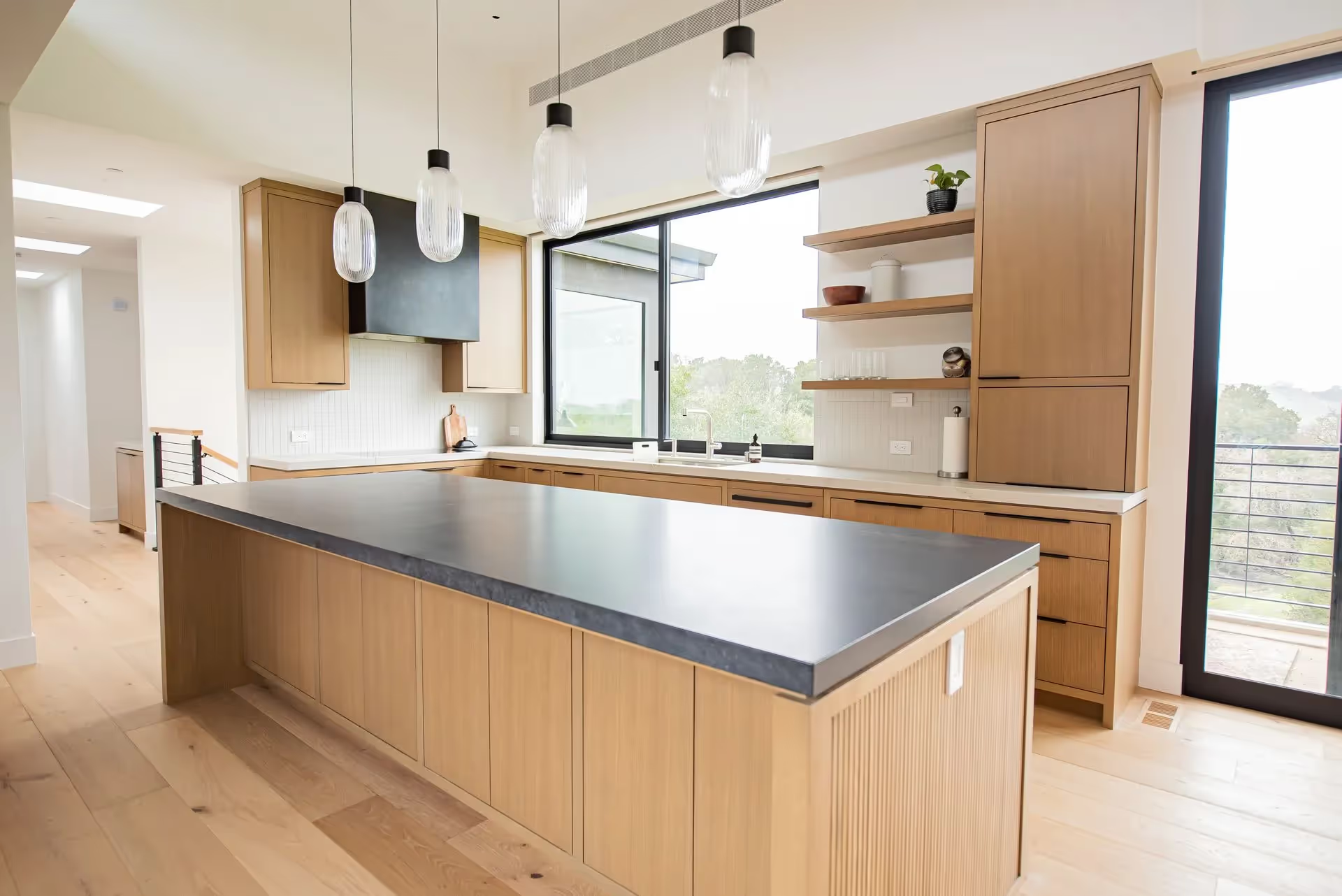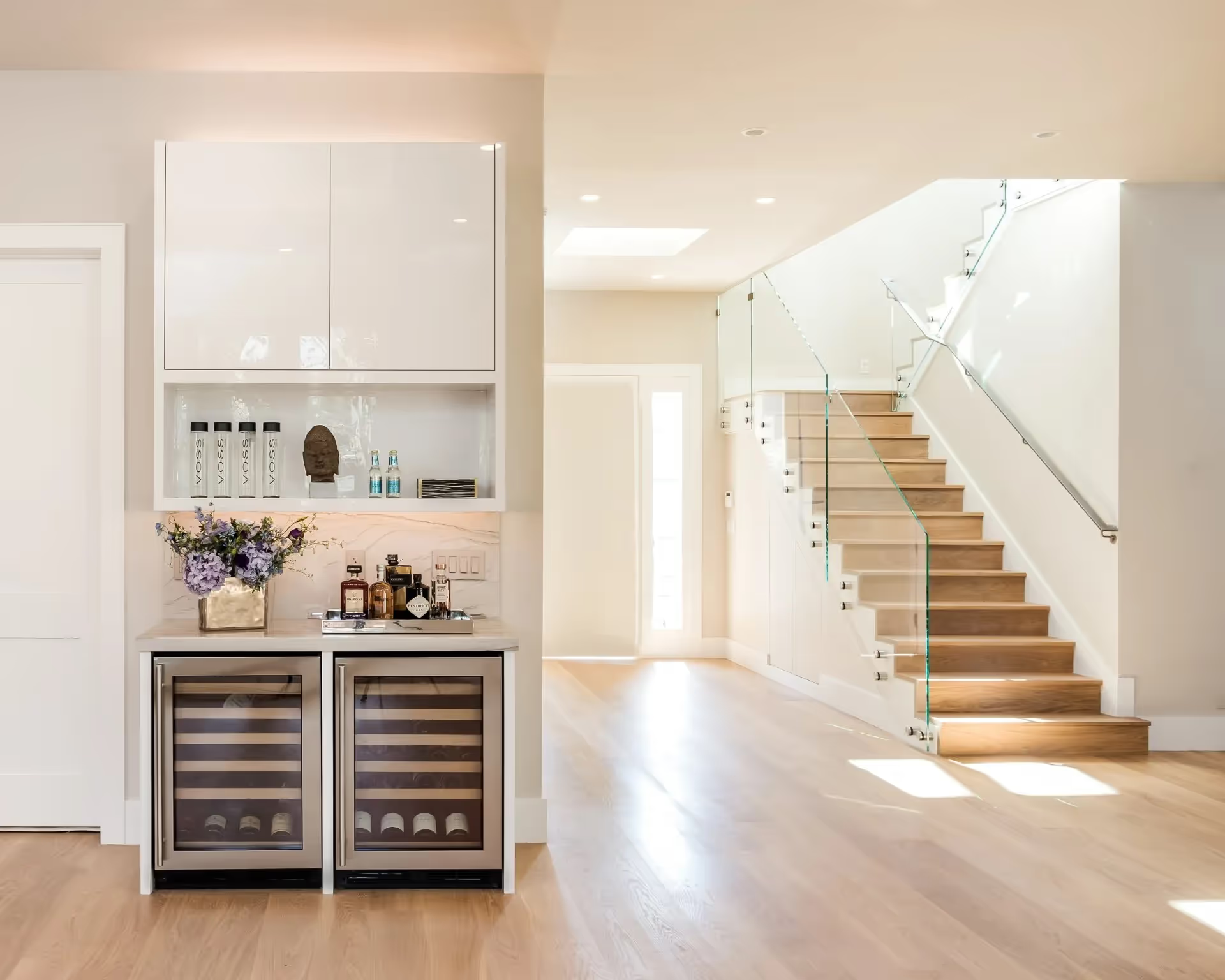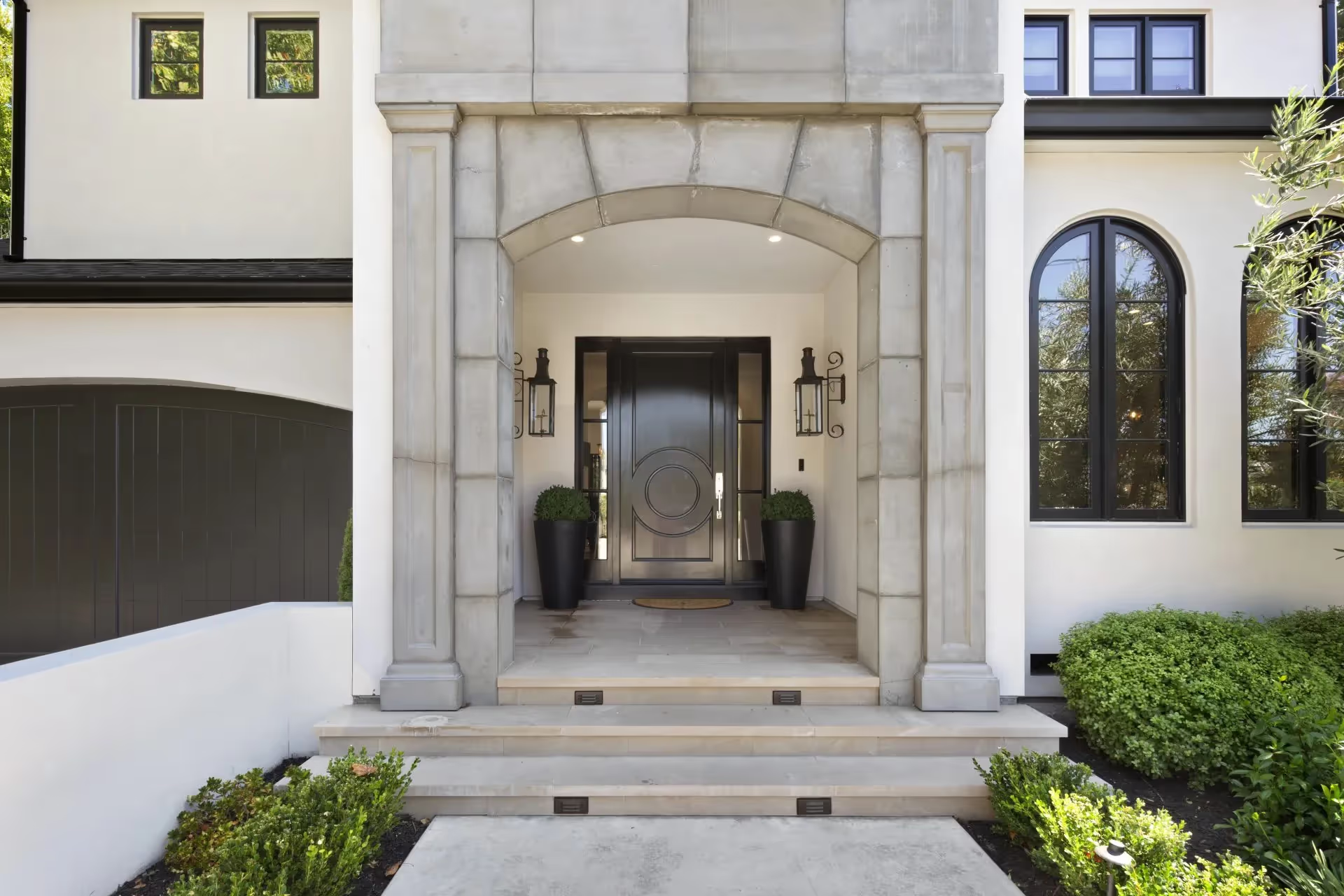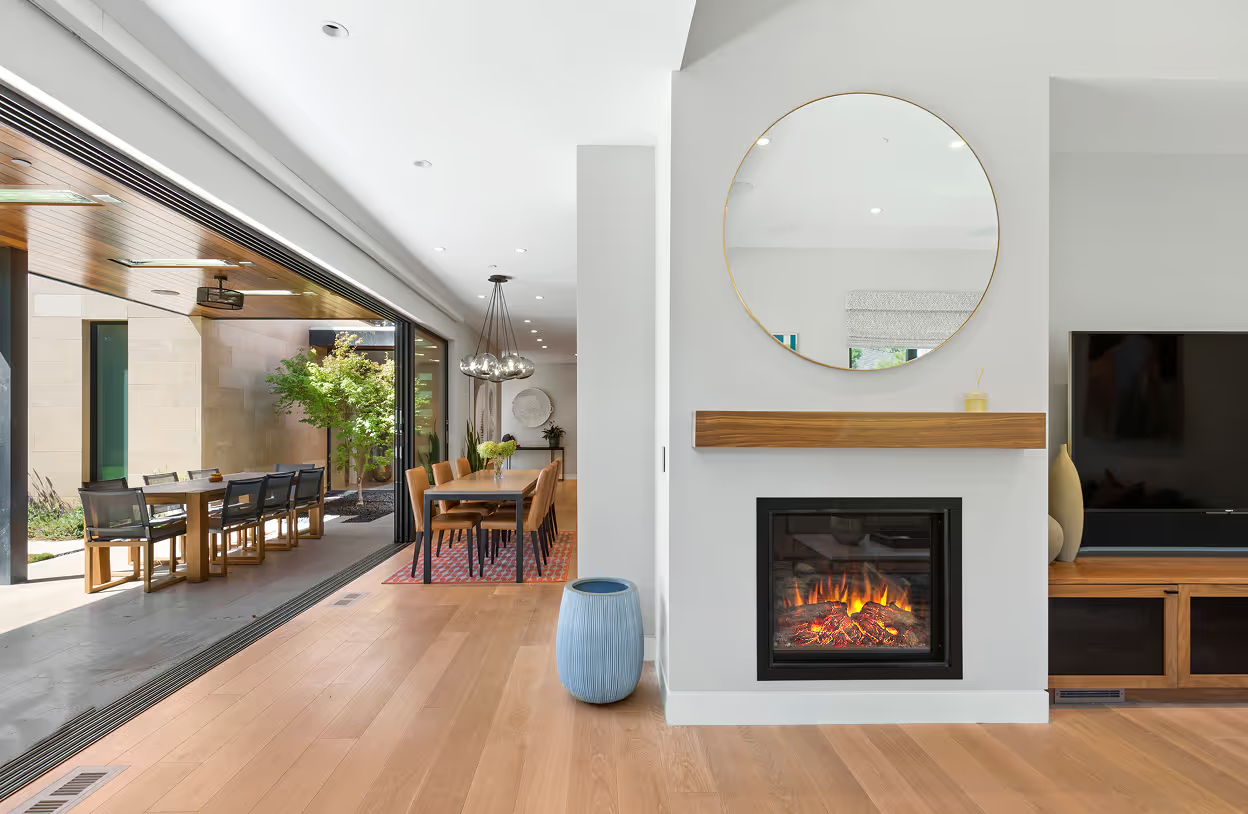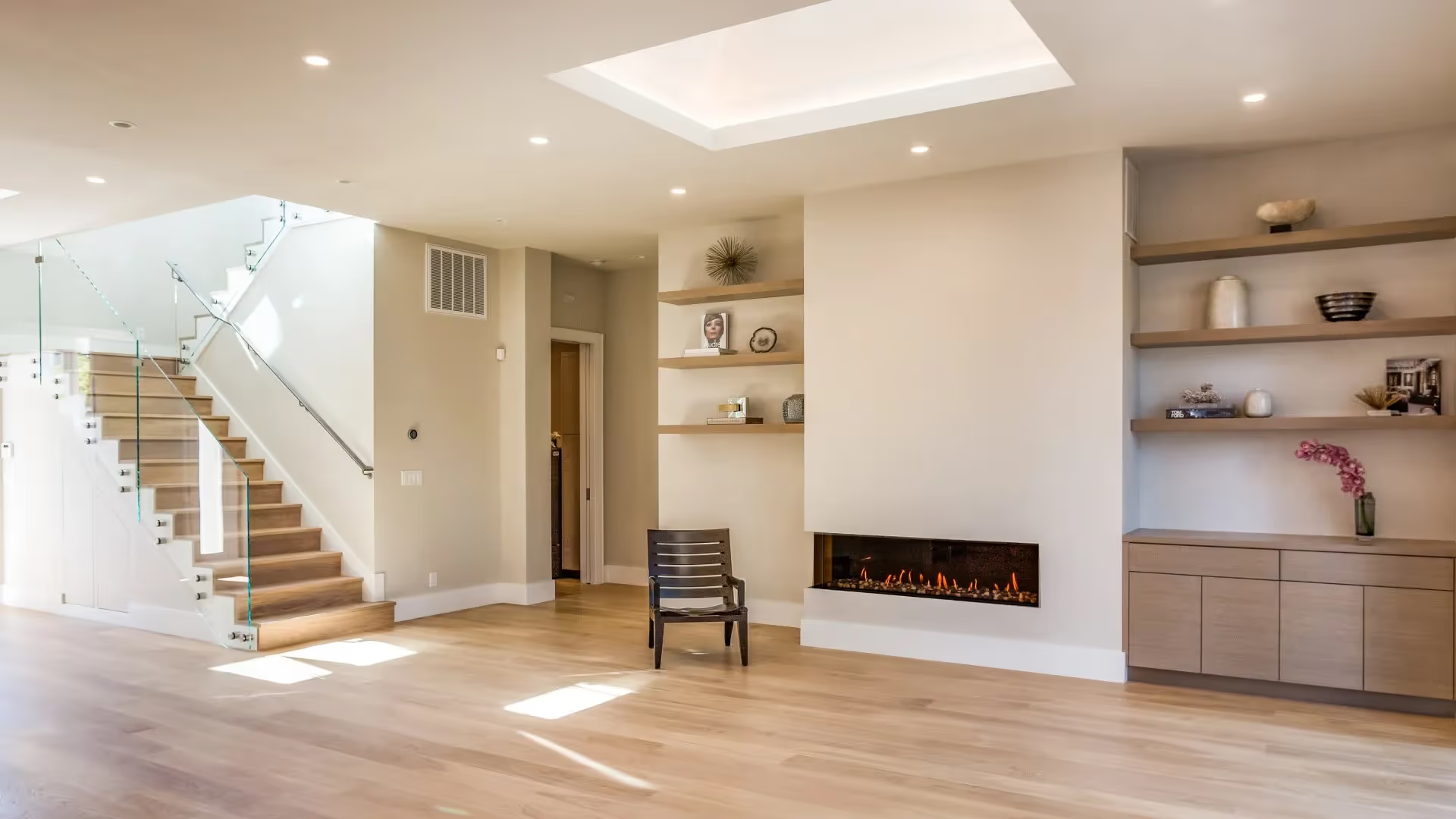
Silicon Valley professionals working from home in Menlo Park are moving beyond basic office setups toward integrated luxury features that support focus, wellness, and professional performance. The most impactful upgrades combine acoustic engineering, smart home automation, dedicated workspaces with biophilic design, and high-speed connectivity infrastructure. These aren't cosmetic additions; they directly affect productivity, property value, and daily quality of life.
Remote work hasn't just changed where Silicon Valley professionals spend their days. It's fundamentally changed what they need from their homes. In Menlo Park, where $4M+ properties sit alongside executives, engineers, and founders logging 10-hour remote days, the bar for what "functional" means at home has been completely reset. A spare bedroom converted into an office no longer cuts it. What this market demands now is purpose-built, performance-driven luxury, spaces designed with the same precision as a corporate campus, woven into a home that still feels like one.
Key Takeaways
- Dedicated soundproofed home offices with professional acoustic treatment are among the highest-ROI investments for WFH luxury homes in Silicon Valley.
- High-performance networking infrastructure, including hardwired fiber drops and mesh Wi-Fi redundancy, is now considered a baseline luxury feature, not an upgrade.
- Biophilic design elements like natural light optimization, living walls, and courtyard-adjacent offices demonstrably reduce cognitive fatigue over long work sessions.
- Wellness amenities such as in-home gyms, infrared saunas, and spa bathrooms serve double duty as recovery tools for high-performing professionals.
- Smart home automation tied to circadian lighting and climate zoning can meaningfully improve both focus and sleep quality for remote workers.
- When deciding whether to build or buy in Menlo Park, WFH feature integration is now a primary evaluation criterion, not an afterthought.

Why Standard Home Offices Fall Short for Silicon Valley's Remote Workforce
Most luxury homes built before 2020 weren't designed with remote work in mind. The challenge isn't square footage, it's the wrong kind of space. A room with a view and a fast Wi-Fi password doesn't address acoustic bleed from the rest of the house, inadequate lighting for video calls, or the psychological separation needed to actually "be at work" while physically at home.
In Menlo Park specifically, the buyer profile has shifted. Professionals here are frequently in back-to-back video calls, need ultra-low-latency connections for cloud-based development tools, and often host virtual meetings with global teams at unusual hours. Their home office requirements are closer to a broadcast studio than a study.
Research from commercial real estate and residential data analysts suggests that homes in premium Silicon Valley zip codes with purpose-built office infrastructure have seen asking price premiums of 8–15% over comparable properties without dedicated remote work amenities, a trend that accelerated sharply post-2021 and shows no signs of reversing.
What Does a Purpose-Built Luxury Home Office Actually Include?
The gap between a nice office and a performance-grade home office comes down to four interconnected systems: acoustics, light, connectivity, and ergonomic infrastructure. Each one affects the others, and shortchanging any single element undermines the whole setup.
Acoustic Engineering and Sound Isolation
This is where most high-end builds still underinvest. Floating wall construction, mass-loaded vinyl underlays, and solid-core doors with proper acoustic seals are the difference between a room that sounds professional on a call and one where every footstep from upstairs bleeds through. In open-plan luxury homes ,popular in Menlo Park's contemporary builds ,sound travels further and more unpredictably than in traditional layouts.
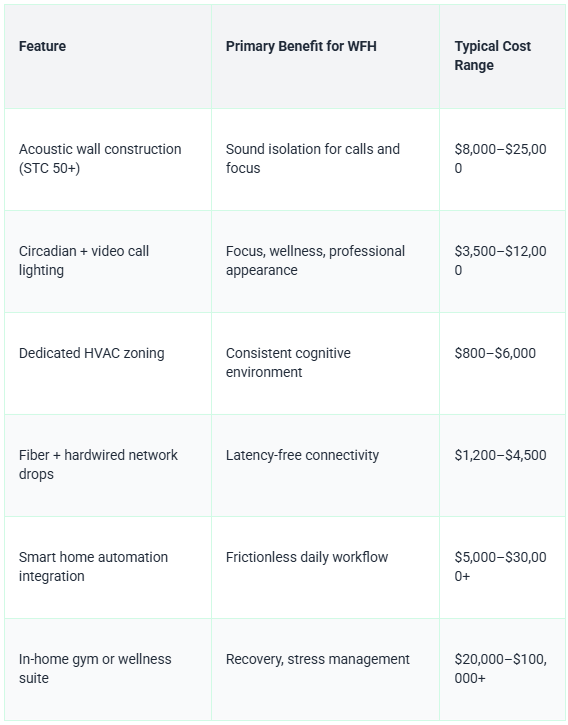
Acoustic consultants working on high-end residential projects in the Bay Area typically recommend targeting an STC (Sound Transmission Class) rating of 50–55 for dedicated home office walls, compared to the standard residential construction rating of 33–40. Achieving this level requires professional acoustic design and adds roughly $8,000–$25,000 to a room renovation depending on scope and existing wall construction.
Lighting Designed for Human Performance
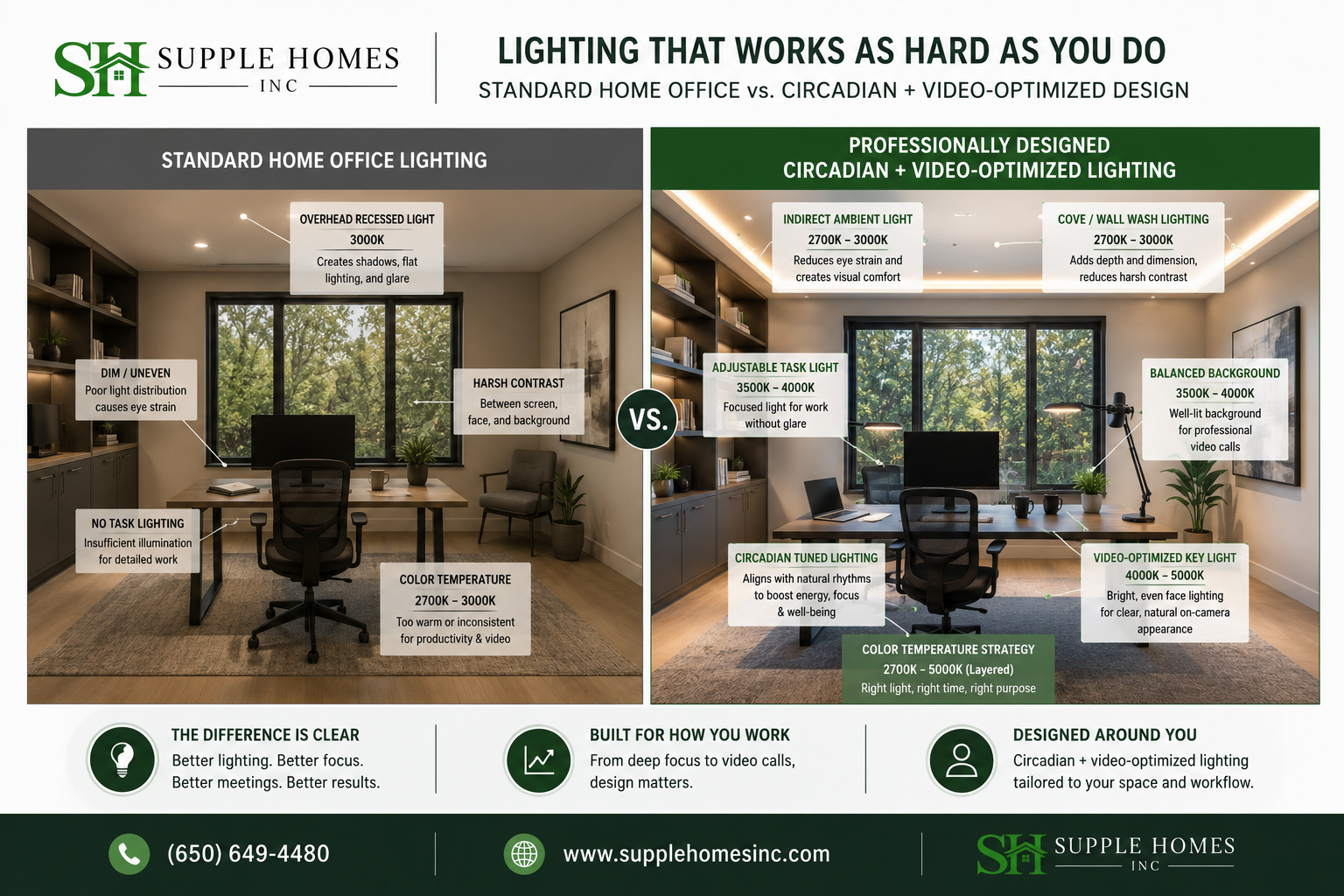
Natural light is the most underrated productivity tool in residential design. Menlo Park's climate ,roughly 260 sunny days per year ,makes north-facing skylights or clerestory windows particularly effective for diffused, glare-free daylight. For artificial lighting, tunable LED systems that shift from cool white (5000K) during focus hours to warmer tones (2700K) in the evening support natural circadian rhythms without requiring manual adjustment.
Video call lighting is a separate consideration entirely. Dedicated key lighting setups integrated into the office ceiling ,not ring lights on a desk ,signal a different level of intentionality and look considerably more professional in high-stakes virtual meetings.
Smart Home Automation as a Productivity Layer, Not Just a Convenience
Most smart home features get sold as lifestyle upgrades. For WFH professionals, they serve a more functional purpose. Automated climate zoning, for example, means the home office can be maintained at a focused 68–70°F while the rest of the house runs warmer or cooler depending on family preferences, without manual adjustment throughout the day.
Studies in workplace environmental science suggest that temperature fluctuations of more than 4–5°F during a work session can reduce cognitive performance and increase error rates. Dedicated HVAC zoning for a home office, typically costing $2,500–$6,000 for a retrofit and $800–$1,500 in new construction, addresses this directly.
Integration with calendar-triggered automations is where this gets genuinely useful. A properly configured system can lower blinds, activate focus lighting, enable Do Not Disturb on the smart doorbell, and silence household audio systems automatically when a scheduled meeting block starts. This is the kind of frictionless environment that luxury WFH homes in Menlo Park are increasingly expected to offer.
Connectivity Infrastructure: The One Non-Negotiable
Everything else on this list becomes irrelevant if the network can't keep up. In luxury WFH homes, connectivity is no longer just about internet speed. It's about architecture: dedicated hardwired Ethernet drops to the office, a managed switch with Quality of Service (QoS) prioritization, a separate VLAN for work devices, and a secondary mesh node or LTE failover so a single point of failure never takes down a live client presentation.
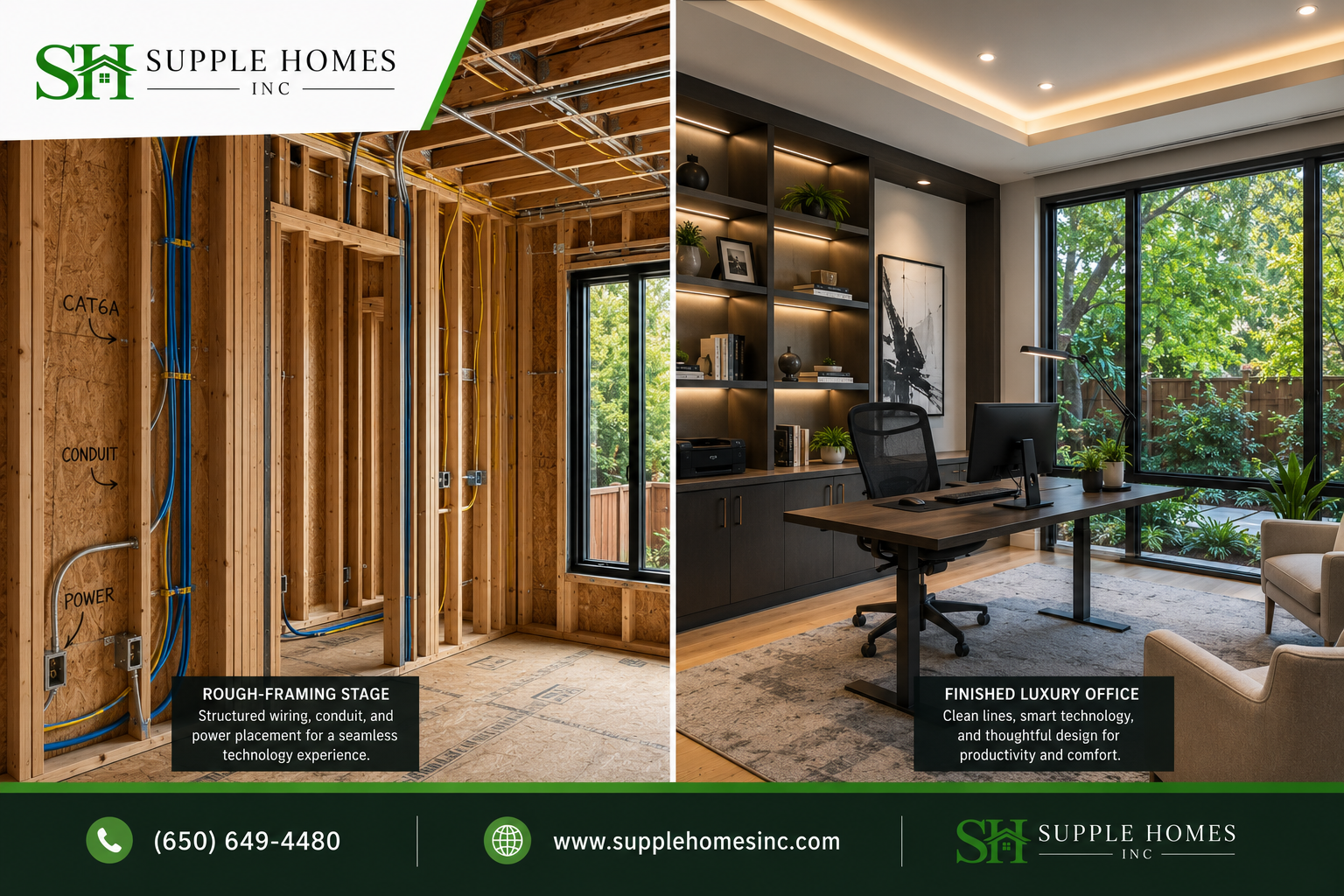
Homes wired with Cat6A during construction cost a fraction of what a retrofit runs later. For new builds and major renovations, custom construction allows this infrastructure to be built in from the framing stage, which is by far the most cost-effective approach.
Wellness Amenities That Actually Support Performance
There's a difference between luxury amenities that look good in a listing and those that genuinely serve high-performing remote workers. Infrared saunas, for instance, have become increasingly common in Menlo Park's top-tier properties. For someone working intense cognitive hours, a 20-minute post-work session offers documented recovery benefits that a hot tub simply doesn't replicate.
Clinical research has linked regular infrared sauna use to reduced cortisol levels and improved sleep onset latency, both of which are directly relevant to professionals managing high-stress workloads. Residential infrared sauna installations in the Bay Area typically range from $4,000 for a prefab unit to $25,000+ for a custom-built cedar room with chromotherapy and audio integration.
Home gyms have moved well beyond treadmills in a spare room. What's appearing in Menlo Park's higher-end projects now includes dedicated stretch and mobility areas, rubber flooring with proper sound isolation, and integrated coaching screens. The best setups are thoughtfully separated from the main living areas so workout noise doesn't interrupt anyone still on calls.
Step-by-Step: Planning a Luxury WFH Home Renovation in Menlo Park
- Audit your current pain points before designing anything. What actually disrupts your workday? Background noise, poor lighting, connectivity drops, no clear work/home boundary? The answer shapes every decision that follows.
- Engage an architect or design-build firm with WFH-specific residential experience. Not every luxury contractor understands the acoustic, lighting, and network requirements specific to home offices. Ask for relevant project examples before committing.
- Plan network and electrical infrastructure before walls close. Conduit runs, Cat6A pulls, and dedicated circuits for office equipment are vastly cheaper to install during rough framing than after finishes are in place.
- Design the office space for both focus work and video presence. These two modes have different requirements. A deep, quiet alcove works for deep work but looks terrible on a call. The best designs account for both.
- Integrate wellness spaces into the overall floor plan, not as afterthoughts. A gym tucked into a basement corner without proper ventilation or natural light will go unused. Treat it with the same design intentionality as any other primary room.
- Test and commission all systems before project sign-off. Acoustic performance should be measured, not assumed. Network throughput, lighting automation sequences, and HVAC zoning should all be validated in real conditions before final payment.
Common Mistakes Menlo Park Homeowners Make When Designing WFH Spaces
- Treating connectivity as a furniture decision. Most people buy a mesh router and call it done. Real WFH infrastructure is a structural conversation, not a Best Buy run.
- Choosing a room for its view instead of its acoustic properties. A beautiful view doesn't help if every sound in the house tunnels into the space. Rooms adjacent to kitchens, laundry, or high-traffic hallways need acoustic intervention regardless of how nice they look.
- Under-specifying electrical capacity. Modern home offices run multiple monitors, desktop computers, video lighting, audio equipment, and standing desk motors simultaneously. A single 15-amp circuit isn't enough. Dedicated 20-amp circuits per workstation are considered baseline in professional-grade setups.
- Overlooking the psychological boundary between work and home. Designing spaces that allow clear transitions between "at work" and "at home" ,even within the same physical structure ,is one of the most underappreciated aspects of WFH design.
- Skipping acoustic measurement after construction. Many contractors will tell you the room is "good enough." In a $3M+ home, subjective assessment isn't acceptable. A basic acoustic measurement with a calibrated microphone takes 30 minutes and reveals exactly what the room is doing.
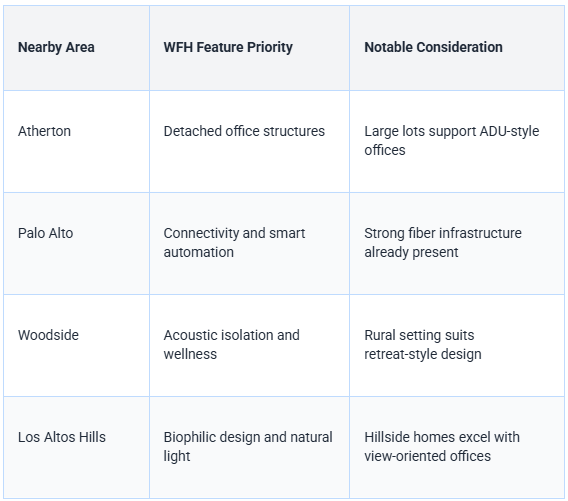
Nearby Areas Served by Supple Homes Inc.
Beyond Menlo Park, Supple Homes Inc. works with luxury homeowners across the broader Peninsula and South Bay. This includes Palo Alto, Atherton, Portola Valley, Los Altos Hills, Woodside, Redwood City, and Los Altos. If you're evaluating a WFH renovation or new custom build anywhere in this corridor, the same principles apply ,with local permitting and architectural context adjusted accordingly.
Frequently Asked Questions
What is the most important technology upgrade for a Silicon Valley home office in 2026?
Hardwired network infrastructure remains the single most impactful technology investment. Wi-Fi is convenient but introduces latency variability, interference risks, and single points of failure that a dedicated Ethernet drop to the workstation eliminates entirely. Pair this with a managed router with QoS settings and a secondary failover connection, and you have a setup that rivals most corporate offices. Everything else, monitors, peripherals, and lighting, can be upgraded incrementally, but network architecture is structural.
How are luxury bathrooms evolving for WFH professionals?
The shift is toward recovery-oriented design. Steam showers, chromotherapy lighting, heated floors, and freestanding soaking tubs are no longer just aesthetic choices. For professionals who rarely leave their homes on work days, the bathroom has become a decompression space. The best new luxury bathrooms in Menlo Park integrate these features with smart controls, so a post-work unwinding sequence can be triggered with a single tap or voice command.
Are "Zoom-ready" backgrounds still popular?
The concept has matured. Early WFH design leaned heavily on styled bookshelves and curated backdrops specifically for video calls. What's evolved is a more integrated approach: offices are now designed holistically so that the entire space looks and sounds professional, rather than having one photogenic corner. Built-in cabinetry, consistent lighting, and thoughtful wall finishes mean there's no single "camera-facing" orientation; the whole room works.
What are the key features of an "eco-friendly" luxury home in this context?
For WFH professionals in Menlo Park, eco-friendly luxury typically means solar with whole-home battery backup (providing energy independence during grid events), high-performance triple-pane windows that reduce HVAC load, smart water systems, and materials with verified low-VOC profiles. The last point matters more than most people realize: spending 10+ hours daily in a home office means indoor air quality directly affects cognitive performance and long-term health, not just environmental credentials.
How can a home office be designed for better work-life balance?
Physical separation is the most reliable method. Even a dedicated entrance to the office from outside the main living area creates a meaningful psychological boundary. When that's not architecturally possible, the next best solution is a defined transition ritual supported by design: a hallway, a door that actually closes, or a distinct material shift that signals a change of environment. Smart automation can reinforce this by shifting lighting, temperature, and audio environments on a schedule that mirrors a natural workday start and end.
Final Thoughts: Building a Home That Works as Hard as You Do
The most successful WFH luxury homes in Menlo Park share a common quality: they were designed with intention, not adapted from something else. They account for how their owners actually work, the hours, the calls, the cognitive demands, and the recovery needs, and they translate that understanding into physical and architectural decisions.
This isn't about expensive finishes. It's about systems that support performance, spaces that create separation between work and life, and infrastructure that never becomes the reason something goes wrong. When those elements come together, the home stops being the place where you happen to work and becomes the environment where you do your best work.
If you're planning a new build or significant renovation in Menlo Park or the surrounding Peninsula, Supple Homes Inc. brings deep experience in luxury residential design for Silicon Valley's remote professional community. Call (650) 649-4480 to talk through your project ,from first concepts to final finishes. The team at Supple Homes builds spaces that genuinely perform.