In the Bay Area, choosing between a tear-down rebuild and a full renovation depends on your home's structural condition, lot value, budget, and long-term goals. Tear-downs typically cost more upfront but deliver higher ROI on premium lots, while renovations preserve character and move faster through permitting. Neither path is universally better, the right choice is highly property-specific.
You've outgrown the layout. The foundation has quirks. The bones might be solid, or they might be hiding decades of deferred maintenance behind freshly painted walls. For Bay Area homeowners, this decision carries real financial weight, land values here are among the highest in the country, and a wrong move in either direction can cost hundreds of thousands of dollars.
Key Takeaways
- Tear-downs make the most financial sense on high-value lots where the existing structure limits the home's potential value.
- Renovations are faster to permit and complete in most Bay Area jurisdictions, especially for non-structural work.
- A full gut renovation of an older Bay Area home can approach or exceed the cost of new construction once hidden problems are uncovered.
- New builds offer superior energy efficiency, modern systems, and customization that older homes cannot easily replicate.
- Local factors, including fire zone classifications, hillside regulations, and HOA restrictions, heavily influence which path is even feasible.
- A qualified local builder like Supple Homes INC can assess your specific property and give you a grounded projection for both scenarios.
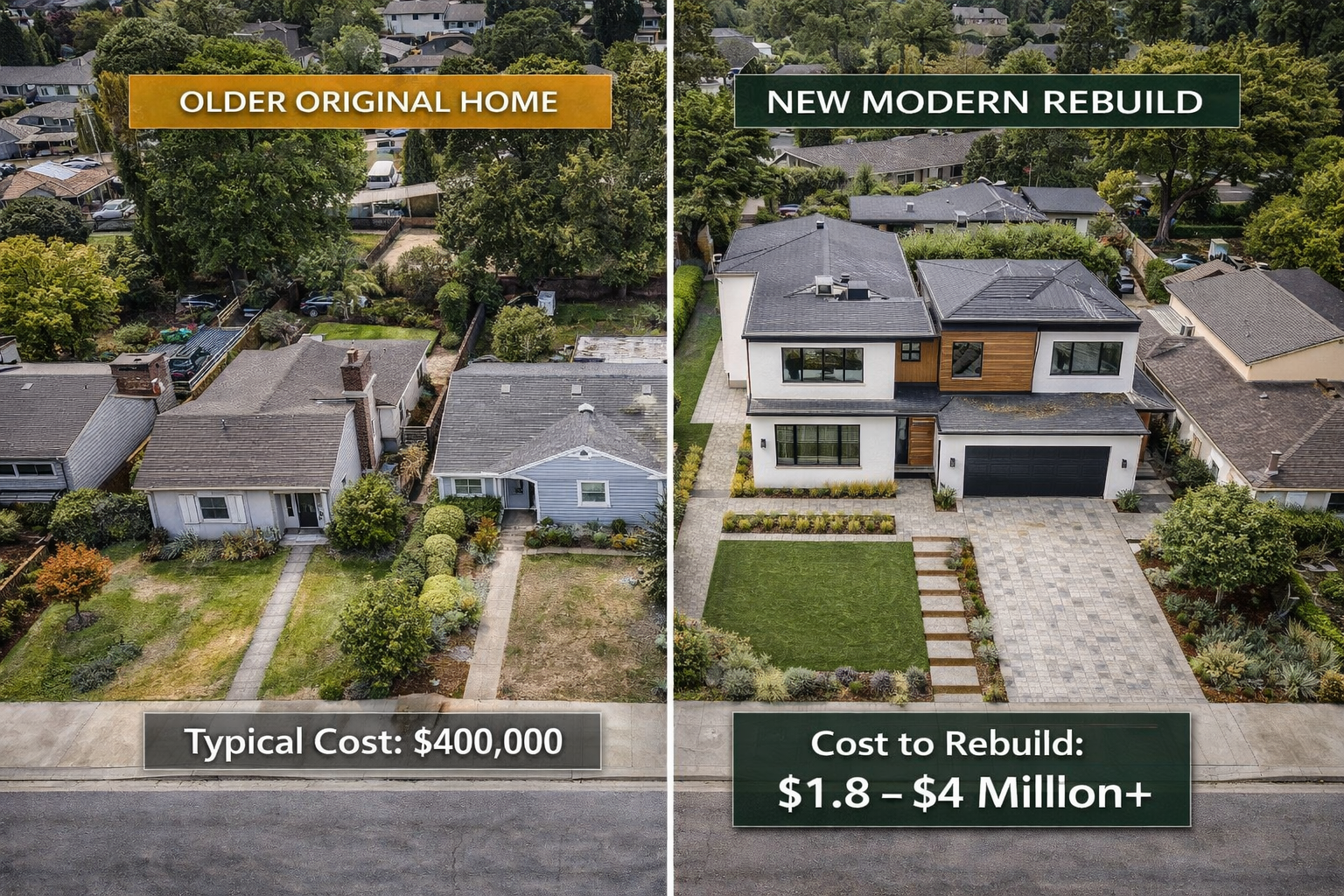
Why This Decision Is Harder in the Bay Area Than Almost Anywhere Else
The Bay Area's housing market is one of the most complex in the nation. Land values in cities like Los Altos, Palo Alto, Atherton, and Saratoga routinely exceed the value of the structures sitting on them. That reality flips the traditional renovation calculus entirely.
In most U.S. markets, homeowners renovate because building new is too expensive relative to what the finished product is worth. In the Bay Area, the opposite pressure often applies. The question becomes whether the existing structure is helping or capping your property's full potential.
Bay Area land values have consistently appreciated faster than the structures built on them, with some Silicon Valley zip codes seeing land represent 70–80% of a property's total assessed value. This land-to-structure ratio is a critical starting point for any tear-down vs. renovation analysis.
What Does a Tear-Down Actually Cost in the Bay Area?
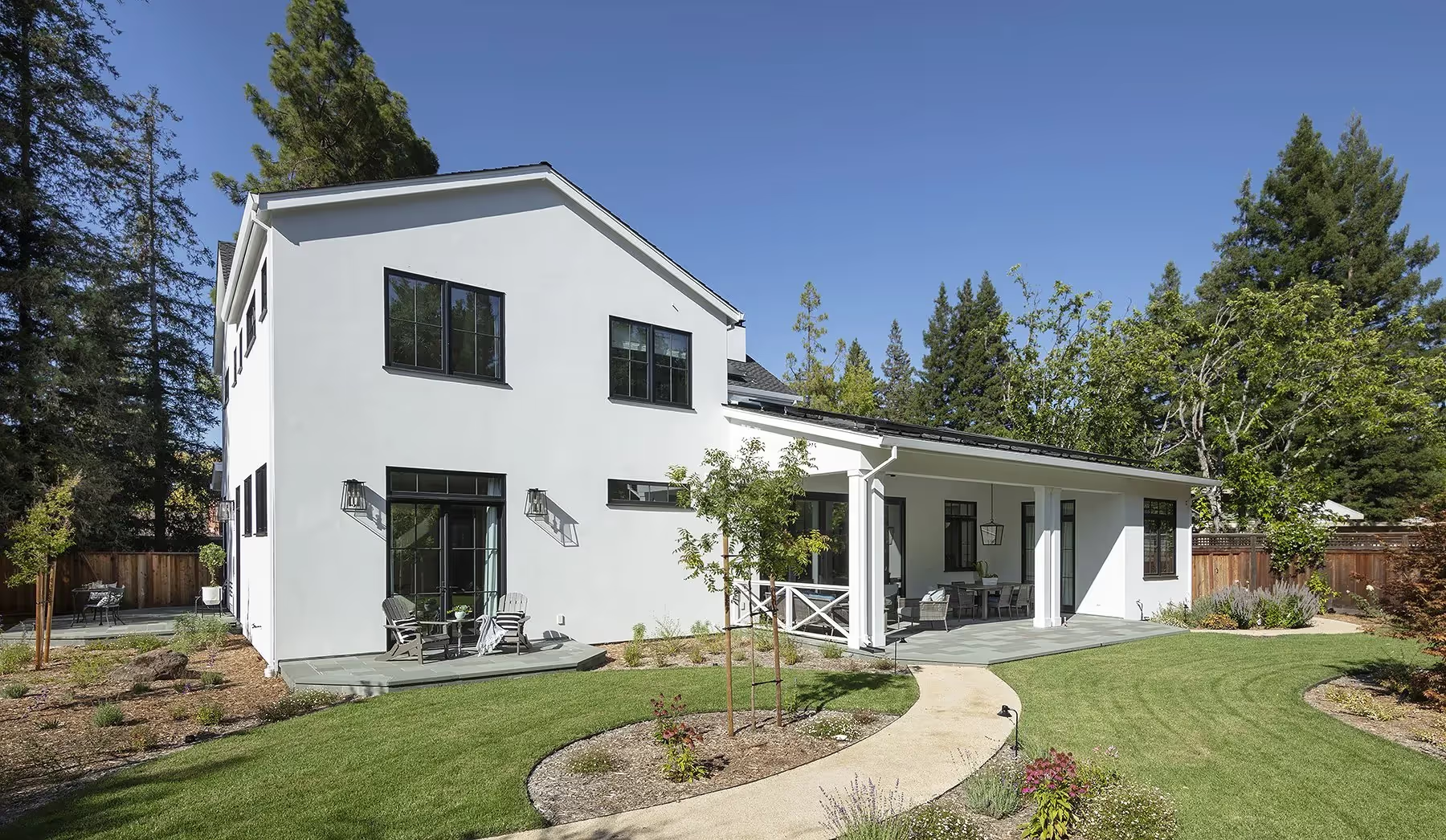
A newly built high-end home builder product in Los Altos Hills or Saratoga can command $3 million to $6 million depending on lot, finishes, and square footage. The rebuild cost often represents a fraction of the finished value.
Beyond construction costs, budget for permits, architectural and engineering fees, soil reports, utility reconnections, and temporary housing during the build. Most complete tear-down-and-rebuild projects in the Bay Area take 18 to 30 months from design to certificate of occupancy.
What Does a Major Renovation Cost and Where Do Costs Spiral?
The real cost trap in renovation is what gets uncovered once walls come down. Homes built before 1978 frequently contain asbestos insulation and lead-based paint. Homes with post-and-pier foundations, especially in hillside neighborhoods, often need significant structural reinforcement to meet current seismic codes. Knob-and-tube wiring, galvanized plumbing, and undersized electrical panels all trigger mandatory upgrades once permits are pulled.
These surprises are not rare, they are the norm in Bay Area renovation projects. A renovation that seems like a $400,000 project at design kickoff can quietly grow to $650,000 by the time the inspector signs off. Budgeting a 20–30% contingency is not pessimistic; it's responsible planning.
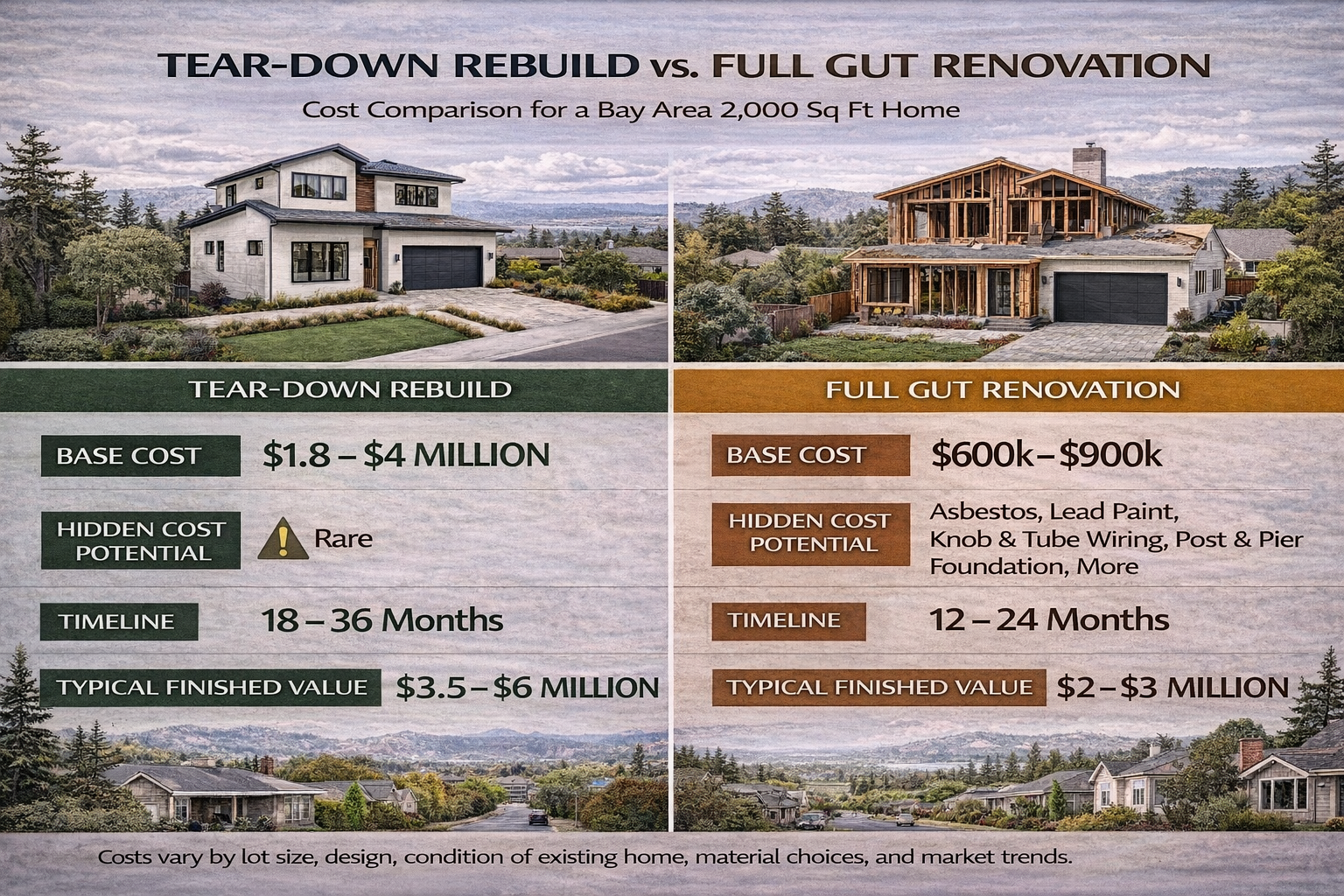
Comparing the Two Paths Side by Side

Step-by-Step: How to Evaluate Which Path Is Right for Your Property
- Get a structural inspection from a licensed engineer. This is the single most important first step. A general home inspector will flag obvious issues; a structural engineer will tell you what it actually costs to fix them, and whether those fixes make financial sense relative to starting fresh.
- Determine your lot's development potential. Check your municipality's zoning rules for maximum allowable floor-area ratio (FAR), setbacks, and height limits. If the existing structure uses only 60% of what zoning allows, a rebuild may let you significantly expand livable square footage.
- Request a preliminary permit feasibility review. Many Bay Area cities offer pre-application meetings with the planning department. This reveals whether your project faces design review, hillside development constraints, or fire zone restrictions before you commit to a design path.
- Run a side-by-side budget model. Have a qualified contractor price both scenarios using your actual property data, not national averages. The gap between renovation and rebuild costs is often narrower than homeowners expect once hidden renovation risks are priced in.
- Model the finished value, not just the cost. Work with a local real estate agent to estimate what the completed project would be worth on the market. This separates emotional preference from financial logic and often makes the right choice obvious.
- Consider your personal situation. If you plan to live in the home for 20+ years, the math looks different than if you're building to sell within five. Tear-downs deliver the best return on long hold periods or sale in competitive markets.
When the Bay Area's Rules Change the Math Entirely
Local regulations add layers of complexity that don't exist in most other markets. Several Bay Area jurisdictions have adopted quality constructions matters standards that require new builds to meet strict sustainability benchmarks, including solar-ready design, EV charging infrastructure, and energy storage provisions.
If your property sits in a Very High Fire Hazard Severity Zone, which covers significant portions of the Oakland Hills, the Santa Cruz Mountains, and hillside areas throughout the peninsula, a full rebuild will require compliance with current defensible space and fire-resistant construction materials standards. That adds cost, but it also adds durability and insurability that older structures often cannot claim.
California's Title 24 energy code, updated in the 2022 cycle, mandates all-electric new construction in many jurisdictions and requires solar panel systems on new single-family homes. These requirements apply to tear-down rebuilds but generally do not apply to renovations, which means new builds carry higher compliance costs but also deliver lower long-term operating costs and better energy independence.
What About ROI? Does a New Build Actually Pay Off?
In Bay Area neighborhoods where comparable new construction sells at a meaningful premium over renovated older homes, the rebuild ROI calculation often favors starting fresh. Think about what it means when a 1960s ranch on your street sells for $2.1 million while a recently completed custom home on an equivalent lot sells for $3.4 million. The $1.3 million delta is the story. If the rebuild cost $1.1 million, the math works clearly in favor of tearing down.
Renovations tend to deliver stronger ROI when the scope is targeted. Kitchen and bath upgrades, ADU additions, and system replacements all generate measurable value. Whole-home renovations that approach rebuild cost without delivering rebuild-quality results are the scenarios where homeowners most often feel they got the worst of both worlds.
Working with a team experienced in high-performance custom homes helps ensure that when you do invest in a rebuild, the finished product reflects the premium your neighborhood commands.
Common Mistakes Bay Area Homeowners Make in This Decision
- Underestimating renovation contingencies. Many homeowners budget 10% for surprises. In Bay Area homes built before 1970, 25–30% is more realistic.
- Ignoring lot potential. Deciding based on the cost of what you're building without accounting for what zoning allows you to build is a common and expensive oversight.
- Choosing renovation to avoid displacement. Staying in the home feels convenient, but major renovations often become uninhabitable mid-project anyway, and they take longer than planned.
- Not getting structural engineering before deciding. A home with "good bones" that actually has foundation or seismic issues will reveal those costs during renovation, not before.
- Skipping the pre-application meeting. Assuming your project will sail through permits without a preliminary check is a frequent source of costly redesigns and delays.
- Optimizing for the cheapest option instead of the best outcome. The lowest-cost path at the start often ends up costing more once scope changes and hidden conditions accumulate.
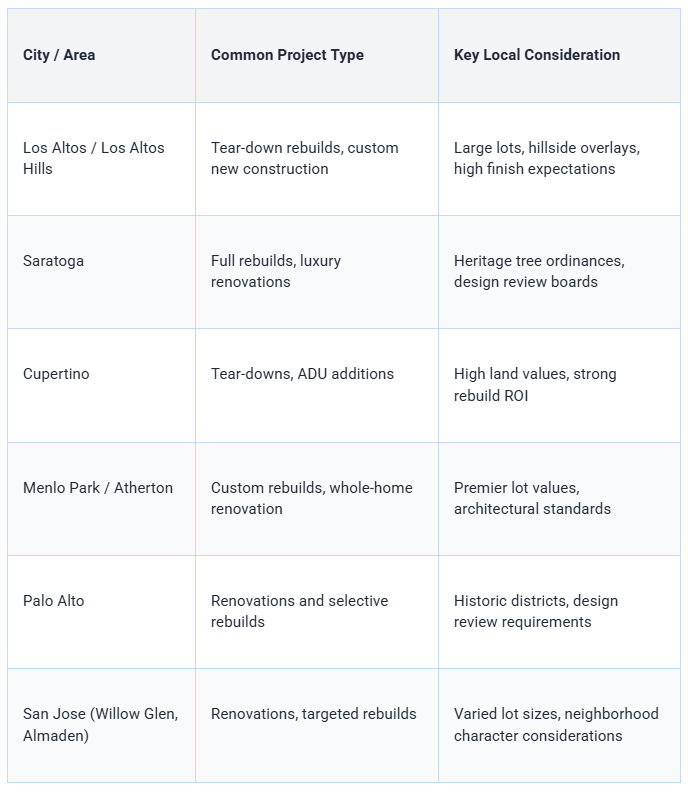
Nearby Bay Area Areas We Serve
Frequently Asked Questions
Is a tear-down or renovation cheaper?
It depends entirely on the scope and condition of the existing home. A tear-down rebuild carries a higher absolute cost, typically $1 million or more for a full custom home in the Bay Area. A renovation starts lower but frequently escalates once structural issues, hazardous materials, and code compliance requirements are uncovered. For homes needing extensive work, the final renovation cost can equal or exceed rebuild cost, without delivering the same quality or customization.
How long do permits take in the Bay Area for a rebuild?
Permit timelines vary significantly by city and project complexity. For a full demolition and rebuild, plan for six to twelve months of plan check and permit review in most Bay Area jurisdictions, though some cities have expedited review programs for projects meeting sustainability or affordability criteria. Jurisdictions with design review boards, such as Saratoga and parts of Palo Alto, add additional review cycles. Starting the permit process early, ideally before finalizing your construction contract, is essential.
Does a new build have better ROI?
In most high-value Bay Area neighborhoods, yes. New construction commands a measurable premium over renovated older homes because buyers pay for modern systems, energy efficiency, seismic compliance, and the warranty protections that come with new construction. That premium is most pronounced in neighborhoods where lot values are high and older housing stock is dated. On lots where zoning allows significant square footage increases, the ROI advantage of a rebuild is even more compelling.
How do I decide if my home has good "bones"?
The term is used loosely, but structurally it means the foundation is sound, the framing meets current load requirements, and the layout can be adapted without major structural intervention. A licensed structural engineer, not a general inspector, is the right person to make this call. Beyond structure, consider whether the existing footprint and lot placement allow you to build what you actually want. A home with solid bones but a layout you can't work with may still be a better candidate for a tear-down than a renovation.
What if I want to live in the home during construction?
For major renovations involving structural work, this is rarely practical and sometimes not permitted by your contractor's insurance or local codes. Plan for at least six to twelve months of temporary housing for a significant renovation, and 18 to 24 months for a tear-down rebuild. Budget $3,000 to $8,000 per month for rental housing in the Bay Area depending on your location and family size. Building this into your total project budget from the start prevents it from becoming a painful surprise mid-construction.
Making the Call: Final Thoughts
There's no universal answer to the tear-down vs. renovation question. What there is, for every Bay Area property, is a right answer specific to that lot, that structure, and that owner's goals. The most common mistake is making this decision based on gut feel or national renovation content that doesn't reflect what projects actually cost and deliver here.
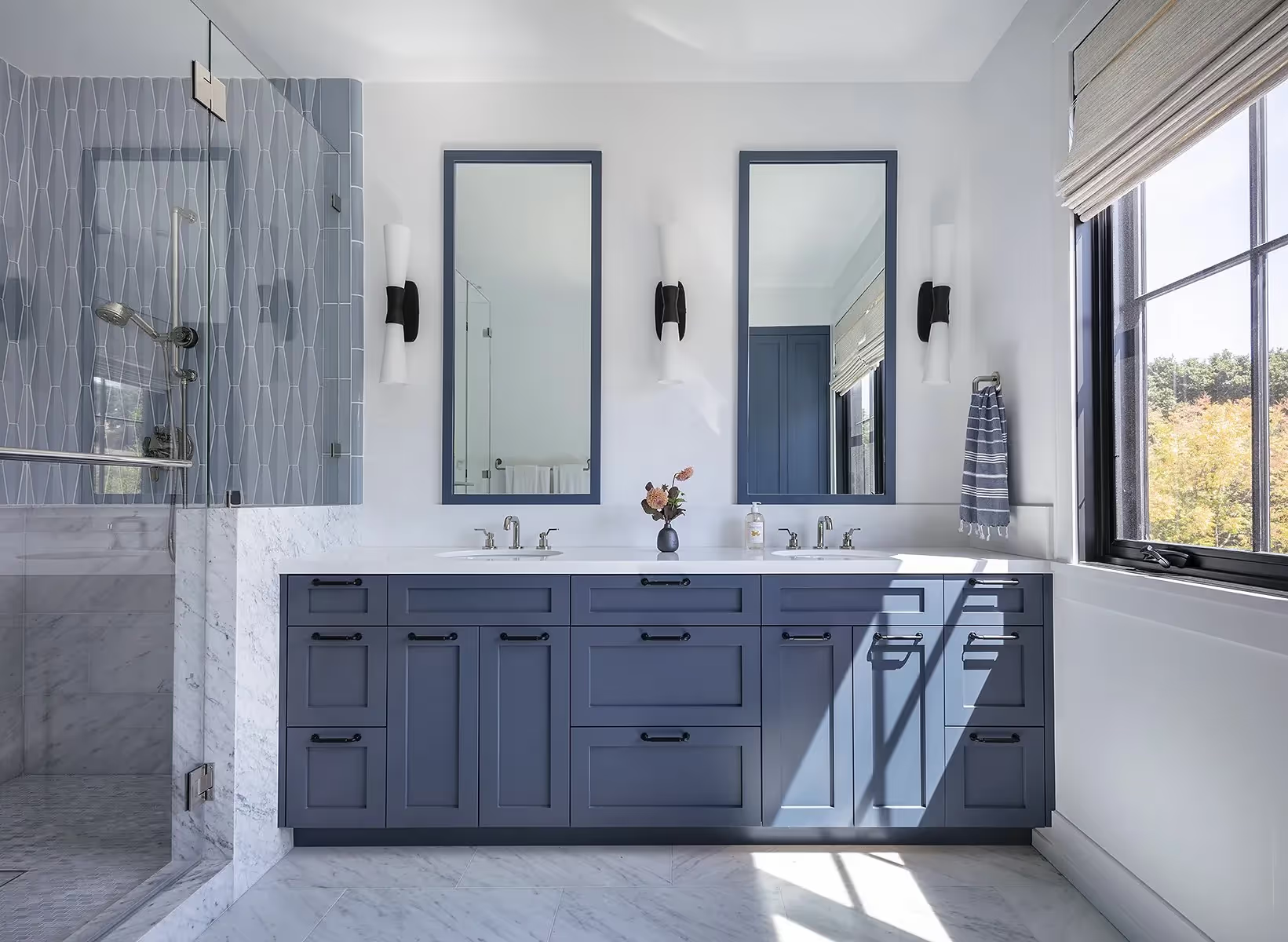
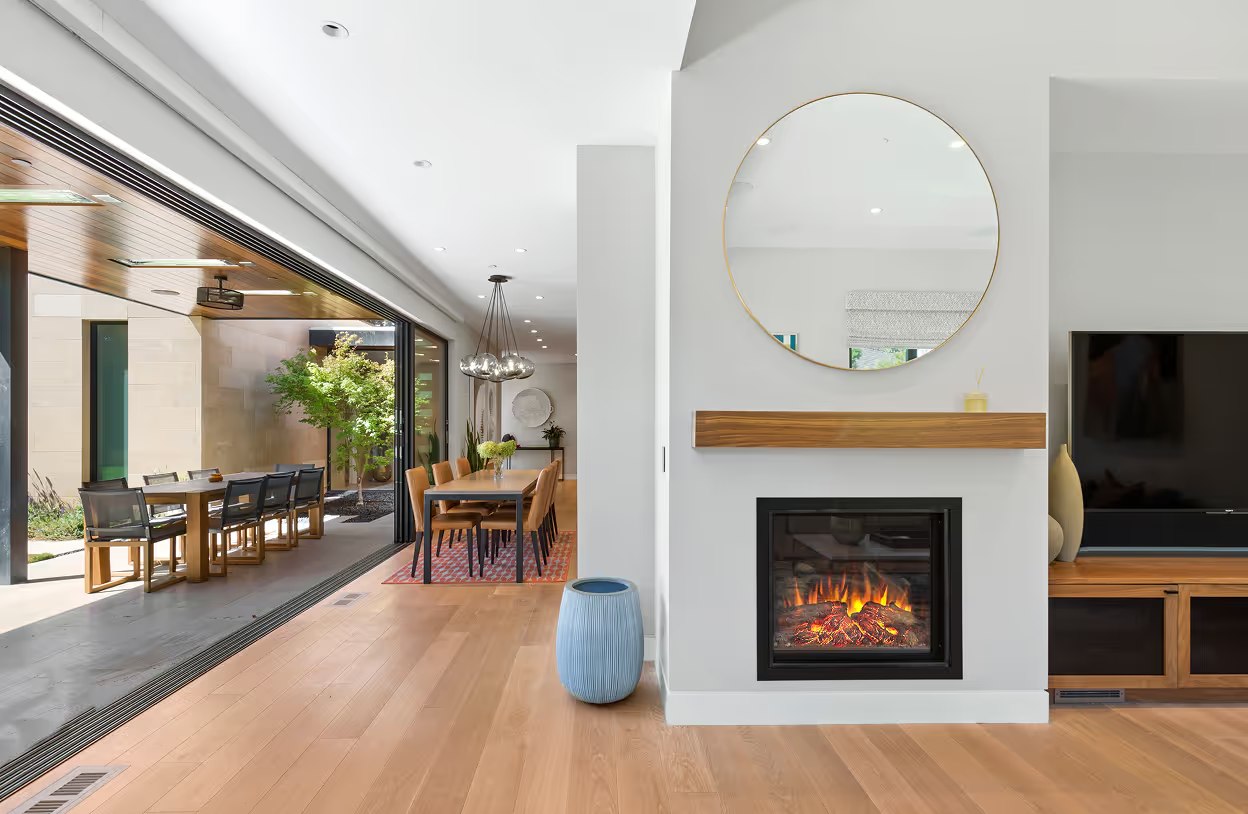
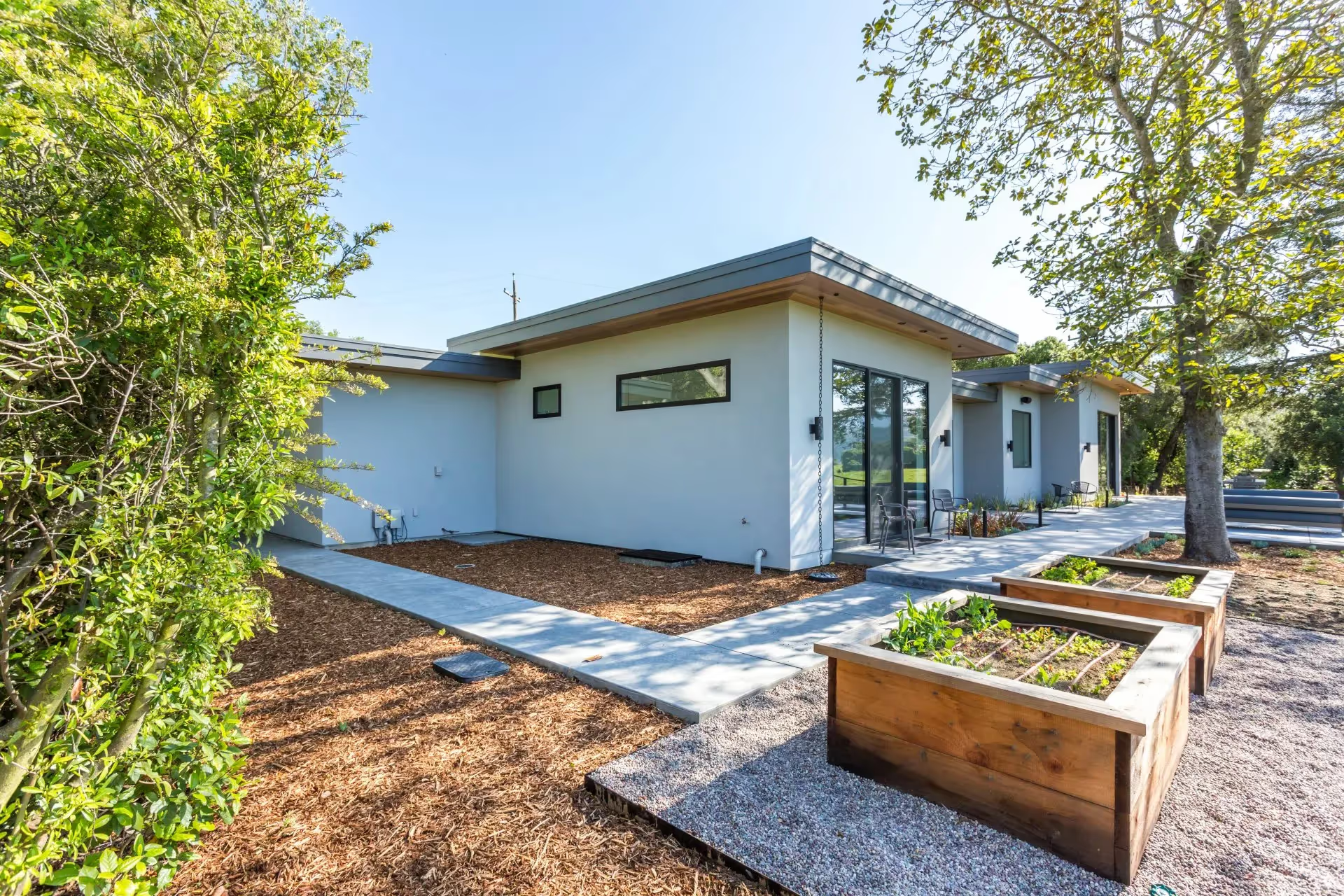
A rebuild lets you start with a clean slate, modern systems, custom layout, full energy compliance, and no inherited problems. It pairs especially well with consideration of luxury interior finish choices and thoughtfully designed luxury outdoor spaces that transform a property into something truly differentiated in the market. A well-scoped renovation, on the other hand, can preserve what's already working while delivering significant value, as long as the scope is grounded and the contingency is real.
The key is working with people who know both paths and can give you an honest projection for your specific property, not a sales pitch for the option that's easiest to sell you.
Ready to Make the Right Decision for Your Bay Area Property?
Supple Homes INC works with Bay Area homeowners to evaluate both paths honestly, running real numbers for your specific property, your neighborhood's comps, and your long-term goals. Whether you're leaning toward a tear-down rebuild or a thoughtful renovation, the conversation starts with a site assessment, not a sales pitch.
Call Supple Homes INC today at (650) 649-4480 to schedule your property evaluation and get a clear picture of what's truly possible on your lot.