Palo Alto is not simply another residential market on the San Francisco Peninsula. It is a community defined by intellectual rigor, technological innovation, and long-term planning. Families who build here are often balancing demanding professional schedules, structured academic expectations, and a desire for stability in one of the most competitive real estate markets in the country.
In this environment, the home must function as a counterbalance to external intensity.
When homeowners search for quiet homes for families in Palo Alto, they are rarely referring only to neighborhood sound levels. They are describing something more structural: a home that feels grounded. A home where activity in one area does not disrupt rest in another. A home that remains stable under daily use. A home that does not require constant adjustment, repair, or correction.
True quiet is not decorative. It is built into the framing, the envelope, the systems, and the sequencing of construction.
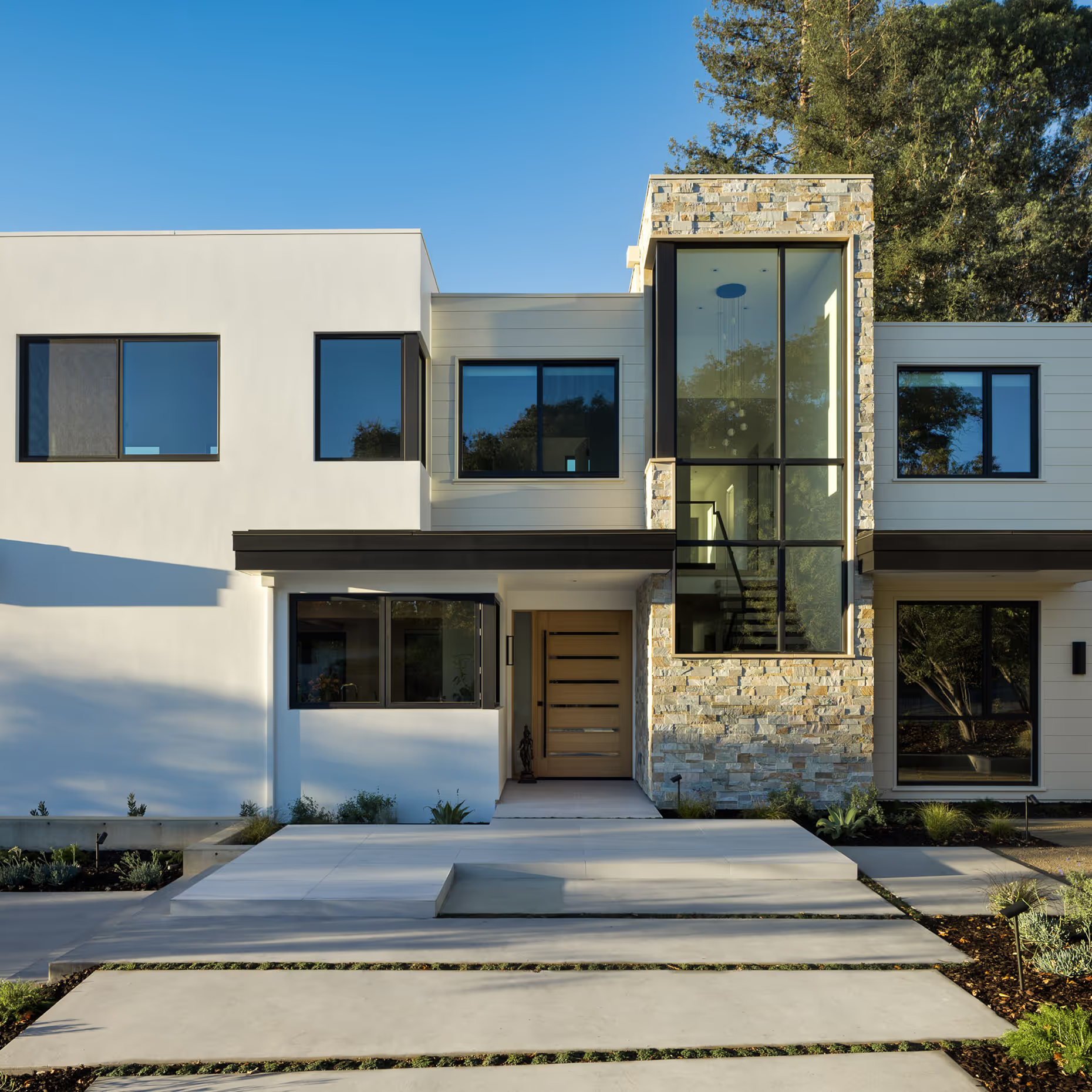
Structural Stability Is the Foundation of Quiet
A quiet home begins with structural confidence. If the underlying frame is inconsistent, every subsequent phase of construction must compensate for that instability. Over time, small inaccuracies compound. Floors shift subtly. Doors require seasonal adjustments. Transitions between materials begin to separate.
In Palo Alto, where custom homes often feature open layouts and wide spans, structural rigidity is especially important.
Key structural priorities include:
- Proper beam sizing for large open spaces
- Reinforced connections at load-bearing junctions
- Careful alignment checks between levels
- Subfloor fastening protocols executed without shortcuts
- Moisture verification before finish flooring installation
When framing is executed with precision, the home feels solid. Movement is minimized. Stair systems remain stable. Doors close cleanly year after year.
This sense of solidity is the first layer of interior calm.
Zoning That Separates Energy Levels
Palo Alto households often operate at multiple speeds simultaneously. A parent may begin early video meetings while children prepare for school. Teenagers may study late into the evening while another family member winds down.
Without intentional zoning, these routines overlap and create friction.
Construction-level zoning should address:
- Clear separation between bedroom corridors and main gathering areas
- Stair placement that avoids cutting directly through private wings
- Buffer spaces between kitchen activity and sleeping zones
- Secondary hallways that limit cross-traffic
These decisions occur during layout execution and framing. They are not decorative refinements.
When zoning is disciplined, the home organizes daily energy rather than amplifying it.
Vertical Coordination in Multi-Level Homes
Many Palo Alto homes are multi-story structures. Vertical coordination becomes critical. Even small framing inaccuracies between floors can lead to long-term performance issues.
Construction discipline requires:
- Joist alignment that supports consistent load transfer
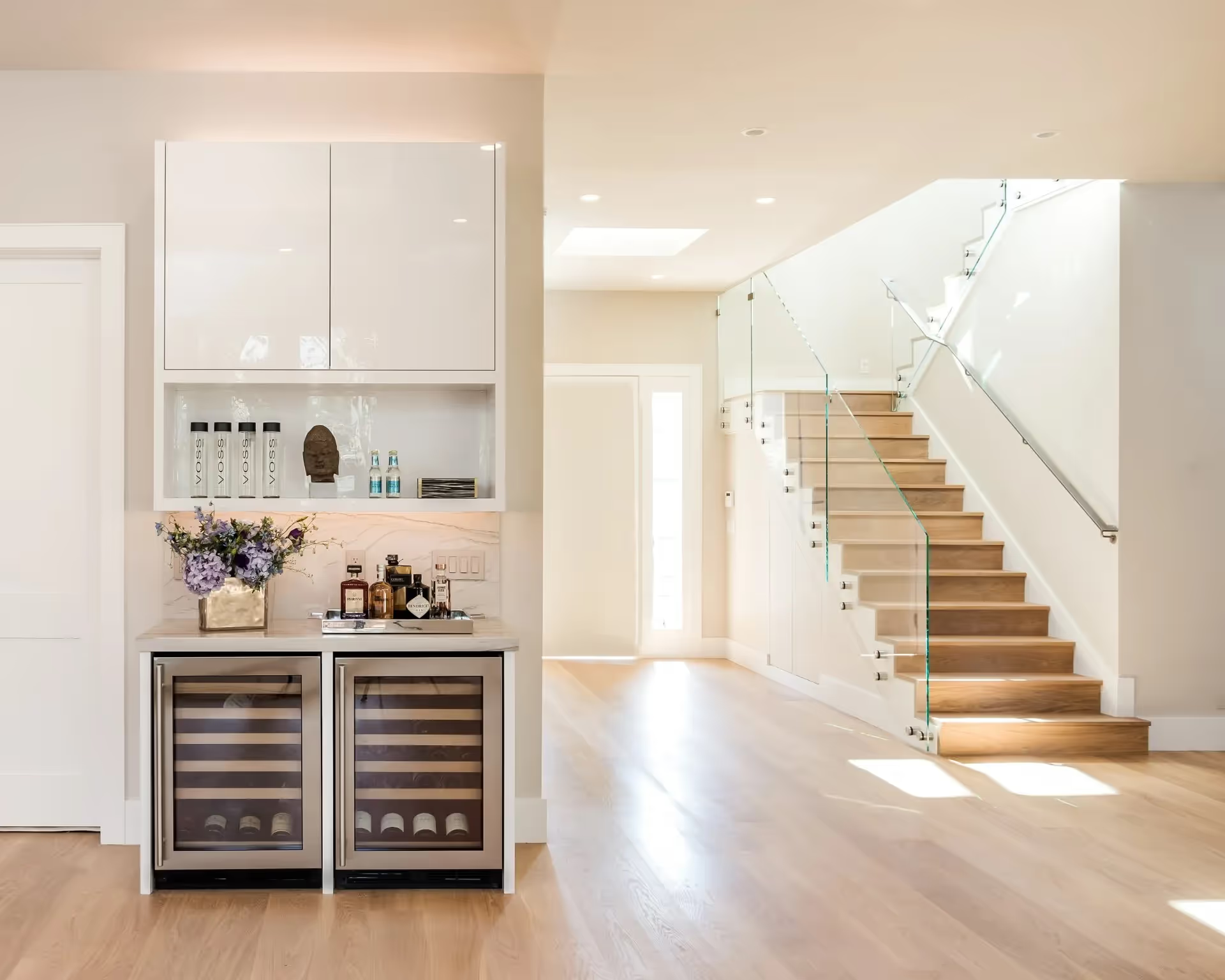
- Reinforced stair assemblies connected at structural points
- Mechanical penetrations planned to avoid compromising framing integrity
- Inspection checkpoints prior to drywall installation
If vertical alignment is inconsistent, the result may not appear immediately. Over time, however, small movements can affect finish integrity and perceived stability.
A quiet home depends on consistent structural coordination across levels.
The Building Envelope as a Performance System
Large glazing systems are common in Palo Alto. Expansive windows increase light and openness, but they must be installed carefully to preserve envelope performance.
Critical execution elements include:
- Continuous flashing around all window openings
- Proper integration with waterproof membranes
- Reinforced framing for wide-span glass systems
- Sealant application in accordance with manufacturer standards
If envelope coordination is weak, subtle fluctuations in interior conditions can occur. Over time, these inconsistencies affect comfort and structural components.
A well-built envelope stabilizes interior performance and supports long-term durability.
Mechanical Systems That Support Stability
Mechanical coordination is often underestimated in discussions about quiet homes. However, system routing and placement significantly influence interior consistency.
Best practices include:
- Locating equipment in designated service zones
- Coordinating duct runs with framing alignment
- Avoiding unnecessary structural penetrations
- Balancing airflow between floors
When systems are integrated carefully, temperature remains even across rooms. The home maintains environmental steadiness without reactive adjustments.
Reinforcing High-Use Transitions
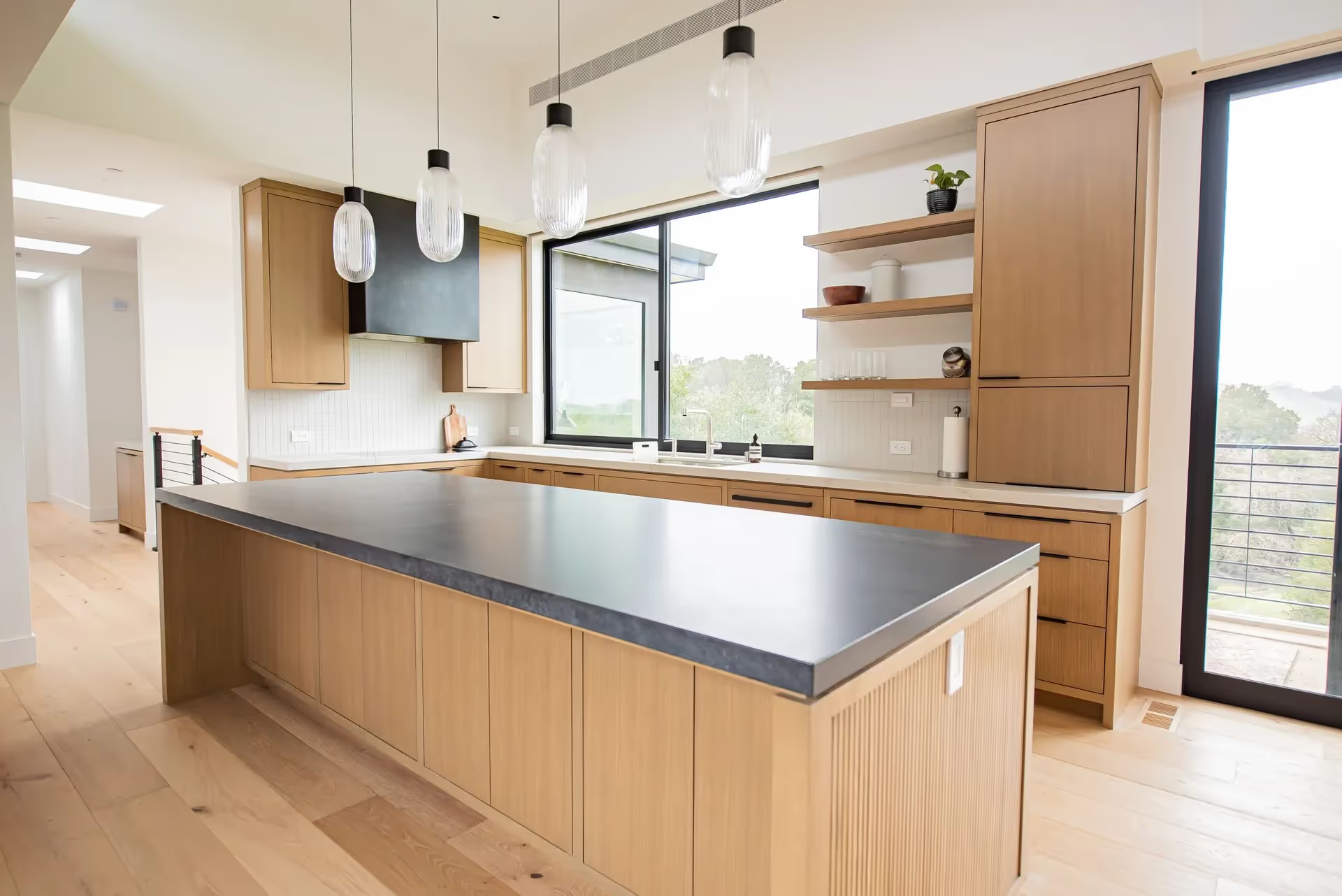
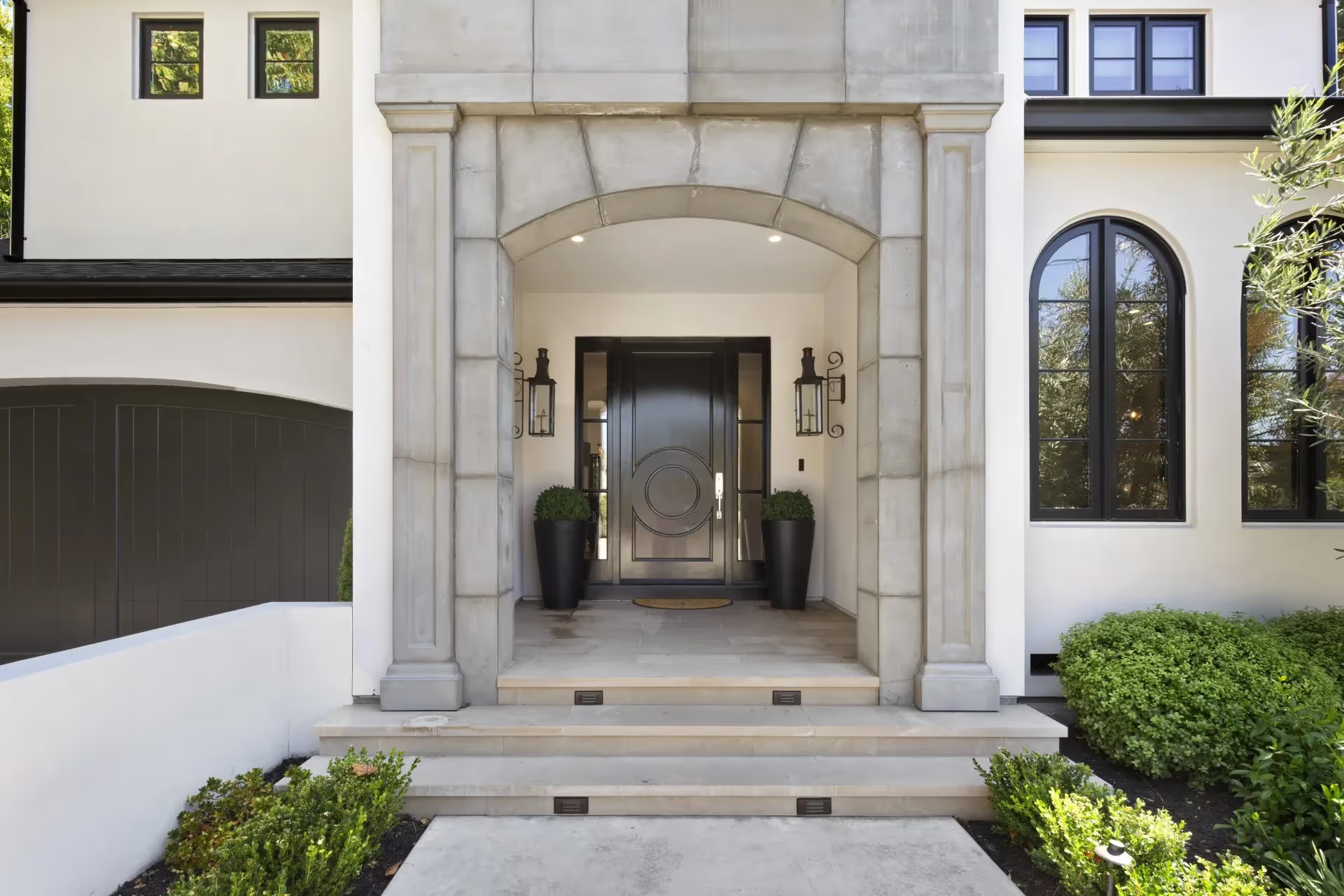
Entryways, kitchens, and staircases experience concentrated daily use in Palo Alto family homes. If not reinforced during construction, these areas can become long-term points of instability.
Execution priorities include:
- Subfloor leveling before hardwood installation
- Stair anchoring at structural junctions
- Secure threshold transitions between materials
- Reinforced cabinetry backing
These details prevent minor shifts that accumulate into visible movement.
Durability in high-traffic zones directly supports interior calm.
Indoor-Outdoor Integration Without Compromise
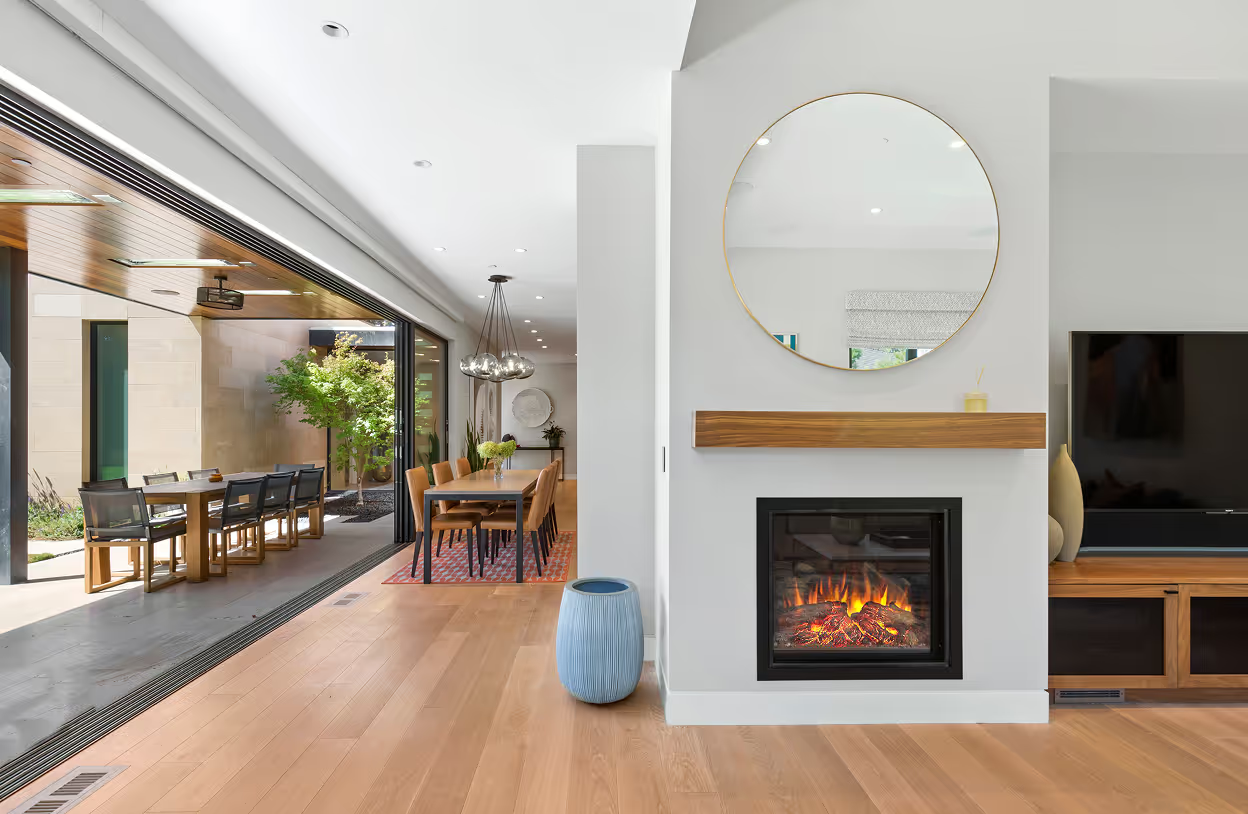
Palo Alto families frequently use patios and covered outdoor areas as extensions of their homes. However, large openings between interior and exterior must be constructed with care.
Critical considerations include:
- Waterproof detailing at door thresholds
- Reinforced framing for wide-span sliding systems
- Proper site grading away from the structure
- Durable exterior finish integration
Indoor-outdoor continuity should enhance livability without weakening structural stability.
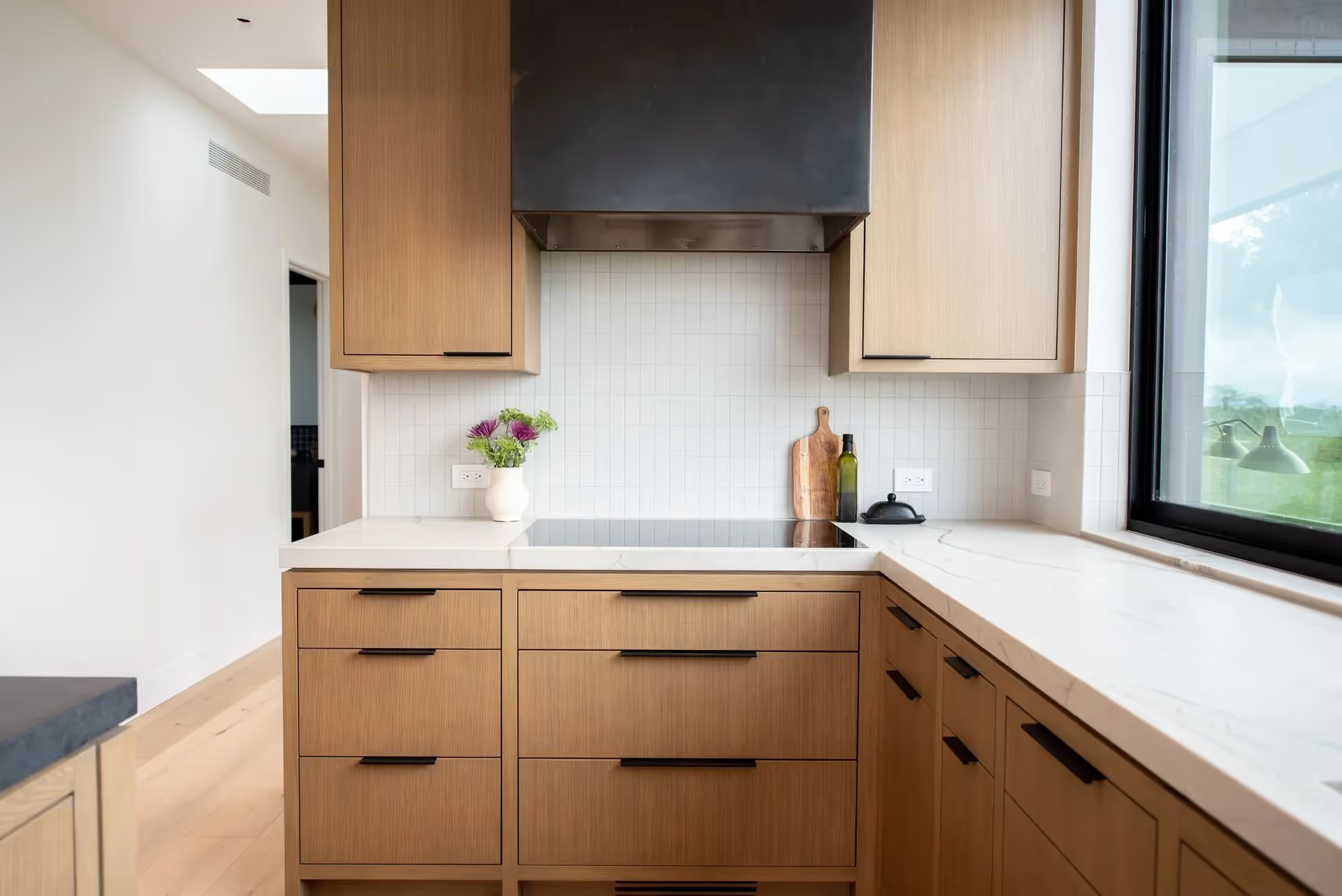
Finish Alignment and Long-Term Consistency
Quiet homes often feel refined because small details remain aligned over time.
This requires:
- Framing verification before drywall
- Door jamb installation with precision
- Secure anchoring of heavy cabinetry
- Inspection prior to finish carpentry
Minor misalignments can create ongoing adjustments. Precision early eliminates correction later.
Planning for Evolving Family Needs
Families building in Palo Alto typically intend long-term residency. Homes must adapt without structural disruption.
Forward-thinking construction may include:
- Flexible bonus rooms
- Reinforced framing for future built-ins
- Clearly separated guest accommodations
- Mechanical capacity for expansion
Adaptability preserves structural calm even as household dynamics change.
Foundation Precision and Site Stability
Even within established neighborhoods, soil conditions influence long-term performance.
Construction priorities include:
- Proper soil compaction verification
- Reinforced footings where required
- Drainage systems designed for seasonal variation
- Accurate slab alignment
Foundation precision prevents settlement-related movement that affects the entire home.
The Psychological Effect of Structural Reliability
Families often describe well-built homes as grounded. This perception stems from structural consistency.
When floors remain level, doors operate smoothly, and systems function predictably, the environment supports focus and rest. Over time, that stability reduces stress within the household.
Quiet is both structural and psychological.
Protecting Long-Term Value in Palo Alto
Palo Alto remains one of the most valuable residential markets in the Bay Area. Structural discipline protects investment value.
Homes built with precision typically:
- Require fewer corrective repairs
- Maintain alignment over decades
- Preserve finish integrity
- Retain strong resale positioning
In a high-value market, longevity reflects construction quality.
Building Quiet Homes for Families in Palo Alto
Quiet homes for families in Palo Alto are defined by structural stability, disciplined zoning, envelope integrity, and coordinated execution. They support focused work, restorative rest, and organized daily routines.
At Supple Homes, the emphasis remains on precision framing, careful sequencing, and long-term performance standards. Quiet performance is achieved through consistent attention at every phase of construction.
If you are considering building a home designed to support calm and steady family living in Palo Alto, a detailed conversation about structure, sequencing, and long-term execution is the appropriate place to begin.