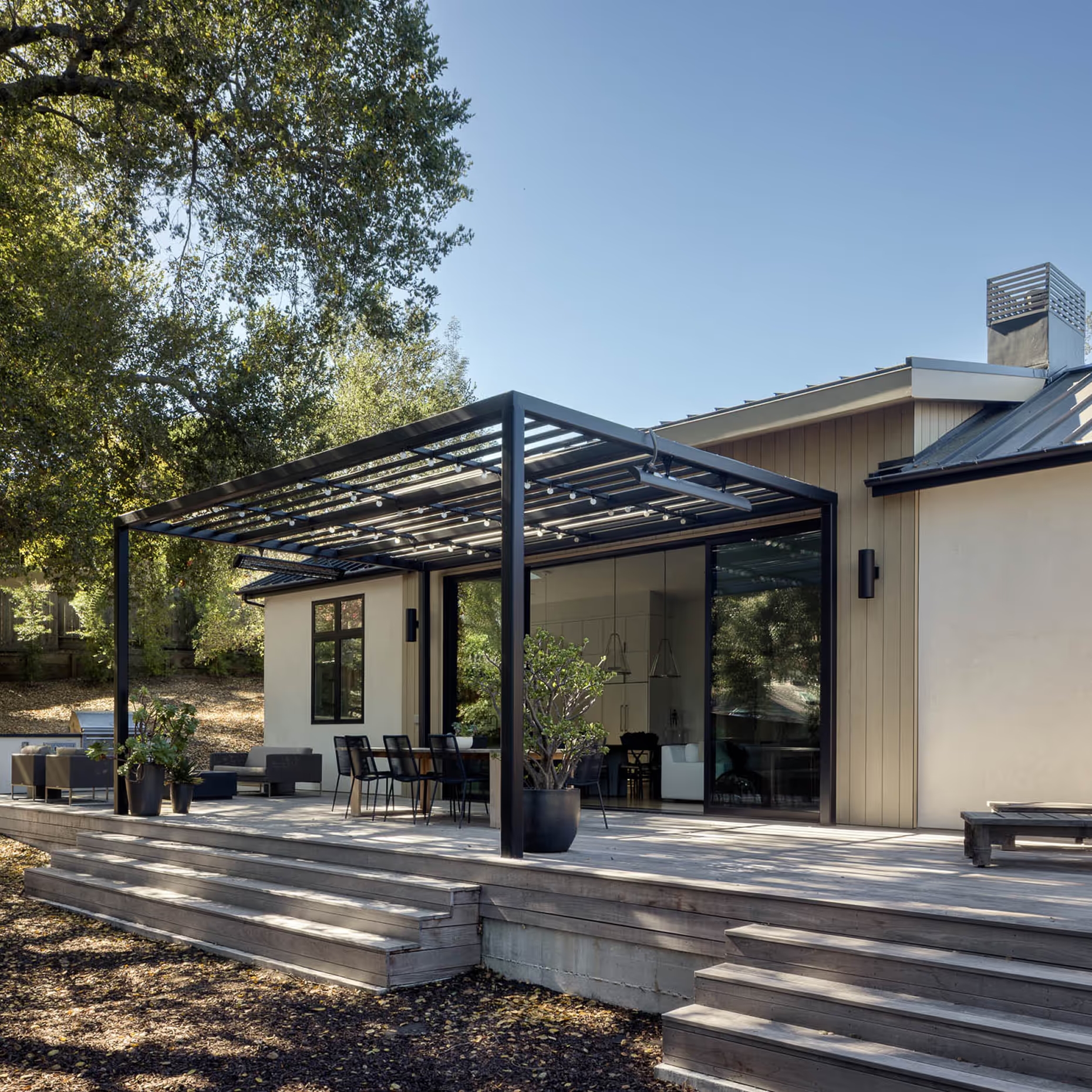
Building in Woodside is a distinct experience within the San Francisco Peninsula. Parcels are larger. Tree coverage is denser. Zoning emphasizes preservation. Homes are often set back from the road, approached by long private drives, and positioned carefully within wooded landscapes.
Estate development in Woodside is not about maximizing footprint. It is about balance — between architecture and land, privacy and openness, structure and setting. The most successful homes in this area feel settled into their environment, as though they belong to the terrain rather than sit on top of it.
For homeowners planning to build in Woodside, the process begins long before architectural drawings are finalized. It begins with understanding the land itself.
The Character of Woodside Properties
Woodside is known for its rural-residential identity. Many properties include mature trees, rolling topography, equestrian zoning overlays, and environmental sensitivity requirements. Compared to denser Peninsula neighborhoods, parcels here often provide:
- Multi-acre layouts
- Heavily wooded areas
- Seasonal creeks or drainage corridors
- Long setback distances
- Limited street visibility
These characteristics create an opportunity for exceptional privacy, but they also introduce planning complexity. Tree preservation ordinances, environmental considerations, and grading limitations all influence how a home can be positioned and constructed.
Estate-level development in Woodside demands thoughtful coordination between design intent and site realities.
Building on Acreage: Strategic Site Placement
Unlike compact suburban lots, larger Woodside parcels allow flexibility — but that flexibility must be guided by intention.
Proper site placement considers:
- Natural grade transitions
- Root protection zones for mature trees
- Solar orientation
- Prevailing wind exposure
- Privacy corridors
A residence that respects tree clusters and natural contours not only preserves the landscape but enhances long-term property value. Improper grading or aggressive clearing can permanently alter the character of a site.
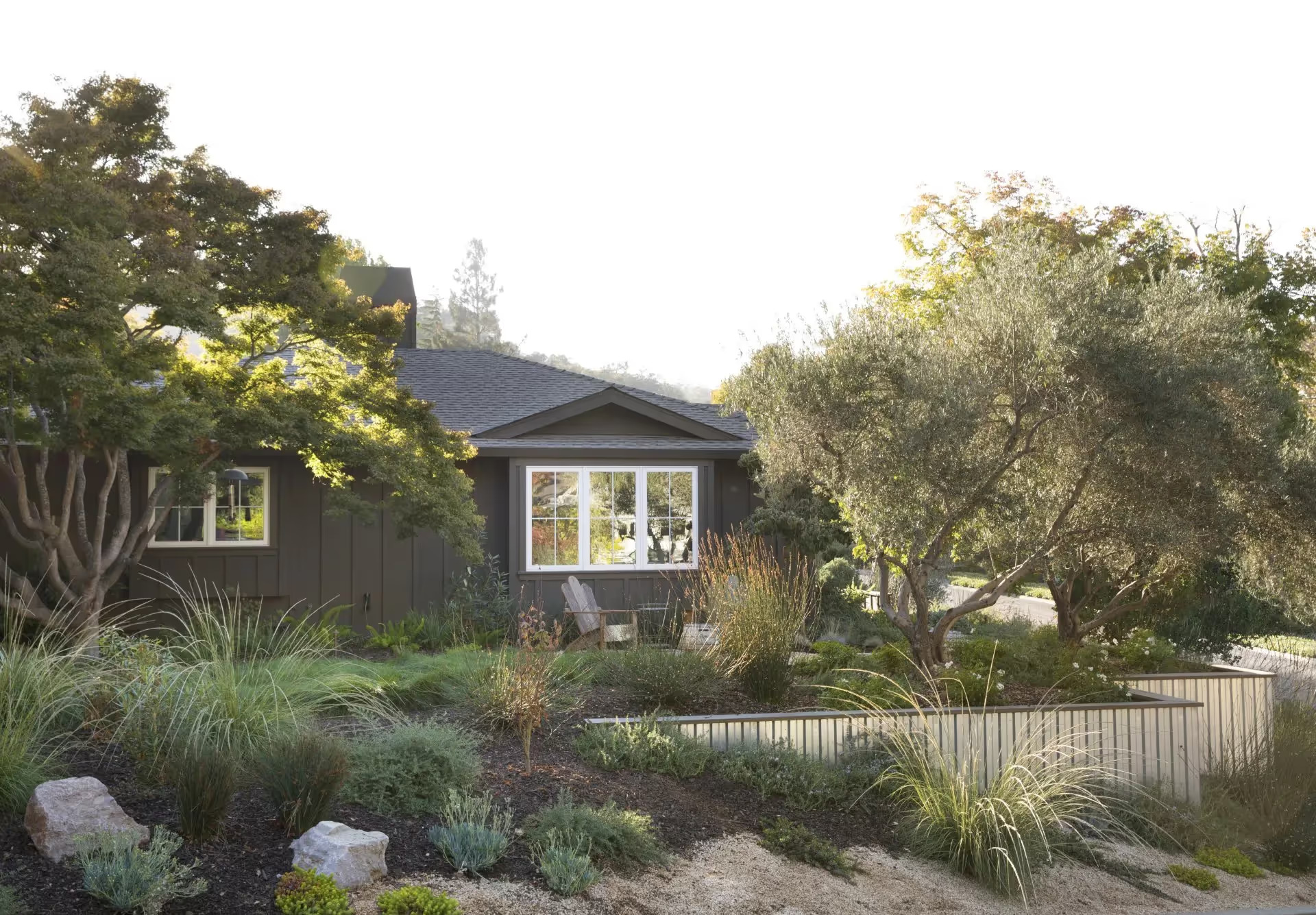
At Supple Homes, acreage planning begins with a measured assessment of how architecture can be woven into the landscape with minimal disruption. Rather than flattening terrain unnecessarily, homes are often designed to step gently with the land.
This approach preserves both the environmental integrity and the estate-scale aesthetic that defines Woodside.
Environmental Sensitivity and Fire Resilience
Woodside’s wooded setting brings responsibility. Fire resilience, defensible space planning, and material selection are central to long-term performance.
Construction strategies often include:
- Non-combustible exterior materials
- Fire-rated roof assemblies
- Ember-resistant vent systems
- Thoughtful vegetation management
- Strategic hardscape buffers around structures
Fire-conscious construction does not diminish architectural refinement. Instead, it integrates protective measures seamlessly into design.
Environmental sensitivity also extends to drainage planning and erosion control. Larger parcels may include natural runoff paths that must be preserved or redirected responsibly.
When handled properly, estate development enhances the site without compromising its ecological balance.
Managing Extended Construction Logistics
Estate parcels often require complex access management. Long driveways, gated entries, and distance from main roads affect construction sequencing and staging.
Heavy equipment movement must be coordinated to protect tree roots and natural contours. Temporary access paths may require reinforcement. Deliveries must be scheduled carefully to maintain safety and minimize disruption.
On acreage properties, logistics are a significant part of the build strategy. Planning includes:
- Defined staging areas
- Soil management plans
- Equipment maneuvering routes
- Protection barriers for preserved landscape zones
A disciplined logistical plan protects both the property and the surrounding environment.
Structural Considerations on Varied Terrain
Woodside terrain ranges from gently rolling to moderately sloped. Structural systems must respond accordingly.
Foundations may require:
- Reinforced grade beams
- Pier and caisson systems
- Engineered retaining solutions
- Subsurface drainage integration
Even on less dramatic slopes, soil composition and moisture patterns influence foundation design. Long-term stability depends on understanding how the land behaves seasonally.
Structural engineering in Woodside often prioritizes durability over speed. The objective is not simply to meet minimum code requirements, but to create a home that remains stable across decades of environmental change.
Architectural Scale and Proportion
Estate development requires restraint as much as vision. Larger parcels can accommodate expansive homes, but proportion must align with site context.
Oversized massing can disrupt landscape harmony. Instead, well-planned estates often:
- Break volume into connected wings
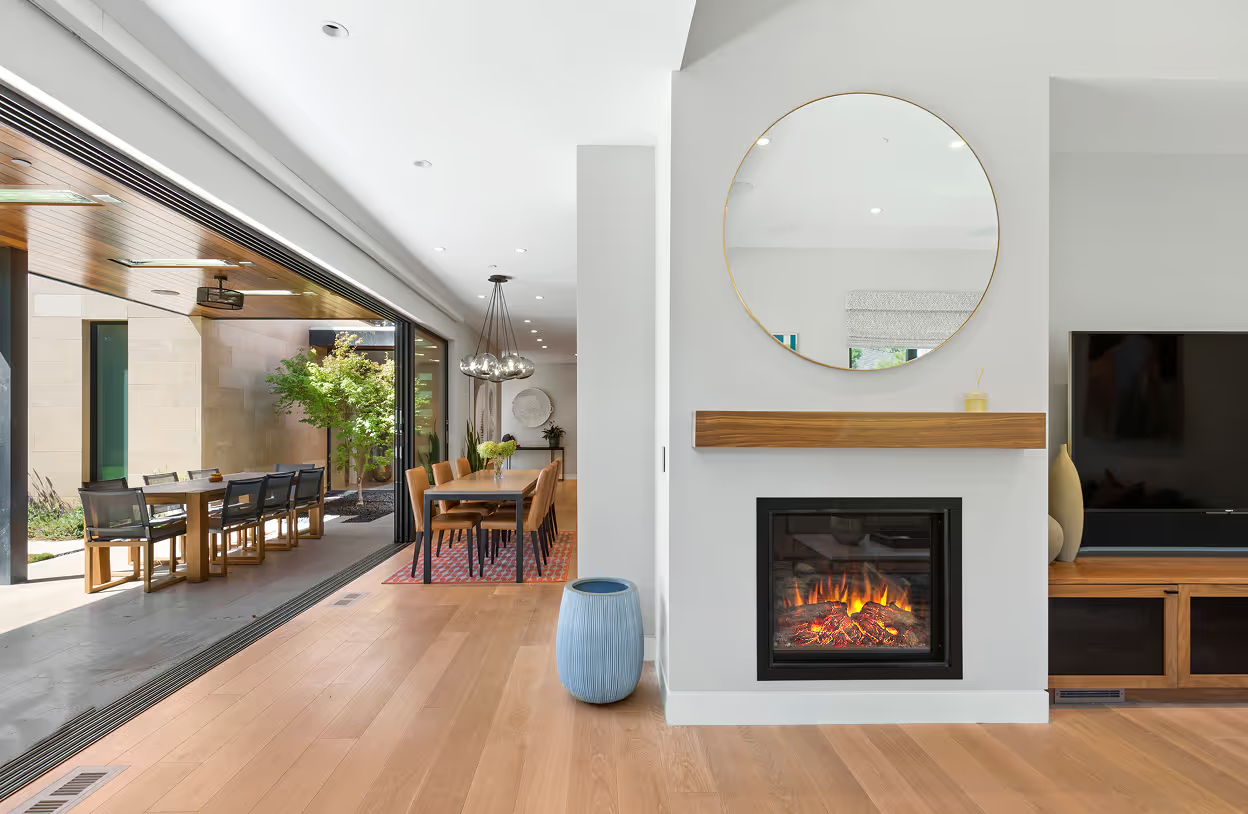
- Incorporate courtyards
- Use rooflines that follow natural grade
- Integrate covered outdoor transitions
This layered approach reduces visual impact while enhancing flow between interior and exterior spaces.
Supple Homes approaches estate architecture with a focus on human scale within large properties. The result is a residence that feels substantial yet grounded.
Privacy Without Isolation
One of the defining characteristics of Woodside living is privacy. However, privacy should not translate to isolation from natural beauty.
Design strategies may include:
- Window placement oriented toward internal courtyards
- Controlled view corridors toward landscape features
- Setback-driven buffer zones
- Layered landscaping for visual screening
Thoughtful placement creates a sense of retreat while maintaining openness to surrounding nature.
The goal is quiet seclusion, not enclosure.
Integrating Outdoor Structures and Amenities
Larger parcels allow for auxiliary structures such as guest houses, detached garages, pool pavilions, or equestrian facilities.
These additions require:
- Zoning compliance
- Utility coordination
- Grading alignment
- Architectural consistency
Secondary structures should complement the primary residence rather than compete with it.
Integrated planning ensures that estate amenities enhance daily living without overwhelming the site.
Energy Performance in Rural-Residential Settings
Woodside’s wooded environment and microclimate shifts influence energy performance strategies.
Homes may benefit from:
- Advanced insulation assemblies
- Air-tight building envelopes
- High-efficiency glazing
- Solar-ready infrastructure
- Strategic overhangs for seasonal shading
Balancing natural light with thermal performance is especially important when tree canopy affects sun exposure patterns.
Long-term comfort is achieved through precise envelope detailing and climate-responsive orientation.
Long-Term Value and Property Stewardship
Estate development is a generational investment. Homes built in Woodside are often intended to remain within families for years.
Durability decisions include:
- Robust structural framing
- Moisture management systems
- High-performance exterior materials
- Long-lifespan roofing systems
- Integrated drainage solutions
At Supple Homes, estate projects are approached with a stewardship mindset. Construction decisions are evaluated not only for immediate impact but for how they protect the property long term.
Well-executed estate development preserves both the architecture and the land.
Collaboration Across Disciplines
Estate-level projects require close coordination between architects, engineers, landscape designers, and builders.
Successful collaboration reduces:
- Redundant grading
- Structural redesign
- Permit delays
- Construction inefficiencies
Early integration of all disciplines creates clarity and protects design integrity.
Woodside projects benefit from this cohesive approach, particularly when environmental factors and acreage scale are involved.
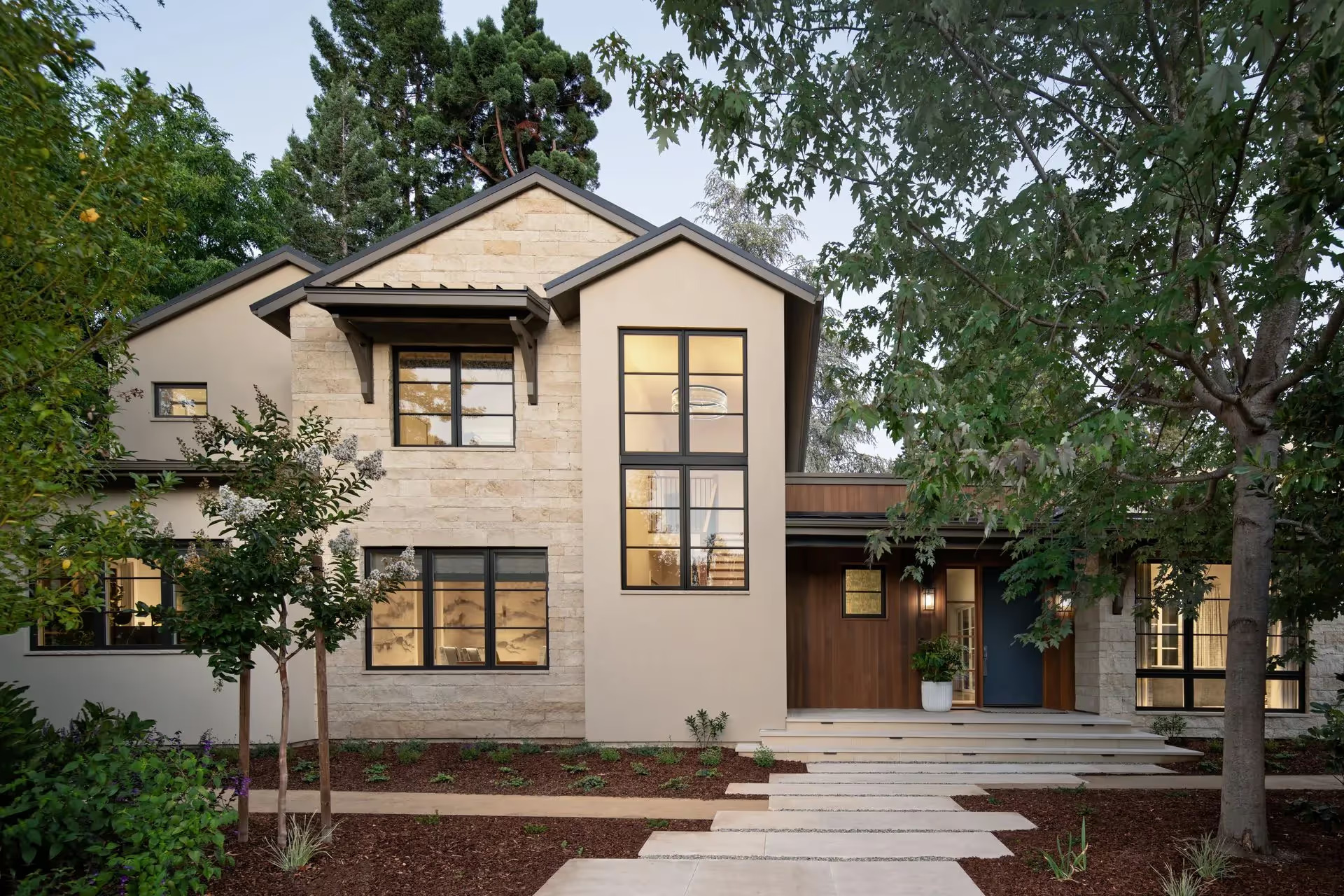
Building in Woodside with Intention
Developing a residence in Woodside is an exercise in restraint, coordination, and respect for land. The size of the parcel does not simplify construction; it expands the scope of responsibility.
From environmental sensitivity to structural engineering, from fire resilience to architectural proportion, every decision must reflect the unique context of the site.
Supple Homes brings a measured, site-conscious philosophy to estate construction in Woodside, focusing on integration rather than dominance. The objective is not simply to build a large home, but to create a residence that feels anchored, private, and enduring.
Estate development in Woodside is about alignment, between land and structure, privacy and openness, permanence and beauty.
When executed thoughtfully, the result is more than a residence. It is a home that belongs to its landscape and stands confidently within it for generations.